
Roof Pitch Calculator
Convert rise/run to degrees and percent slope. Get rafter length, pitch factor, and roof area instantly with a live visual diagram.
Your Roof Pitch Results
Based on your inputs – 2026 values
Want a Pro to Confirm These Numbers?
Get a free, no-obligation quote from a licensed local roofing contractor before you order materials or start framing.
| Pitch (X/12) | Degrees | % Slope | Pitch Factor | Category |
|---|
Pro Tip
–
Ready to Move Forward on Your Roof?
Connect with a vetted local contractor who can verify this pitch on-site and give you an accurate material and labor quote.
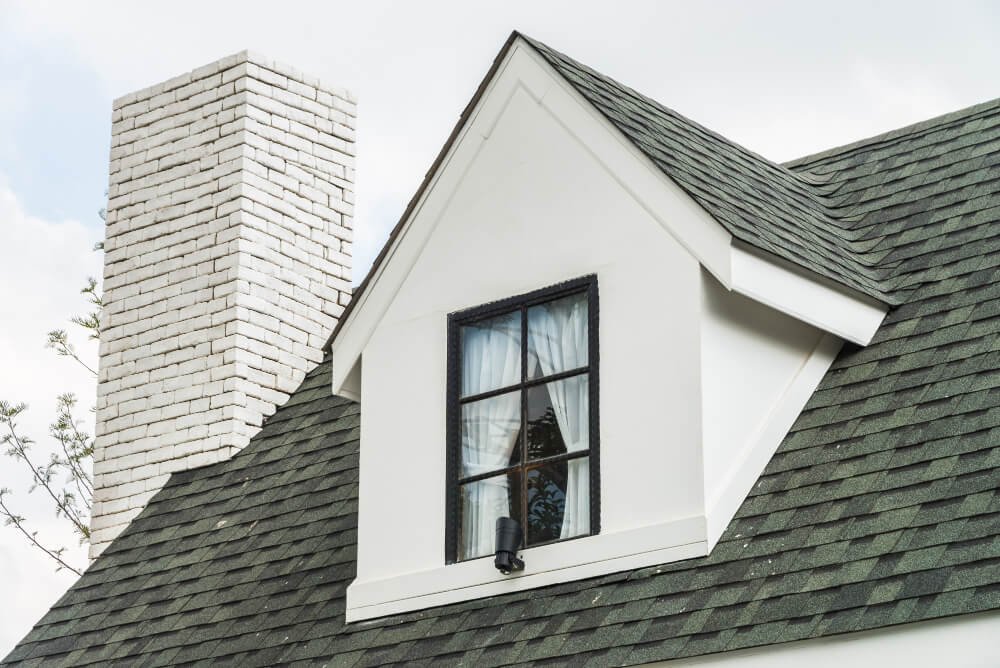
Roof Pitch Calculator: What It Does and How to Use It
This roof pitch calculator handles four different input methods so you can start from whatever information you have on hand. Enter a rise and run, key in an angle in degrees, type a percent slope, or enter full building dimensions for a complete roof area calculation. Every input produces the same core outputs: pitch in X/12 notation, degrees, percent slope, pitch factor, and rafter length.
Roof pitch comes up in nearly every home improvement project that touches the exterior. Whether you are planning a home addition and need to match the existing roofline, budgeting foundation repair costs where the roof drainage pattern affects grade, or designing a specialty roof shape like a gambrel roof, pitch is the first number you need.
Roof Pitch Visual Comparison
The spectrum below shows every major residential pitch side by side. Each triangle is drawn to accurate proportions so you can see exactly how the profile changes as pitch increases.
Roof Pitch Formulas: Step-by-Step
Every output this calculator produces comes from standard right-triangle trigonometry. Here are all four formulas with worked examples you can verify by hand.
arctan(6 / 12) x 57.296
= arctan(0.5) x 57.296
= 26.57 degrees
(6 / 12) x 100
= 0.5 x 100
= 50% slope
sqrt(1 + 0.25) = sqrt(1.25)
= 1.118
1,000 sq ft plan x 1.118 = 1,118 sq ft actual
14 x 1.118
= 15.65 ft rafter length
Add eave overhang to span first.
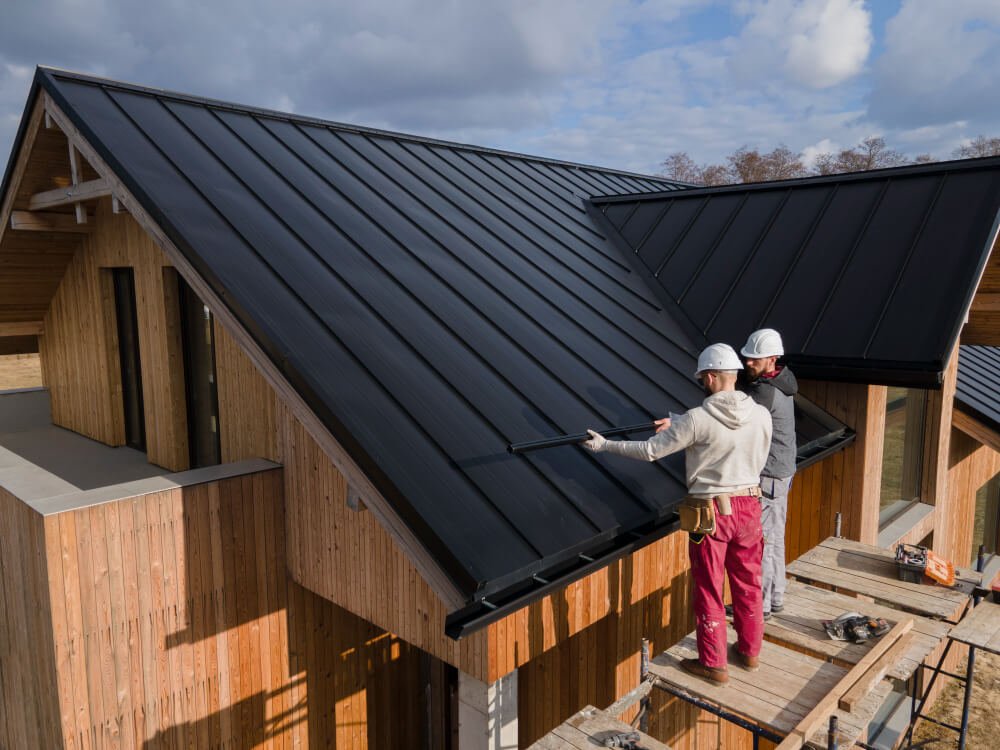
How to Measure Roof Pitch: 3 Methods Ranked by Accuracy
Before ordering materials or calling a contractor, you need the actual pitch. These three methods range from jobsite-accurate to good-enough-for-estimates. Choose based on your access and tools.
Roof Pitch Full Conversion Table
Use this table to find any standard pitch and all its equivalent values. The pitch factor column is what you multiply by your plan area to get actual roofing squares.
| Pitch (X/12) | Degrees | % Slope | Pitch Factor | Category | Common Application |
|---|---|---|---|---|---|
| 1/12 | 4.76 | 8.3% | 1.003 | Flat | Commercial membrane, TPO, EPDM |
| 2/12 | 9.46 | 16.7% | 1.014 | Low-slope | Shed roofs, carports, extensions |
| 3/12 | 14.04 | 25% | 1.031 | Low-slope | Garages, porch roofs, low dormers |
| 4/12 | 18.43 | 33.3% | 1.054 | Conventional | Ranch homes, minimum for asphalt shingles |
| 5/12 | 22.62 | 41.7% | 1.083 | Conventional | Common US suburban residential |
| 6/12 | 26.57 | 50% | 1.118 | Conventional | Most popular US pitch nationwide |
| 7/12 | 30.26 | 58.3% | 1.158 | Conventional | New England, Midwest residential |
| 8/12 | 33.69 | 66.7% | 1.202 | Steep-slope | Colonial, Tudor, craftsman styles |
| 9/12 | 36.87 | 75% | 1.250 | Steep-slope | High-snow regions, Victorian homes |
| 10/12 | 39.81 | 83.3% | 1.302 | Steep-slope | A-frame, chalet, heavy snow areas |
| 12/12 | 45.00 | 100% | 1.414 | Steep-slope | A-frame, architectural statement |
| 14/12 | 49.40 | 116.7% | 1.537 | Very steep | Towers, decorative steep gables |
| 18/12 | 56.31 | 150% | 1.803 | Very steep | Gambrel lower sections, steep barns |
Roofing Material Compatibility by Pitch
Not every roofing material works on every pitch. The cards below show the minimum pitch, compatible range, and a compatibility bar for each major material type as of 2026. Pitch also determines which roof style is structurally practical: gable roofs typically run 4/12 to 12/12, while hip roofs most commonly land between 4/12 and 8/12 where the hip rafter geometry stays manageable.
Building Code Requirements by Pitch (IRC 2021)
The 2021 International Residential Code (adopted by most US states by 2024 to 2026) sets specific requirements based on roof pitch. Understanding these before you design saves costly re-work.
Industry References
Free Roofing Calculators for Your Next Project
Your roof pitch is just the starting point. Use these free 2026-updated calculators to plan every stage of your roofing project – from estimating replacement cost to figuring shingle and rafter quantities. If you are in Texas and need a licensed contractor to verify your calculations on-site, browse vetted roofers in Houston, Austin, and Dallas.
Roof Pitch Resources and Guides
Go deeper on individual pitches with these dedicated guides, or use the full pitch conversion chart to look up any rise and run combination at once.
Find a Roofing Contractor Near You
Once you know your pitch, the next step is getting a licensed local contractor to verify measurements and quote the job. Browse our vetted contractor listicles for these cities.
Roof Pitch Calculator: Frequently Asked Questions
Answers to the questions homeowners, builders, and architects ask most often about roof pitch in 2026.
How do I calculate roof pitch?
Roof pitch is the ratio of vertical rise to horizontal run, expressed as X/12 in the US. To calculate it manually: place a level horizontally against the rafter, mark 12 inches along the level, and measure straight down from that point to the rafter. That vertical measurement is your rise. A 6-inch rise over 12 inches of run = 6/12 pitch. You can also calculate pitch from the ridge height and half-span: pitch = (ridge height divided by half-span) x 12.
How do I convert roof pitch to degrees?
Use the arctangent formula: Degrees = arctan(rise / 12) x (180 / pi). Key values: 4/12 = 18.4 deg, 6/12 = 26.6 deg, 8/12 = 33.7 deg, 9/12 = 36.9 deg, 12/12 = 45 deg. Enter your degrees directly in the From Degrees tab above and the calculator converts automatically.
What is a good roof pitch for a residential home?
The most common US residential pitch is 6/12 (26.57 degrees), which balances water shedding, material compatibility, attic usability, and rafter length. The accepted standard range is 4/12 to 9/12. For high-snow regions (climate zones 6 to 8), 10/12 or steeper improves snow shedding. For hurricane-prone coastal areas, 4/12 to 6/12 reduces wind uplift load on the roof deck.
How do I calculate rafter length from roof pitch?
Rafter length = horizontal span x pitch factor, where pitch factor = sqrt(1 + (rise/12) squared). For a 6/12 pitch with a 14 ft span: pitch factor = 1.118; rafter length = 14 x 1.118 = 15.65 ft. Add eave overhang to the span before calculating to get the full rafter from ridge centerline to fascia. Subtract half the ridge board thickness at the top end for layout.
What is the minimum roof pitch for asphalt shingles?
4/12 is the minimum for standard asphalt shingle installation per the 2021 IRC and all major manufacturer warranties. Between 2/12 and 4/12 a low-slope modification is required: double-layer underlayment and manufacturer-approved sealant at every course. Below 2/12, shingles are not warrantied and a membrane system (TPO, EPDM, or modified bitumen) is required.
What does the pitch factor or roof multiplier mean?
The pitch factor converts your building’s horizontal footprint to actual sloped roof surface area. A 1,500 sq ft house at 6/12 pitch (factor 1.118) has 1,677 sq ft of actual roof surface – 16.77 squares of material before waste. Ordering by footprint instead of sloped area causes 5 to 25% shortfalls depending on pitch. Always multiply plan area by the pitch factor before ordering shingles, underlayment, or metal panels.
How do I measure roof pitch from the ground?
Three options: (1) Smartphone inclinometer app – stand at gable end, hold phone against roofline, read angle, convert via rise = round(12 x tan(angle)). Accuracy: plus or minus 1 degree. (2) Speed square from ladder at eave – pivot the square at the fascia and read pitch from the degree scale. (3) Calculate from known dimensions – if you know ridge height above top plate and half-span, pitch = (ridge height / half-span) x 12. Ground methods work for material estimates but not framing cuts.
What roof pitch sheds snow best?
10/12 (39.8 degrees) and steeper reliably sheds snow under gravity before loads reach critical levels. ASCE 7-22 uses 10/12 as a practical benchmark in high-snow-load design. Between 6/12 and 9/12, snow sheds in most US climates but ice dams can form at eaves in zones 6 to 8 without heat cable. Below 4/12, roofs are engineered to carry snow load structurally rather than shed it – the structural design must account for full ground snow load.
How do I convert roof pitch to percent slope?
Percent slope = (rise / 12) x 100. So 6/12 = 50%, 12/12 = 100%, 3/12 = 25%. Watch out when reviewing commercial roofing specs or drainage plans – a “6% slope” is nearly flat at about 0.72/12, not the same as a 6/12 pitch. Percent slope notation is common in civil engineering, landscape drainage, and commercial membrane specs but rarely used in residential framing.
What is the difference between roof pitch and roof slope?
Historically, pitch meant total rise divided by full building span (roughly half the slope), while slope was rise over run. Today they are used interchangeably in US residential construction to mean rise per 12 inches of run. The distinction that matters in practice is between rise/12 notation (framing plans, material specs) and percent slope (drainage engineering, commercial specs) – these look similar but mean very different things when a number like “6” appears without a denominator.