
3/12 Roof Pitch
A low-slope pitch that unlocks exposed-fastener metal roofing and provides the lowest material cost of any functional pitched roof. Here is everything about 3/12 – the 14.04 degree angle, rafter lengths for every building width, why standard shingles need a modification here, and when 3/12 is the right choice.
What Is a 3/12 Roof Pitch?
A 3/12 roof pitch means the roof surface rises 3 inches vertically for every 12 inches of horizontal distance. The first number is the rise; the second is always 12, representing one foot of horizontal run. You will also see it written as 3:12, 3-in-12, or 3 over 12.
In degrees, 3/12 equals 14.04 degrees, calculated as arctan(3/12) x (180/pi). From the street, a 3/12 roof looks nearly flat to most observers. It sits clearly in the low-slope category – steep enough to drain water under normal conditions, but not steep enough for standard asphalt shingle installation without modifications.
The Dual Position of 3/12
The 3/12 pitch occupies a specific regulatory position that defines its character. It is the minimum for exposed-fastener metal roofing (IBC R905.10 and most manufacturer warranties) and simultaneously the highest pitch at which standard asphalt shingles cannot be used without modification. It sits in the gap between the full low-slope membrane world below it and the full conventional material world above it.
- Lowest material cost per square foot. The 1.031 pitch factor means only 3.1% more material than the building footprint – the smallest area premium of any roof that can drain adequately without engineering.
- Full metal roofing access. At 3/12, every exposed-fastener metal panel system opens up at standard installation. Below 3/12, metal requires standing seam with sealed seams.
- Standard shingles need modification. Below 4/12, asphalt shingles require full-coverage ice-and-water shield or double underlayment to meet IRC R905.2. Many manufacturers require additional written approval at this pitch. Most professional roofers recommend stepping up to 4/12 if shingles are the target material.
- Poor snow performance. At 14.04 degrees, snow does not shed under gravity. Any snow load accumulates and must be carried structurally. Avoid 3/12 in climate zones 5 and above.
- Very safe to walk. One of the easiest pitches for crew safety and maintenance access.
Why 3/12 Is the Exposed-Fastener Metal Roofing Minimum
Understanding why 3/12 is the minimum for exposed-fastener metal – and what the different metal systems require – is the most important technical knowledge for anyone working with this pitch.
Why Exposed-Fastener Panels Fail Below 3/12
Exposed-fastener metal panels are screwed directly through the panel face into the sheathing or purlins below. Each screw is sealed with a rubber neoprene washer. At 3/12 and above, water moves off the panel surface fast enough that it drains around the screw washer without dwelling long enough to cause capillary intrusion.
Below 3/12, the slower drainage speed allows water to dwell at the screw location. Wind-driven rain can force water backward under the neoprene washer faster than it drains. This leads to rust-ring formation around each fastener within 3 to 5 years and eventual deck rot beneath.
Metal panel sidelaps (where one panel overlaps the next) are sealed with butyl sealant tape on quality installations. At 3/12, this sealant plus gravity drainage provides adequate protection. Below 3/12, wind creates negative pressure zones at sidelap gaps that pull water upward through the lap – especially during the wind-driven rain events common in thunderstorms.
The 3/12 threshold is validated by manufacturer field failure data showing that exposed-fastener panels at 2/12 have 3x to 5x higher leak rates than the same product at 3/12, primarily at sidelaps and fastener locations.
Metal Roofing System Requirements at 3/12
Not all metal roofing systems have the same minimum pitch. The table below shows what is allowed at 3/12 and what is not, based on IBC 2021 and manufacturer technical data sheets.
| Metal Roofing System | At 3/12 | Min. Pitch | Key Requirement at 3/12 | 2026 Cost / sq |
|---|---|---|---|---|
| Corrugated Metal (exposed fastener) | Standard | 3/12 | Standard installation with lap sealant. Synthetic underlayment recommended over felt. | $180-$300 |
| R-Panel / Rib Panel (exposed fastener) | Standard | 3/12 | Minimum 3/12 per McElroy, Metal Sales, Fabral. Full-coverage underlayment at this pitch. | $200-$320 |
| 5V Crimp (exposed fastener) | Standard | 3/12 | Standard install. 5V Crimp handles 3/12 well due to wider seam geometry. | $220-$360 |
| Snap-Lock Standing Seam | Standard | 1/12 | Well above minimum. No sealant upgrade needed at 3/12. | $350-$550 |
| Mechanical Lock Standing Seam | Standard | 1/4:12 | Overkill for 3/12. Use snap-lock instead – lower cost, same performance at this pitch. | $420-$680 |
| Metal Shingles / Stone-Coated Steel | Standard | 3/12 | Varies by manufacturer. Most require 3/12 standard, some require 4/12. | $280-$450 |
| Corrugated (no lap sealant) | Not Rec. | 4/12 pref. | Without sidelap sealant, 4/12 is the practical minimum even though 3/12 is the code minimum. | – |
Rafter Length Table: Every Standard Building Width
The table below gives the structural rafter length and full rafter length (including a standard 12-inch eave overhang) for a 3/12 pitch on every common building width from 16 to 60 feet. Adjacent pitches (2/12 and 4/12) are shown for comparison. The 3/12 pitch factor of 1.031 produces the most material-efficient rafters of any standard pitched roof.
| Building Width | Run (half-width) | 2/12 Rafter | 3/12 Rafter ★ | 4/12 Rafter | 3/12 + 12″ OH | Lumber to Buy |
|---|---|---|---|---|---|---|
| 16 ft | 8 ft | 8′ 1″ | 8′ 3″ | 8′ 5″ | 9′ 3″ | 10 ft |
| 18 ft | 9 ft | 9′ 1″ | 9′ 3″ | 9′ 6″ | 10′ 4″ | 12 ft |
| 20 ft | 10 ft | 10′ 2″ | 10′ 4″ | 10′ 7″ | 11′ 4″ | 12 ft |
| 22 ft | 11 ft | 11′ 2″ | 11′ 4″ | 11′ 7″ | 12′ 4″ | 14 ft |
| 24 ft | 12 ft | 12′ 2″ | 12′ 4″ | 12′ 8″ | 13′ 5″ | 14 ft |
| 26 ft | 13 ft | 13′ 2″ | 13′ 5″ | 13′ 9″ | 14′ 5″ | 16 ft |
| 28 ft | 14 ft | 14′ 2″ | 14′ 5″ | 14′ 9″ | 15′ 5″ | 16 ft |
| 30 ft | 15 ft | 15′ 2″ | 15′ 6″ | 15′ 10″ | 16′ 6″ | 18 ft |
| 32 ft | 16 ft | 16′ 2″ | 16′ 6″ | 16′ 10″ | 17′ 6″ | 18 ft |
| 36 ft | 18 ft | 18′ 2″ | 18′ 7″ | 18′ 11″ | 19′ 8″ | 20 ft |
| 40 ft | 20 ft | 20′ 2″ | 20′ 7″ | 21′ 1″ | 21′ 8″ | 22 ft |
| 44 ft | 22 ft | 22′ 3″ | 22′ 8″ | 23′ 2″ | 23′ 8″ | 24 ft |
| 48 ft | 24 ft | 24′ 3″ | 24′ 9″ | 25′ 3″ | 25′ 9″ | 26 ft |
| 52 ft | 26 ft | 26′ 3″ | 26′ 10″ | 27′ 4″ | 27′ 10″ | 28 ft |
| 60 ft | 30 ft | 30′ 4″ | 30′ 11″ | 31′ 7″ | 32′ 0″ | 34 ft |
| ★ 3/12 pitch factor = 1.031. Rafter = run x 1.031. Full rafter (+12″ OH) = (run + 1) x 1.031. Subtract 0.75″ at ridge end for ridge board half-thickness before cutting. | ||||||
Hip Rafter Lengths at 3/12
Attic Space and Ridge Height at 3/12 Pitch
The 3/12 pitch is the second most limiting standard pitch for attic space after 2/12. At this pitch, the ridge height equals exactly one-quarter of the half-span. A 24-foot wide building achieves a ridge height of only 3 feet above the top plate – a crawl space, not an attic.
| Building Width | Half-Span (Run) | Ridge Ht Above Plate | Total Ridge (8 ft walls) | Headroom at Center | Attic Suitability |
|---|---|---|---|---|---|
| 20 ft | 10 ft | 2 ft 6 in | 10 ft 6 in | 2 ft 6 in | Not usable – structural only |
| 24 ft | 12 ft | 3 ft 0 in | 11 ft 0 in | 3 ft 0 in | Not usable – crawl space |
| 28 ft | 14 ft | 3 ft 6 in | 11 ft 6 in | 3 ft 6 in | Tight crawl space – HVAC/mechanical only |
| 32 ft | 16 ft | 4 ft 0 in | 12 ft 0 in | 4 ft 0 in | Crawl space – no standing |
| 36 ft | 18 ft | 4 ft 6 in | 12 ft 6 in | 4 ft 6 in | Crawl space storage |
| 40 ft | 20 ft | 5 ft 0 in | 13 ft 0 in | 5 ft 0 in | Very limited crouching access |
| 48 ft | 24 ft | 6 ft 0 in | 14 ft 0 in | 6 ft 0 in | Standing in center zone only (tight) |
| 56 ft | 28 ft | 7 ft 0 in | 15 ft 0 in | 7 ft 0 in | Functional storage loft (wide building) |
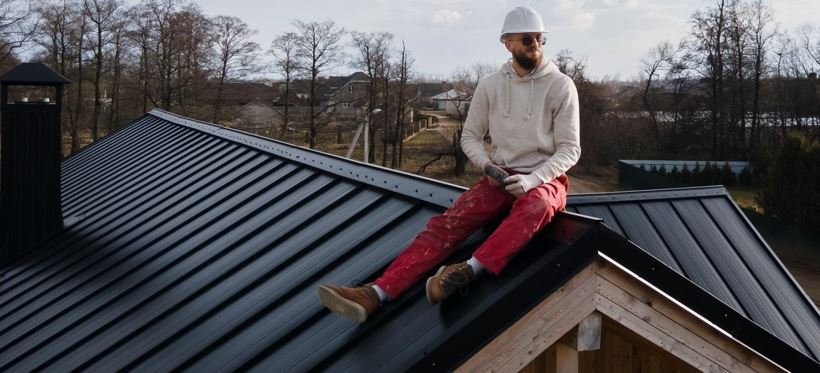
2/12 vs 3/12 vs 4/12: Side-by-Side Comparison
The 3/12 pitch sits between the near-flat membrane world of 2/12 and the shingle-compatible threshold of 4/12. Each pitch step here has significant material and performance consequences.
| Factor | 2/12 | 3/12 ★ | 4/12 |
|---|---|---|---|
| Angle (degrees) | 9.46° | 14.04° | 18.43° |
| Pitch Factor | 1.014 | 1.031 | 1.054 |
| Hip / Valley Factor | 1.424 | 1.436 | 1.453 |
| Ridge Height (28 ft building) | 2 ft 4 in | 3 ft 6 in | 4 ft 8 in |
| Asphalt shingles – standard install | NO Full mod req | NO Mod req | YES Minimum |
| Exposed-fastener metal – standard | NO Standing seam only | YES Minimum | YES |
| Standing seam metal | YES (1/12 min) | YES | YES |
| TPO / EPDM membrane | YES Ideal range | YES (but overkill) | Works – overpowered |
| Material area vs footprint | +1.4% | +3.1% Lowest for metal | +5.4% |
| OSHA classification | Low-slope | Low-slope Very easy to walk | Low-slope |
| Snow performance | Very poor – must engineer | Poor – must engineer Zones 5+ risky | Adequate zones 2-4 |
| Best architecture / application | Modern flat homes, commercial, carports | Garages, barns, additions, sheds | Ranch homes, all shingle types |
When to Choose 2/12 Over 3/12
Choose 2/12 when the aesthetic absolutely requires a near-flat profile (modern flat-roof architecture, commercial buildings), when using a membrane system that performs optimally on low slopes, or when matching an existing structure. The material penalty is minimal – 2/12 and 3/12 cost nearly the same per square. The drainage distinction between them matters most in wet climates where 3/12 can drain actively while 2/12 relies on positive drainage to scuppers or internal drains.
When to Choose 4/12 Over 3/12
Choose 4/12 whenever you want asphalt shingles without the low-slope modification. For new construction where shingles are the target material, the single best decision is to frame at 4/12 rather than 3/12 – the additional rafter length is minimal (2.3% longer at 4/12 vs 3/12) and the material selection freedom is significant. Also choose 4/12 over 3/12 for any building in climate zone 4 or higher where snow load is a consideration.
Full Material Compatibility Guide for 3/12
Material selection is where 3/12 demands more thought than any other pitch. You are in the zone where the standard shingle world ends and the low-slope metal and membrane world begins. The guide below gives the 2026 verdict for every major roofing material at 3/12.
3/12 Pitch Roof Cost Estimates (2026)
The 3/12 pitch has the lowest material cost per square of any functional pitched roof. The 1.031 pitch factor means you are ordering only 3.1% more material than the building footprint. The estimates below are for a 28 x 40 foot building with a standard gable roof and 12-inch eave overhang. Material cost savings vs a 6/12 shingle roof are significant.
| Cost Component (R-Panel Metal) | Quantity (28×40 ft) | Unit Cost (2026) | Subtotal | Notes |
|---|---|---|---|---|
| Metal R-panel (29 gauge Galvalume) | 12 squares | $55 to $90/sq material | $660 to $1,080 | 11.55 sq sloped + 5% waste at 3/12 |
| Synthetic underlayment | 12 squares | $22 to $35/sq | $264 to $420 | Required under metal at 3/12 |
| OSB sheathing (if replacing) | 46 sheets | $18 to $26/sheet | $828 to $1,196 | 1,155 sq ft / 25 sq ft net per sheet |
| Sidelap butyl sealant tape | 1,200 linear ft | $0.15 to $0.25/lf | $180 to $300 | Critical at 3/12 – do not skip |
| Ridge cap and trim | 42 linear ft | $4 to $8/lf | $168 to $336 | Metal ridge and eave trim |
| Fasteners (self-drilling screws) | 1 box per 2 sq | $30 to $50/box | $180 to $300 | EPDM-washered screws, not standard drywall screws |
| Labor | 12 squares | $180 to $260/sq | $2,160 to $3,120 | No pitch premium – 3/12 is below OSHA 7/12 |
| Tear-off and disposal | 12 squares | $35 to $55/sq | $420 to $660 | Single layer tear-off |
Framing Specs and IRC 2021 Requirements for 3/12
Rafter Sizing for 3/12: IRC 2021 Span Limits
At 3/12 pitch, the low angle means the structural horizontal span is nearly equal to the rafter length, which gives some of the longest allowable spans for a given lumber size. Spans below come from IRC 2021 Table R802.4.1 at 20 psf live load, 10 psf dead load, 16-inch on-center spacing.
| Lumber Size | Species / Grade | Max Span (20 psf LL) | Max Span (30 psf LL) | Application |
|---|---|---|---|---|
| 2×6 | SPF #2 | 14′ 0″ | 12′ 3″ | Up to 28 ft wide buildings |
| 2×6 | Doug Fir-Larch #2 | 15′ 5″ | 13′ 5″ | Up to 31 ft wide buildings |
| 2×8 | SPF #2 | 18′ 5″ | 16′ 1″ | Up to 37 ft wide buildings |
| 2×8 | Doug Fir-Larch #2 | 20′ 3″ | 17′ 8″ | Up to 41 ft wide buildings |
| 2×10 | SPF #2 | 23′ 6″ | 20′ 6″ | Up to 47 ft wide buildings |
| 2×10 | Doug Fir-Larch #2 | 25′ 10″ | 22′ 6″ | Up to 52 ft wide buildings |
Unique Framing Considerations at 3/12
Best Applications for a 3/12 Roof Pitch
The 3/12 pitch is not a compromise pitch – it is the optimal pitch for specific applications. Understanding where it excels prevents the mistake of using it where a shallower or steeper pitch would serve better.
The most common residential application for 3/12. Garages benefit from the low profile (the roof does not visually compete with the house), low material cost (metal R-panel at 3/12 is among the most economical roofing systems), and easy installation on a structure that typically does not require attic space. A 3/12 metal roof on a detached garage will outlast the building in most climates.
Agricultural construction has used 3/12 to 4/12 metal panel roofing as the standard for decades. The combination of low pitch, exposed-fastener metal, wide-span purlins, and no attic requirement creates the most cost-efficient large-roof structure per square foot available. The 3/12 pitch is specifically common on pole barns in the 40-foot to 60-foot width range in the southern and midwestern US.
Attached covered structures often use 3/12 to 4/12 to tie into the main building eave at a comfortable height without the roof meeting the wall too high or too low. The 3/12 pitch on a covered porch with metal roofing provides adequate drainage without creating the visual bulk that a steeper addition slope would impose on the main facade.
In climate zones 2 and 3 (Arizona, Nevada, New Mexico, western Texas, southern California), the combination of low rainfall and no snow load makes 3/12 completely practical for residential use. The low pitch reduces exposed surface area to UV radiation compared to steeper alternatives, extending material life in high-UV environments. Metal roofing with a cool-roof Kynar coating at 3/12 is a common and effective system in these markets.
The flat-to-low-slope aesthetic of mid-century modern architecture (1950s to 1970s residential) naturally suits 2/12 to 4/12 pitches. 3/12 specifically hits the visual zone where the roof reads as a clean horizontal element rather than a peaked feature. Standing seam metal at 3/12 in a dark Kynar finish is the material of choice for contemporary residential projects pursuing this aesthetic.
Many existing homes have a main roof at 5/12 to 8/12 and a rear addition or porch at 3/12 to 4/12. When replacing the low-slope section, 3/12 is the correct pitch to maintain. Switching to a steeper addition pitch creates visual dissonance and complicates the wall intersection at the house-to-addition junction. Match the existing pitch and use the appropriate material system for that pitch rather than changing the structure to accommodate shingles.
Where 3/12 Should NOT Be Used
- Climate zones 5 and above (northern US, mountain states): Snow load accumulation at 3/12 requires full structural engineering. In these zones, the combination of structural cost and ice dam risk makes 3/12 impractical for residential construction. Use 6/12 minimum.
- When asphalt shingles are required: If the client, HOA, or local aesthetic codes specify asphalt shingles, frame at 4/12 minimum. The low-slope shingle modification adds cost and reduces warranty reliability.
- When attic space is needed: On any standard residential width (under 48 feet), 3/12 produces a crawl space, not an attic. If storage, mechanical space, or future finishing is anticipated, use at least 6/12.
- High-wind coastal zones: The low pitch reduces uplift exposure slightly, but 3/12 metal panel roofs with exposed fasteners need careful fastener schedule design in Wind Zone II and III areas (Florida peninsula, Gulf Coast). Engineered fastener pattern required in these zones regardless of pitch.
Frequently Asked Questions: 3/12 Roof Pitch
What angle is a 3/12 roof pitch?
A 3/12 roof pitch equals 14.04 degrees, calculated as arctan(3/12) x (180/pi) = arctan(0.25) x 57.296 = 14.04 degrees. From street level this looks nearly flat – significantly shallower than a 4/12 (18.43 degrees) or 6/12 (26.57 degrees) roof. It is classified as a low-slope roof. Use the roof pitch calculator to convert any pitch to degrees and get rafter lengths for your span.
Can you put shingles on a 3/12 roof?
Standard asphalt shingles cannot be installed at 3/12 with a full warranty under standard methods. The IRC minimum for standard shingle installation is 4/12. Between 2/12 and 4/12, the IRC allows shingles with a low-slope modification (IRC R905.2.2): full-coverage ice-and-water shield under the entire deck and reduced shingle exposure. Most major manufacturers require written approval for this application. The modification adds $65 to $95 per square to installed cost. Most experienced roofers recommend choosing metal roofing at 3/12 rather than doing the shingle modification, as metal performs better at this pitch and often costs less over a 20 to 30 year period.
What is the minimum pitch for exposed-fastener metal roofing?
The minimum pitch for exposed-fastener metal panels (corrugated, R-panel, 5V crimp) is 3/12 per IBC Section R905.10 and the installation manuals of all major manufacturers including Metal Sales, Fabral, McElroy Metal, and Union Corrugating. Below 3/12, fastener penetrations and sidelap joints become vulnerable to water infiltration via capillary action and wind-driven backflow. For pitches below 3/12, a standing seam metal system with snap-lock or mechanically seamed panels is required. Standing seam can go as low as 1/12 (snap-lock) or 1/4:12 (mechanically seamed).
What is the rafter length for a 3/12 pitch?
The 3/12 pitch factor is 1.031, so every foot of horizontal run produces 1.031 feet of rafter. For common widths: 24 ft wide (12 ft run) = 12.37 ft structural rafter, 13.40 ft with 12-inch overhang. 28 ft wide (14 ft run) = 14.43 ft structural, 15.46 ft with overhang. 36 ft wide (18 ft run) = 18.56 ft structural, 19.59 ft with overhang. See the full rafter length table above for every width from 16 to 60 feet. Subtract 0.75 inches at the ridge end for the ridge board half-thickness before cutting.
What is the pitch factor for 3/12?
The pitch factor for 3/12 is 1.031, calculated as sqrt(1 + (3/12)^2) = sqrt(1 + 0.0625) = sqrt(1.0625) = 1.031. This means a 3/12 roof has only 3.1% more surface area than its flat footprint. For a 28×40 ft building: 1,120 sq ft x 1.031 = 1,155 sq ft of actual roof surface = 11.55 squares. Add 5% waste for metal (vs 10% for shingles, since metal panels are cut to length with minimal waste) = 12.1 squares to order. This is the lowest pitch factor of any roof that can use standard metal roofing. Use the roof square footage calculator for an exact figure including overhangs.
Is 3/12 good for snow?
No. A 3/12 pitch does not shed snow under gravity. At 14.04 degrees, snow accumulates and must be carried structurally just as on a flat roof. In climate zones 5 and above (northern states, Rocky Mountain region), a 3/12 roof requires full snow load structural engineering and is generally not recommended for residential construction. Ground snow loads above 15 psf trigger engineering requirements for this pitch. In dry, low-snow climate zones (2 through 4, covering the southern and southwestern US), 3/12 is completely practical as snow load is not a design driver. For any northern state application, use at least 6/12, and for reliable snow shedding use 10/12 or steeper.
Can you walk on a 3/12 roof?
Yes – a 3/12 pitch is one of the safest roof pitches to walk on. At 14.04 degrees, the surface feels nearly flat underfoot even in rubber-soled boots. Well below the OSHA 7/12 steep-slope threshold. Note that while walking is easy, standard fall protection requirements still apply: any roofing work at 6 feet or more above a lower level requires fall protection (guardrails, safety nets, or personal fall arrest) per OSHA 29 CFR 1926.502, regardless of slope. The practical advantage of 3/12 for maintenance is that homeowners with proper footwear and safety awareness can safely clear debris, inspect flashings, and check gutters more easily than on any steeper pitch.
What is the hip and valley factor for 3/12 pitch?
The hip and valley rafter factor for 3/12 pitch is 1.436, calculated as sqrt((3/12)^2 + 2) = sqrt(0.0625 + 2) = sqrt(2.0625) = 1.436. Multiply your hip rafter horizontal run by 1.436 to get the actual hip rafter length. For a 28-foot building with a 14-foot hip run: 14 x 1.436 = 20.10 feet. Buy 22-foot lumber to allow for the ridge deduction and tail cut. This factor applies to both hip and valley rafters since both run at 45 degrees in plan. See the roof pitch chart for hip/valley factors at every pitch from 1/12 to 24/12.
Calculators and Related Guides
Use these free tools to take your 3/12 pitch measurements to a complete material list and cost estimate. If you need a licensed contractor to verify or install a 3/12 metal roof in Texas, see the vetted lists for Houston, Austin, and Dallas.