
📅 Updated July 2026 • 2026 National Pricing • All Add-Ons Included

Home Inspection Cost Calculator

Get an instant home inspection estimate with this home inspection calculator based on your home size, age, foundation type, region, and any add-on inspections — radon, mold, sewer scope, thermal imaging, pool, and more.

✓ Base Fee by Size & Age ✓ Regional Adjustment ✓ Foundation Surcharge ✓ 10 Add-On Inspections ✓ Low / Mid / High Range
🏠 Step 1 — Home Details
1
Property Size, Age & Type
🌏 Step 2 — Your Region
2
Select Your U.S. Region

Inspector pricing varies by up to 40% between regions based on cost of living, local competition, and state licensing requirements.

➕ Step 3 — Add-On Inspections
3
Select Any Specialized Add-On Inspections

These are separate from the standard inspection and must be booked and paid for in addition to the base fee. Prices shown are national midpoint estimates for 2026.

Radon Testing
+$125-250 (avg $175)
48-72hr continuous monitor. Recommended in EPA Zone 1 & 2 states.
Sewer Scope
+$200-350 (avg $275)
Camera inspection of sewer lateral. Highly recommended for pre-1985 homes.
Mold Inspection
+$300-650 (avg $450)
Air sampling and surface swab with lab analysis. For visible mold or musty odors.
Thermal Imaging
+$150-300 (avg $200)
Infrared camera reveals moisture, insulation gaps, and electrical hot spots.
Termite / WDO Inspection
+$75-150 (avg $110)
Wood-destroying organism inspection. Often required by VA and FHA lenders.
Pool & Spa Inspection
+$200-400 (avg $300)
Pump, filter, heater, lights, and structural inspection of pool and spa.
Chimney Inspection
+$100-300 (avg $200)
NFPA 211 Level 1 or Level 2 inspection of firebox, flue, and cap.
Lead Paint Inspection
+$300-600 (avg $450)
Required for pre-1978 homes. XRF testing or paint chip sampling with lab analysis.
Asbestos Sampling
+$100-300 (avg $175)
Bulk sample collection and lab analysis. Relevant for homes built before 1980.
Well & Water Quality Test
+$150-350 (avg $250)
Flow rate test and water quality lab panel. Required for homes on private wells.
📊 Your Estimate
🏠

Fill in Steps 1-3 and click Calculate to see your personalized home inspection cost estimate with a low-to-high price range, itemized breakdown, and add-on cost table.

✓ Base fee • Age surcharge • Foundation surcharge • Region adjustment • Add-on costs • Total range
Estimated Total Cost (Midpoint)
$0
Range: $0 – $0 • Base + add-ons
$0
Base Inspection
$0
Add-On Cost
$0
Low Estimate
$0
High Estimate
Where Your Estimate Falls in the Market Range
$0
$200 National price range for this type of inspection $800
Base Fee
$0
standard inspection only
Age Surcharge
$0
based on year built
Foundation Surcharge
$0
crawlspace / basement
Region Multiplier
1.00x
vs national average
Add-On Services
0 selected
none
Est. Inspection Time
2-3 hrs
on-site duration
Line ItemLowMid (Est.)HighNotes
💡

Negotiating Tip: Always get quotes from 2-3 licensed inspectors before booking. Ask each one to itemize their base fee, travel fee (if any), and add-on costs. Inspectors who bundle radon testing, termite inspection, and a sewer scope together in a package often charge 10-20% less than ordering each separately. The cheapest inspector is rarely the best value — look for ASHI or InterNACHI certification and recent reviews that mention report quality.

Disclaimer: This calculator provides estimates based on 2026 national pricing data from industry sources. Actual inspection costs vary by inspector, local market conditions, home-specific factors, and the exact scope of services. Always obtain quotes from licensed, certified home inspectors in your area before booking.

Home Inspection Cost Calculator: How Much Does a Home Inspection Cost in 2026?

Using a home inspection cost calculator gives you a realistic cost estimate before you contact inspectors so you can verify that quotes are reasonable and budget accordingly. The average cost of a home inspection is $344 in 2026, with prices ranging from $296 to $424 for a standard single-family home inspection. The actual number for your home depends on five factors: square footage, year built, foundation type, your geographic region, and whether you add specialized inspections on top of the base fee.

2026 Quick Reference: Standard home inspection (no add-ons): $300-$500 for most homes. With common add-ons (radon + sewer scope + termite): $600-$850 total. Large or older home with full add-on package: $900-$1,500+. Inspectors may charge up to $800 or more if the house is in a region with luxury homes or a high cost of living.

Average Add-On Inspection Costs (2026) Base Inspection $350 avg Sewer Scope $275 avg Mold Inspection $450 avg Lead Paint $450 avg Thermal Imaging $200 avg Radon Testing $175 avg $0 $200 $400 $600
Average 2026 home inspection costs by service. The base inspection fee covers all major systems; each add-on is a separate specialist service charged on top. Mold and lead paint inspections are the most expensive add-ons; radon and termite inspections are the most commonly recommended.

Home Inspection Cost Estimator: What Drives the Price

A home inspection cost estimator works by combining five pricing variables: base rate by square footage, age surcharge for older homes, foundation surcharge for crawlspaces and basements, a regional multiplier, and any add-on inspection fees. Understanding each variable helps you anticipate where your estimate will land and which choices have the biggest impact on the final bill.

Square Footage and Base Rate

Home inspection cost per square foot typically runs between $0.10 and $0.20 in 2026, depending on region and the inspector’s experience level. For a 2,000-square-foot home, that puts you somewhere between $200 and $400 before any add-ons. Most inspectors use a tiered flat-rate model: a base fee covering the first 1,000-1,500 square feet, then an incremental charge for each additional 500 square feet. Expect $25 to $50 extra per 500 sq ft above 2,000 square feet.

Year Built and Age Surcharge

Pre-1950 homes typically carry a surcharge due to older wiring such as knob-and-tube and older plumbing such as galvanized pipes, which require more detailed examination. Most inspectors apply a tiered age surcharge: no surcharge for homes built after 1990, a modest $25-50 surcharge for 1970-1990, a $50-100 surcharge for 1950-1970, and $75-150 for pre-1950 homes where inspectors must budget significantly more time for complex and potentially hazardous older systems.

Foundation Type Surcharge

A crawlspace usually incurs a surcharge of around $100 due to difficult access, confined space hazards, and the need for protective gear. A basement typically carries a smaller surcharge but still adds time to check for moisture intrusion and structural issues. Slab foundations are the simplest to inspect and carry no additional surcharge because the inspector can examine the perimeter but cannot enter a sub-grade space.

Average Base Fee by Region (2,000 sqft home, 2026) South ~$310 Midwest ~$324 National Avg ~$350 avg Mountain West ~$378 Northeast ~$413 West Coast ~$427 $0 $280 $445
Regional base fee comparison for a standard 2,000 sq ft single-family home inspection in 2026. Home inspection costs are highest in high-cost states like California, Washington, New York, and Massachusetts, where a standard inspection commonly runs $450 to $650 or more. Lower-cost states across the Midwest and South often fall in the $300 to $450 range.

Home Inspection Price Calculator: Add-On Inspections Explained

A standard home inspection covers the visible, accessible major systems of a home — foundation, structure, roof, HVAC, plumbing, electrical, insulation, windows, and doors. It does not include radon testing, mold testing, sewer scope, termite inspection, pool inspection, chimney inspection, lead paint testing, asbestos sampling, or well water quality testing. Each of these is a specialized service requiring different equipment, certifications, or lab analysis, and each is priced separately. Additional specialized inspections including radon, mold, termites, and sewer scopes add $75 to $650 per service on top of the base inspection fee.

Add-On ServiceLowAverageHighBest For
Radon Testing$125$175$250All homes; essential in EPA Zone 1 states
Sewer Scope$200$275$350Pre-1985 homes; homes with mature trees
Mold Inspection$300$450$650Visible mold, musty odor, or prior water damage
Thermal Imaging$150$200$300Moisture, insulation, and electrical issues
Termite / WDO$75$110$150VA/FHA loans; southeastern states
Pool & Spa$200$300$400Any home with a pool or spa
Chimney$100$200$300Homes with fireplaces or wood stoves
Lead Paint$300$450$600Pre-1978 homes, especially with young children
Asbestos Sampling$100$175$300Pre-1980 homes with intact or disturbed materials
Well & Water Quality$150$250$350Homes on private wells

House Inspection Cost Calculator: Is a Home Inspection Worth It?

When evaluating average home inspection cost against potential repair costs, the math almost always favors the inspection. Every home inspection estimate below $600 represents less than one percent of a median home purchase price, yet a single major finding can save tens of thousands. Use this home inspector cost calculator to see exactly where your total will land before calling inspectors.

A house inspection cost calculator helps you see that even a fully loaded inspection — base fee plus radon, sewer scope, and thermal imaging — typically runs $700-$1,000, which is less than 0.5% of the purchase price of a $300,000 home. A $400 inspection that turns up a $6,000 electrical deficiency pays for itself in the negotiation alone. Even clean reports are worth having: they confirm the home is in the condition you expect it to be.

The most common inspection finding that justifies the cost entirely is a roof nearing the end of its useful life. A roof replacement runs $8,000-$20,000 depending on size and material — knowledge of this before closing allows you to negotiate a seller credit, request a repair, or walk away. Other high-value findings include aging HVAC systems, foundation movement, moisture intrusion in crawlspaces, knob-and-tube or aluminum wiring, and galvanized plumbing approaching failure.
$344
Average cost of a home inspection in 2026 per Angi national survey data
2-4 hrs
Typical on-site duration for a standard inspection of a 1,500-2,500 sqft home
40%+
Price variation between the lowest-cost and highest-cost US regions for the same inspection
Pre-1978
Year built threshold that triggers recommendation for lead paint testing under EPA guidelines
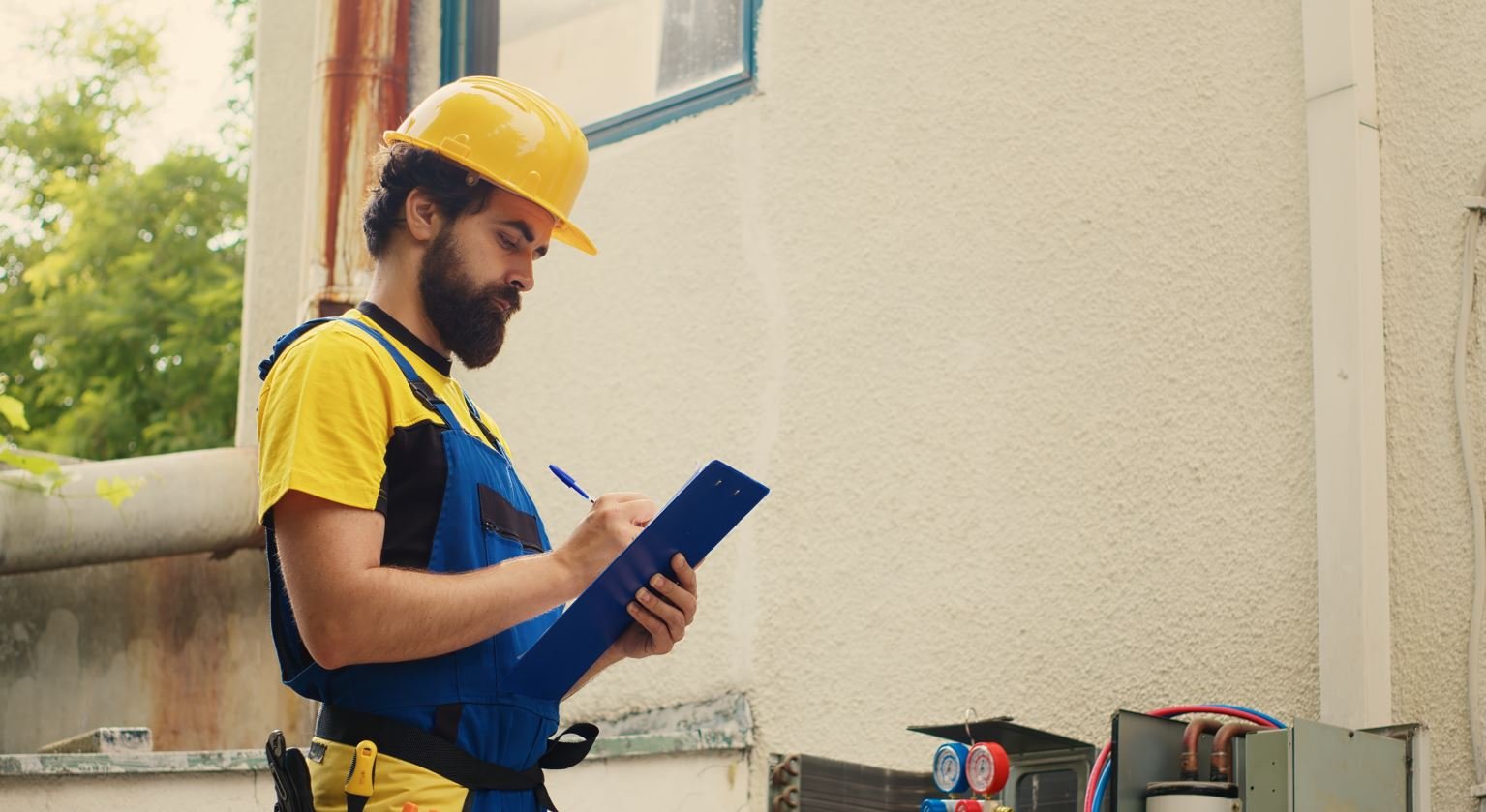
Home inspection cost calculator showing a licensed home inspector examining a residential property exterior

Related Roofing Calculators

A home inspection often reveals roofing issues. Use these calculators to estimate the cost of any roof work your inspection uncovers.

Find Roofing Contractors Near You

If your home inspection revealed roofing concerns, these city guides help you find vetted local roofing contractors with verified reviews and licensing information.

Frequently Asked Questions

How much does a home inspection cost in 2026?

+
The average cost of a home inspection is $344 in 2026, with most homes falling in the $296 to $424 range for a standard inspection. Larger homes, older homes, crawlspaces, and high-cost metro areas push the fee higher. Add-on inspections for radon, sewer scope, mold, or termites are priced separately on top of the base fee.

Who pays for the home inspection — buyer or seller?

+
In most U.S. real estate transactions the buyer pays for the home inspection, because it is performed for the buyer’s benefit. Exceptions include pre-listing inspections ordered and paid for by the seller before putting the home on the market, and negotiated arrangements where a seller agrees to credit the buyer at closing for inspection costs. The fee is usually paid directly to the inspector at the time of the inspection, not through the closing process.

How long does a home inspection take?

+
A standard home inspection takes 2 to 4 hours on-site depending on home size, age, and complexity. A 1,500 sq ft home typically takes 2 to 2.5 hours; a 3,000 sq ft home with a basement and detached garage takes 3.5 to 4+ hours. Add-on inspections like radon testing (passive 48-72 hour monitor) or sewer scope (30-60 minutes) extend the overall process.

What does a standard home inspection cover?

+
A standard home inspection covers all accessible, visible major systems: foundation and structural components, roof (from the exterior and attic), HVAC systems, plumbing, electrical panel and outlets, insulation, windows and doors, walls, ceilings, floors, and exterior drainage. It does not include radon testing, mold testing, sewer scope, termite inspection, pool inspection, chimney inspection, lead paint testing, asbestos sampling, or well water testing — those require separate add-on services.

Is a home inspection worth the cost?

+
Yes, for almost every buyer. A standard inspection costs $300-$500 and typically takes less than 0.5% of the purchase price of a median-priced home. A single significant finding — a roof needing replacement ($8,000-$20,000), a failed HVAC system ($4,000-$12,000), foundation issues ($5,000-$30,000+), or major electrical deficiencies ($3,000-$8,000) — more than justifies the cost by either producing a seller credit or allowing you to walk away before you own the problem.

Do I need radon testing?

+
Radon testing is recommended for virtually all home purchases in the U.S., particularly in EPA Radon Zone 1 states (Iowa, Minnesota, North Dakota, South Dakota, Pennsylvania, Ohio, Kentucky, Montana, Idaho) where elevated radon levels are common. Radon is the second-leading cause of lung cancer in the U.S. Mitigation systems cost $1,200-$2,500 if elevated levels are found, so the $125-$250 test is a strong investment. In lower-risk Zone 3 states it is less critical but still reasonable to test.

Should I get a sewer scope inspection?

+
A sewer scope inspection is strongly recommended for any home built before 1985, any home with large trees near the sewer lateral, and any home in Philadelphia or similar cities where the homeowner is responsible for the full sewer line to the street main. Root intrusion, collapsed clay pipes, and offset joints are common and expensive ($4,000-$15,000 to repair) — the $200-$350 scope cost is a fraction of that. Many inspectors now recommend a sewer scope as standard practice for any home regardless of age.

What is thermal imaging in a home inspection?

+
Thermal imaging (infrared inspection) uses a heat-sensing camera to detect temperature variations in walls, ceilings, and floors that indicate moisture intrusion, missing insulation, electrical overloads, and air leaks. It costs $150-$300 as an add-on and is especially valuable in older homes, homes in wet climates, and any home with a history of water damage. About 65% of inspectors now use digital inspection tools including thermal imaging cameras.

How do I find a good home inspector?

+
Look for inspectors certified by ASHI (American Society of Home Inspectors) or InterNACHI (International Association of Certified Home Inspectors) — both require ongoing education and adherence to standards of practice. Read recent reviews on Google and Yelp, specifically looking for comments about report quality, thoroughness, and communication. Ask to see a sample report before booking. Get quotes from 2-3 inspectors and compare what is included, not just the base price. Avoid inspectors recommended exclusively by your real estate agent, as there is a potential conflict of interest.

Can I attend the home inspection?

+
Yes, and you should. Being present at the inspection allows the inspector to walk you through findings in real time, show you exactly where issues are located, and explain the severity of each problem in plain language. This context is far more useful than reading a written report after the fact. Plan to arrive about halfway through the inspection so the inspector can complete their documentation uninterrupted first, then join for the walkthrough and Q&A portion.

Sources & Data

  • Angi — Home Inspection Cost Guide, 2026 Edition
  • HomeGuide — How Much Does a Home Inspection Cost, 2026
  • American Society of Home Inspectors (ASHI) — Standards of Practice
  • InterNACHI — Home Inspection Standards and Pricing Data, 2026