
Roof Replacement Cost Calculator
Get a detailed, contractor-grade estimate in seconds. Based on 2026 national pricing, local labor markets, and current material costs.
Fill in Steps 1-4 above and click Calculate to see your detailed cost breakdown appear below.
✓ Regional pricing • All add-ons included
Want a Pro to Confirm This Estimate?
Get a free, no-obligation quote from a licensed local roofing contractor before you commit to a budget.
Cost Breakdown by Category
| Line Item | Unit | Rate | Subtotal |
|---|
Pro Tip: Always get 3+ quotes. Bids often vary 20-40% for the same job. Lowest bid is rarely the best value — check licenses, insurance, and warranty terms first.
Ready to Get This Roof Done?
Connect with a vetted local roofing contractor who can turn this estimate into a firm, written quote.
Material Warranty & Lifespan Comparison
| Material | Lifespan | Manufacturer Warranty | Wind Rating | ROI Grade |
|---|---|---|---|---|
| 3-Tab Asphalt | 15-25 yrs | 20-25 yr limited | 60-90 mph | B- |
| Architectural Shingle | 25-40 yrs | 30-50 yr limited | 110-130 mph | A- |
| Luxury Shingle | 30-50 yrs | 50 yr limited | 130+ mph | A |
| Standing Seam Metal | 40-70 yrs | Lifetime (mfr) | 140-160 mph | A+ |
| Metal Ribbed Panel | 30-50 yrs | 30-40 yr | 120-140 mph | A |
| Clay Tile | 50-100 yrs | Lifetime | 150 mph | A+ |
| Concrete Tile | 30-50 yrs | 30-50 yr | 125 mph | A |
| Natural Slate | 75-150 yrs | Lifetime | 110+ mph | A+ |
| Synthetic Slate | 30-50 yrs | 30-50 yr | 110-130 mph | A |
| Cedar Shake | 20-40 yrs | 5-15 yr | 80-100 mph | B |
| TPO / EPDM | 15-30 yrs | 10-20 yr | N/A (flat) | B |
2026 Roof Replacement Cost: What Homeowners Actually Pay
The average roof replacement cost in 2026 runs between $5,500 and $45,000+ for most homes, with the national midpoint landing around $12,000 to $16,000 for a 1,500-2,500 sq ft home with architectural shingles. Costs have risen roughly 8-14% from 2024 levels due to continued labor shortages, material supply chain adjustments, and rising disposal fees in major metros. Understanding what drives that number is the first step to budgeting confidently and avoiding contractor surprises.
Five variables move your final bill more than anything else: roof surface area (always larger than your floor plan), the material you choose, your roof pitch and complexity, the number of existing layers that need tearing off, and your local labor market. Every single input in our calculator maps directly to one of those five drivers.
2026 Quick Reference: A standard 2,000 sq ft home (approximately 2,350 sq ft of actual roof area after pitch factor) with architectural shingles runs $11,000-$19,000 installed by a licensed contractor in most US markets. Metal roofing on the same home runs $21,000-$42,000. Natural slate tops out at $55,000-$90,000.
Roof Replacement Cost by Home Size (2026, Architectural Shingles)
The table below shows the national average installed cost for a full tear-off and replacement using architectural shingles, the most common material choice. Prices assume one existing layer, standard pitch (5-7/12), and national average labor rates. Your region and material choice will shift these numbers up or down significantly.
| Home Footprint | Approx. Roof Area | Roofing Squares | Budget Range | Average Range | Premium Range |
|---|---|---|---|---|---|
| 800 sq ft (small cottage) | 928 sq ft | 9.3 sq | $4,200 | $6,800 | $10,500 |
| 1,000 sq ft | 1,160 sq ft | 11.6 sq | $5,200 | $8,400 | $13,000 |
| 1,200 sq ft | 1,392 sq ft | 13.9 sq | $6,200 | $9,900 | $15,400 |
| 1,500 sq ft | 1,740 sq ft | 17.4 sq | $7,500 | $12,200 | $19,200 |
| 1,800 sq ft (average US home) | 2,088 sq ft | 20.9 sq | $9,000 | $14,500 | $22,800 |
| 2,000 sq ft | 2,320 sq ft | 23.2 sq | $9,900 | $16,100 | $25,400 |
| 2,500 sq ft | 2,900 sq ft | 29.0 sq | $12,400 | $20,100 | $31,800 |
| 3,000 sq ft | 3,480 sq ft | 34.8 sq | $14,800 | $24,100 | $38,200 |
| 3,500 sq ft | 4,060 sq ft | 40.6 sq | $17,200 | $28,000 | $44,500 |
| 4,000+ sq ft (large home) | 4,640+ sq ft | 46.4+ sq | $19,600+ | $32,000+ | $51,000+ |
* Budget = 3-tab shingle, DIY-assisted or lower-cost market. Average = architectural shingle, licensed contractor. Premium = luxury shingle or entry-level metal, premium installer.
How Roofing Costs Are Calculated
Contractors price roofing jobs by the “square” (100 sq ft). Your final bill depends on four main cost drivers: the total roof area, your chosen material, the pitch and complexity of the roof, and local labor rates. Each factor can dramatically shift your estimate.
Roof Area = Home Footprint x Pitch Factor x Complexity Factor x (1 + 10% waste)
Roof Area vs. Home Footprint
Your roof is always larger than your home’s floor plan because of the pitch (slope). A standard 6/12 pitch adds about 12-18% more area. A steep 12/12 pitch nearly doubles the area. Our calculator applies the correct pitch multiplier based on your selection.
| Pitch | Rise/Run | Multiplier | 1,800 sq ft Home Roof Area |
|---|---|---|---|
| Flat / Low-slope | 1-2/12 | 1.03 | 1,854 sq ft |
| Low pitch | 3-4/12 | 1.08 | 1,944 sq ft |
| Standard (most homes) | 5-7/12 | 1.16 | 2,088 sq ft |
| Steep pitch | 8-10/12 | 1.30 | 2,340 sq ft |
| Very steep / cathedral | 11-12+/12 | 1.50 | 2,700 sq ft |
How Does This Roof Replacement Calculator Work?
This calculator uses a contractor-grade estimation model built on 2026 national pricing benchmarks from RSMeans, the NRCA, and aggregated contractor bid data across 200+ US markets. Every input you enter flows through a multi-variable formula that mirrors how professional estimators actually price a job — not a simple square-footage guess.
Here is exactly what happens when you click Calculate:
Step 1: Roof Area Calculation
The calculator starts with your home’s ground-floor footprint, then applies two geometric multipliers. First, the pitch factor converts flat floor area into actual sloped roof surface — a 6/12 pitch roof has about 16% more area than the footprint below it. Second, the complexity multiplier adds area for valleys, hips, and dormers, which require additional material cuts and labor time. Finally, a standard 10% waste factor is added for overlaps, cuts, and starter courses, matching what contractors order in practice.
Example: 2,000 sq ft footprint x 1.16 (6/12 pitch) x 1.12 (moderate complexity) x 1.10 = 2,862 sq ft
Step 2: Material Cost
Each of the 12 material types in the calculator carries its own material cost per square foot, sourced from 2026 supplier pricing. These figures include the primary roofing product, standard synthetic underlayment, nails, drip edge, and accessory flashings. A regional multiplier is then applied — the same shingle that costs $2.40/sq ft in materials in the rural South costs $3.50/sq ft in the San Francisco Bay Area due to freight, local supplier margins, and contractor overhead differences.
Materials with structural complexity (tile, slate) also carry a pitch surcharge in the model because steeper roofs require more staging, safety equipment, and time per square, even for the material phase of the project.
Want a real number, not just an estimate? A licensed local contractor can inspect your roof and give you an itemized, no-obligation quote for free.
Call (877) 505-0936Step 3: Labor Cost
Labor is calculated separately from materials and accounts for 40-60% of total project cost depending on the material. The labor rate per square foot reflects the installation technique, required crew size, and typical time-on-roof for each material type. Standing seam metal, for example, requires a much smaller and more specialized crew than asphalt shingles, pushing its labor rate up even though the crew may be faster per square. The story factor adds a surcharge for second- and third-story work (up to 25% extra) because equipment setup, safety rigging, and material hoisting multiply significantly with height.
Step 4: Tear-off and Decking
Tear-off costs depend on the number of existing layers. Most jurisdictions allow a maximum of two layers of asphalt before a full strip is required. One-layer tear-off averages $1.25/sq ft installed; two layers run $2.10/sq ft; three or more can reach $3.25-$4.50/sq ft because of the added labor and higher disposal tonnage fees. Decking repair cost is calculated as a percentage of total roof area at $2.80/sq ft — the slider in Step 4 lets you estimate how much of your sheathing is likely damaged based on the age and condition of your current roof.
Step 5: Add-ons and Regional Adjustment
Each add-on (skylights, chimney flashing, gutters, ridge vents, ice and water shield, synthetic underlayment upgrade, solar-ready prep, and permits) carries a fixed or area-based cost that is also scaled by the regional multiplier where applicable. The season timing chip applies a modest 5% discount for off-peak winter work or a 5% peak surcharge for summer — reflecting real contractor scheduling dynamics in most US markets.
How Accurate Is This Estimate?
For a standard residential re-roof, this calculator typically lands within 10-18% of actual contractor bids. The biggest sources of variance are site-specific factors that no calculator can see remotely: the exact condition of your decking and fascia boards, your specific contractor’s overhead and margin, local disposal fees that spike in some metros, and any code-upgrade requirements triggered by your permit inspection. Use this estimate as a solid budgeting anchor and a baseline for evaluating contractor quotes — not as a substitute for written bids.
Best practice: Run this calculator with your actual measurements, then get 3 written quotes from licensed contractors. If a bid comes in more than 25% below this estimate, ask the contractor exactly which line items they excluded before accepting it.
Roof Replacement Cost by Material (2026 Prices)
Material prices below reflect 2026 installed costs per square foot of roof area. Each figure includes the primary roofing product, standard underlayment, nails and fasteners, starter strips, and accessory materials. Labor is broken out separately in the table that follows.
| Material | Low | Average | High | Best For |
|---|---|---|---|---|
| 3-Tab Asphalt Shingle | $1.20 | $1.80 | $2.50 | Budget replacement |
| Architectural Shingle | $1.80 | $2.40 | $3.20 | Best value (most popular) |
| Luxury / Designer Shingle | $2.80 | $3.80 | $5.00 | Curb appeal, steep roofs |
| Standing Seam Metal | $5.50 | $8.00 | $12.00 | Long-term, energy savings |
| Ribbed Metal Panel | $3.00 | $4.50 | $6.50 | Barns, commercial, modern homes |
| Clay Tile | $7.00 | $11.00 | $16.00 | Mediterranean, SW climates |
| Concrete Tile | $4.00 | $6.50 | $9.00 | Budget tile alternative |
| Natural Slate | $12.00 | $18.00 | $30.00 | Historic, ultra-premium |
| Synthetic Slate | $4.50 | $7.00 | $10.00 | Slate look, lighter weight |
| Cedar Shake | $4.00 | $6.00 | $8.50 | Rustic/natural aesthetics |
| TPO Membrane | $1.50 | $3.00 | $4.50 | Flat roofs only |
| EPDM Rubber | $1.25 | $2.50 | $4.00 | Flat commercial/residential |
Labor Costs by Material (2026)
Labor typically makes up 40-60% of a roofing project total. Labor rates vary widely by region, contractor experience, and job difficulty. Steep roofs, complex layouts, and second-story work all add to labor time and cost.
| Material | Labor Low | Labor Avg | Labor High | Labor % of Total |
|---|---|---|---|---|
| 3-Tab Asphalt | $1.50 | $2.00 | $2.75 | 45-52% |
| Architectural Shingle | $1.75 | $2.50 | $3.25 | 42-52% |
| Luxury Shingle | $2.00 | $3.00 | $4.00 | 38-48% |
| Standing Seam Metal | $4.00 | $6.00 | $9.00 | 40-50% |
| Clay / Concrete Tile | $5.00 | $7.00 | $10.00 | 38-50% |
| Natural Slate | $10.00 | $14.00 | $20.00 | 45-52% |
| Cedar Shake | $3.50 | $5.00 | $7.00 | 42-50% |
| TPO / EPDM | $2.50 | $4.00 | $6.00 | 48-58% |
Regional Cost Multipliers (2026)
Labor markets vary enormously across the US. The same architectural shingle roof can cost 80-90% more in San Francisco than in rural Mississippi. Major drivers include prevailing wages in the local construction market, contractor density (competition), local permitting costs, disposal fees, and material freight costs. The table below shows the regional adjustment factors our calculator uses, sourced from 2026 RSMeans Geographic Cost Indexes.
| Region / Market | Multiplier | Example: $13,800 National Avg Job | Notes |
|---|---|---|---|
| Rural South | 0.82x | $11,316 | Lowest labor rates in US |
| Rural Midwest | 0.88x | $12,144 | Low cost, limited contractor options |
| Small City South (Birmingham, Tulsa) | 0.95x | $13,110 | Good contractor competition |
| National Average | 1.00x | $13,800 | Benchmark used in all base estimates |
| Mid-size South (Charlotte, Tampa) | 1.05x | $14,490 | Growing markets, rising labor |
| Major Southeast (Atlanta, Nashville) | 1.10x | $15,180 | High demand, limited supply of licensed crews |
| Major Midwest (Chicago, Detroit) | 1.15x | $15,870 | Union labor in some markets |
| Pacific Northwest (Portland, Seattle) | 1.22x | $16,836 | High permits, strong labor market |
| Denver / Mountain West | 1.25x | $17,250 | Altitude surcharges, hail market demand |
| Boston / Washington DC | 1.30x | $17,940 | Dense markets, permit backlog |
| Los Angeles / San Diego | 1.38x | $19,044 | High disposal costs, CARB materials reqs |
| San Francisco Bay Area | 1.45x | $20,010 | Top 3 highest labor market in US |
| New York City Metro | 1.48x | $20,424 | High insurance, disposal, permit costs |
| Hawaii | 1.55x | $21,390 | Material freight adds 20-30% alone |
Roof Replacement Cost: Hidden and Often-Overlooked Fees
The biggest frustration homeowners report after a roofing project is getting a final invoice that is meaningfully higher than the original quote. That gap is almost always explained by line items that were either excluded from the initial bid or discovered once tear-off began. Budget an additional 12-22% beyond your base estimate for the following categories:
- Decking replacement: Rotted or damaged plywood sheathing costs $2.00-$4.00/sq ft to replace. Inspectors find that 10-25% of decking needs replacement on roofs over 20 years old. On a 2,000 sq ft home, that can add $1,800-$6,500 to the final bill depending on how much is affected.
- Tear-off and disposal: $1.00-$4.00/sq ft depending on number of layers and local dump fees. Two-layer tear-off adds $1,500-$4,000 to an average job. Disposal fees in dense urban markets like NYC, Boston, and LA can run 40-60% higher than the national average.
- Flashing replacement: $200-$600 for chimney step and counter flashing; $300-$1,000 for valley and skylight flashings; $150-$400 per pipe boot. Many quotes assume reusing existing flashing, which is often at or near end-of-life on an older roof.
- Permits and inspections: $150-$600 in most jurisdictions, sometimes up to $900 in major metros. Required for code compliance and essential for future insurance claims and resale disclosure. Never let a contractor skip the permit.
- Ice and water shield: $0.25-$0.55/sq ft for full-coverage self-adhering membrane. Required by building code in most cold-climate states for the first 24-36 inches from the eave. Some contractors include only the minimum code requirement and charge extra for full-coverage application.
- Drip edge: $1.00-$2.50 per linear foot of eave and rake. Required by code in most jurisdictions and often required to pass final inspection. Frequently left out of the initial material list.
- Gutter re-attachment: $0.80-$2.00 per linear foot if gutters must be removed and re-hung during the project. Add $3.00-$8.00/linear ft if gutters are being replaced simultaneously — often the right call while crews are already on the ladder.
- Fascia and soffit repairs: $6.00-$18.00/linear ft for rotted fascia board replacement. Roofers commonly uncover fascia damage when removing old drip edge and gutters. Ignoring it leads to faster re-damage of the new roof edge.
- Code-upgrade requirements: In some jurisdictions, a new roofing permit triggers mandatory upgrades to ventilation (ridge vent + soffit ratio), attic insulation R-value, or structural decking thickness. These surprises can add $800-$3,500 to a project in stricter code-enforcement markets.
Worried about surprise charges? A licensed local contractor can walk your roof and give you a straightforward, itemized quote with no hidden fees.
Call (877) 505-0936How to Protect Yourself from Bill Shock
Ask every contractor for an itemized quote, not a single lump-sum number. The quote should list materials by product and quantity, labor rate, tear-off cost, decking replacement allowance (how many sheets are included before extra charges kick in), permit fees, and any site-specific conditions. A contractor who will not provide line-item pricing is a red flag regardless of how low their headline number looks.
Signs You Need a Full Roof Replacement (Not Just Repairs)
One of the most common questions homeowners ask before running a cost estimate is whether they actually need a full replacement or whether targeted repairs will buy more years. The honest answer depends on the age of the roof, the extent of damage, and the material involved. Here are the clearest signals that replacement makes more financial sense than repair:
Age-Based Warning Signs
Asphalt shingles are warrantied for 30-50 years but reach functional end-of-life closer to 20-30 years in most climates, especially in hot southern states where UV and thermal cycling accelerate granule loss. If your roof is within 5-7 years of its expected lifespan, patching individual sections is rarely cost-effective — you are paying repair costs now and full replacement costs soon. Metal, tile, and slate roofs have longer service lives and repair makes more sense at mid-life for localized damage.
Damage-Based Warning Signs
- Widespread granule loss: Asphalt shingles shed granules as they age. A heavy accumulation in gutters or bare, shiny patches visible on the roof surface indicate the shingles have lost their UV protection and are nearing failure.
- Curling or cupping shingles: Shingles that curl at the edges (cupping) or curl upward at the center (clawing) are no longer lying flat and have compromised their waterproofing layer. Widespread curling signals systemic failure, not isolated damage.
- Multiple active leaks: A single leak is a repair. Two or more leaks in different locations on a roof over 15 years old is almost always a sign of systemic waterproofing failure. Each repair extends one area while the rest continues to fail.
- Sagging roof deck: Any visible sag between rafters means moisture has reached the structural decking or framing below. This requires immediate attention and almost always means full tear-off and decking replacement.
- Daylight in the attic: If you can see daylight through your attic roof boards, the underlayment and shingles have failed in multiple locations. By the time light gets through, water has been getting through for longer.
- More than two existing layers: Most building codes prohibit more than two layers of asphalt shingles. If your roof already has two layers, any future replacement legally requires full tear-off regardless of the new material chosen.
Rule of Thumb: If the repair cost exceeds 30-35% of what a new roof would cost, replacement is almost always the smarter financial decision — especially if the existing roof is over 15 years old.
How to Choose a Roofing Contractor (and Avoid Costly Mistakes)
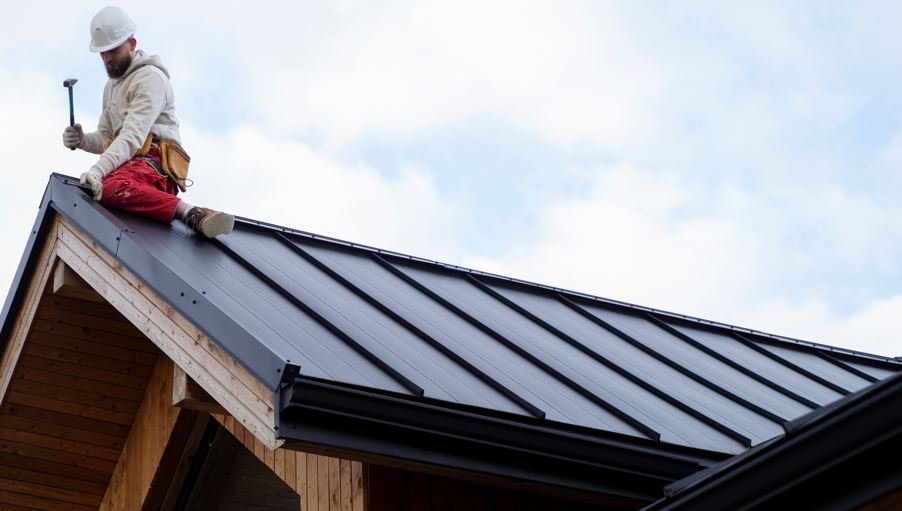
Getting the right contractor matters as much as choosing the right material. A poor installation on premium materials will underperform a quality installation on standard materials every time. The roofing industry has one of the highest rates of contractor fraud of any home improvement trade — storm-chasing crews, unlicensed operators, and lowball bidders who cut corners on underlayment and flashing are common in every market.
Non-Negotiable Contractor Requirements
- State contractor license: Verify the license number directly on your state’s contractor licensing board website — do not rely on a card or copy the contractor hands you.
- General liability insurance (minimum $1M): Ask for a certificate of insurance naming you as an additional insured for the duration of the project. This protects you if a worker is injured on your property or the crew damages a neighbor’s fence, vehicle, or landscaping.
- Workers compensation coverage: Required in most states for crews of 3 or more workers. Without it, an injured worker may have legal standing to sue the homeowner.
- Manufacturer certification: For GAF, Owens Corning, and CertainTeed shingles, certified installers can offer extended system warranties (50-year, lifetime) that uncertified installers cannot. This is a meaningful difference for resale value and long-term coverage.
- Local physical address: Storm chasers typically operate from a PO Box or out-of-state address with a temporary local phone number. A contractor who cannot give you a verifiable local business address should be disqualified.
The 3-Quote Process
Get a minimum of three written, itemized quotes before signing anything. Time each quote request so all three contractors are bidding on the same scope at the same time — this prevents scope-creep in later bids from contractors who learn what competitors offered. Compare quotes line by line, not just by total. A bid that is 20% lower but excludes ice and water shield, uses thinner underlayment, or skips the decking replacement allowance is not actually a lower-cost option once those items are accounted for.
Red Flags to Watch For
Walk away immediately if a contractor: demands more than 10-15% deposit upfront; asks you to sign paperwork to “lock in” pricing before seeing a full written scope; offers a dramatically lower price in exchange for using “leftover materials” from another job; cannot provide a manufacturer product brochure for the specific shingle they plan to install; or pressures you to decide the same day they visit. Legitimate contractors are busy but not so desperate that your same-day signature is required.
Understanding the Roofing Warranty Layers
A complete roofing warranty actually has three distinct layers that most homeowners never think to separate. The manufacturer material warranty covers defective shingles or tiles (typically 25-lifetime depending on product). The workmanship warranty is provided by the contractor and covers installation errors — this ranges from 1 year with budget contractors to 10-25 years with certified premium installers. The system warranty (offered by manufacturers like GAF, Owens Corning, and CertainTeed through their certified installer programs) covers the entire roof assembly as an integrated system and typically runs 25-50 years. Always ask what warranty level your installer qualifies for before signing a contract.
Financing Your Roof Replacement
For most homeowners, a roof replacement is one of the largest unplanned expenses they will face. The average project cost of $13,000-$16,000 sits well above what most emergency funds cover. Here are the most common financing paths ranked by total cost to you:
| Financing Option | Typical Rate | Term | Best For | Watch Out For |
|---|---|---|---|---|
| Cash / savings | 0% | N/A | Lowest total cost | Depletes emergency fund |
| Home equity line (HELOC) | 7-10% (2026) | 10-20 yrs | Large projects, tax-deductible interest | Variable rates can rise |
| Home equity loan | 8-11% (2026) | 5-15 yrs | Fixed payment certainty | Closing costs 2-5% |
| Homeowner insurance claim | Deductible only | N/A | Storm / hail / wind damage | ACV vs. RCV policy terms |
| Personal loan (unsecured) | 10-18% | 3-7 yrs | Fast approval, no equity needed | Higher rates than secured |
| Contractor financing | 0-14.9% promo | 12-60 mo | Convenience, sometimes 0% promo | Rates spike after promo period |
| Credit card | 20-28% (2026) | Revolving | Small jobs only, rewards points | Very high interest if carried |
If your damage was caused by a storm, hail, or wind event within the past 12 months, file an insurance claim before pursuing financing. Even a partial insurance payout significantly changes the math. Most insurers require a professional inspection report from a licensed roofing contractor — not a public adjuster — as part of the claim submission process.
Related Roofing Calculators
Use these companion tools from roofpitch.net to refine your numbers further — from measuring your exact roof area to estimating add-on projects that often get bundled with a re-roof.
Find Roofing Contractors in Your City
Looking for licensed, vetted roofing contractors near you? These city guides rank the top-reviewed roofers in major markets with pricing, service areas, and verified contact information.
FAQs – Roof Replacement Cost Calculator
How much does it cost to replace a 1,500 sq ft roof in 2026?
How much does it cost to replace a 2,000 sq ft roof?
What is the cheapest roofing material to replace a roof?
How long does a roof replacement take?
Does roof replacement increase home value in 2026?
What is a “roofing square” and how many do I need?
How do I know if I need a full replacement vs. repair?
Does homeowners insurance cover roof replacement?
What permits do I need for a roof replacement?
When is the best time of year to replace a roof?
Sources & Data
- National Roofing Contractors Association (NRCA) – 2026 Labor and Cost Benchmarks
- RSMeans Construction Cost Data, Q1 2026 Edition
- Insurance Institute for Business & Home Safety (IBHS) – Roofing Material Wind Resistance Standards