Class 4 is the top impact rating under UL 2218, earned by surviving two strikes from a 2-inch steel ball dropped 20 feet without cracking. Iowa ranks 7th nationally for hail, with May and June carrying most of the annual risk. Where carriers offer it, a Class 4 discount commonly runs 10 to 35 percent on the wind and hail portion of a premium, which is what makes the upfront premium worth modeling rather than guessing at.
“Impact resistant shingles worth it” and “best roofing material for hail” are searches that spike every spring across Central Iowa, right as hail season gets underway.
Des Moines and the surrounding communities, Altoona, Ankeny, Urbandale, and Pleasant Hill among them, see enough significant hail activity most years that material choice genuinely affects how often you’re dealing with storm damage repairs down the road.
Iowa’s Hail Season by the Numbers
The seasonal spike in those searches tracks something real. Iowa recorded 15,266 hail events between 1955 and 2024, which ranks it 7th nationally, and the season is concentrated rather than spread across the year.
- June leads with about 3,800 recorded events
- May follows with about 3,625
- April adds about 2,609
- Activity drops off sharply after July, and October through February sees very little
- The largest Iowa hailstone on record measured 8 inches, in 1958
Those three spring months carry roughly two-thirds of the state’s recorded hail activity. That concentration is exactly why a material decision made in February lands differently than one made under a claim deadline in June.
Why Standard Asphalt Shingles Leave Real Performance on the Table
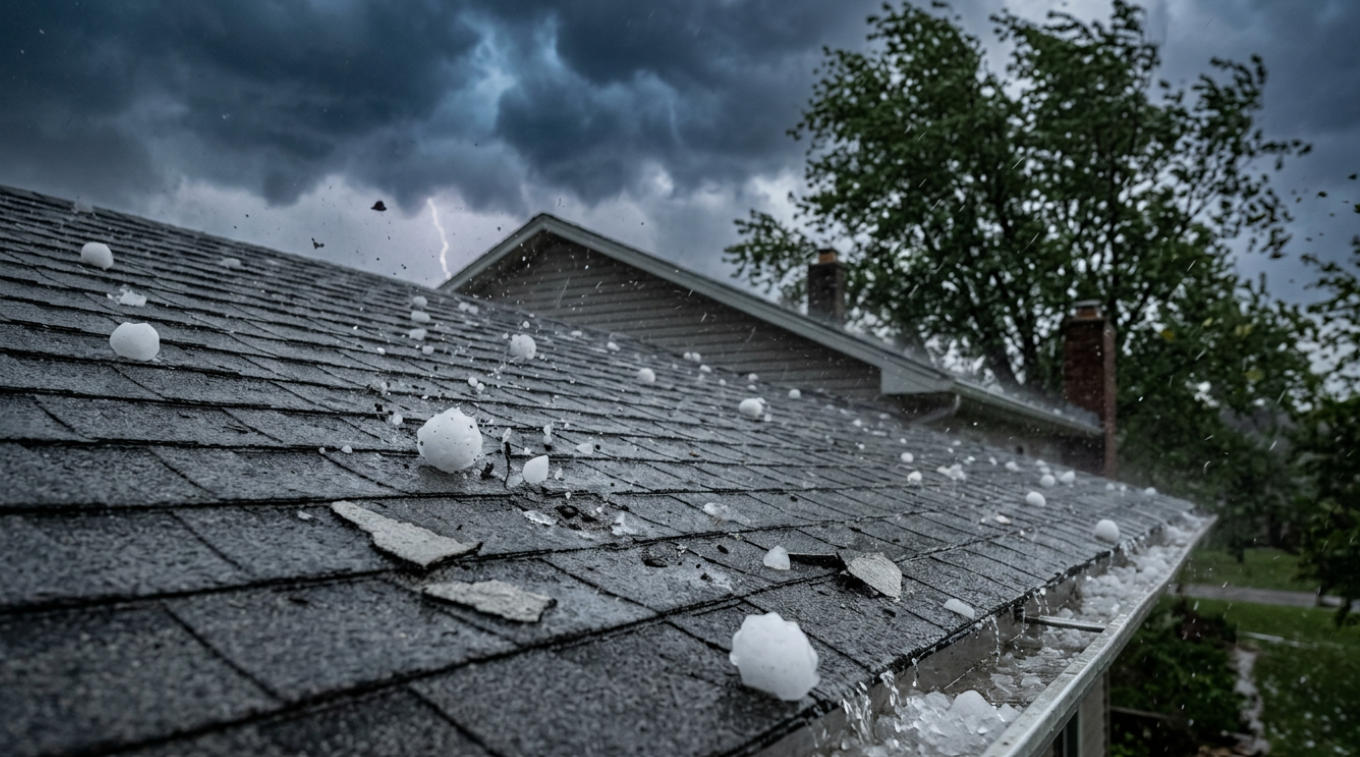
Standard-grade asphalt shingles can bruise, crack, or lose protective granules under a significant hail impact, damage that isn’t always obvious immediately but that shortens the roof’s effective lifespan and can eventually lead to leaks.
For a region that sees hail with real regularity, this is a genuine, recurring vulnerability rather than a rare risk worth ignoring.
What Class 4 Impact-Resistant Shingles Actually Offer
Class 4 is the highest impact-resistance rating available for asphalt shingle products, tested specifically against steel ball impacts simulating hail.
These shingles resist cracking and granule loss considerably better than standard-grade products, and many insurance carriers offer meaningful premium discounts for homes equipped with them, which can offset a real portion of the added upfront cost over time.
The test behind the rating is worth understanding, because it tells you what the label does and does not promise. Under UL 2218, a steel ball roughly 2 inches in diameter is dropped from 20 feet onto the shingle. To earn Class 4, the shingle must not crack or split after being struck twice in the same spot. The standard has four grades, with Class 4 the highest.
What Class 4 does not mean: it is not hail-proof. Very large hail can still bruise or mark a Class 4 roof. Because many policies exclude cosmetic hail damage, the rating protects the roof’s function more reliably than its appearance. Also confirm which standard your insurer accepts, since UL 2218 and FM 4473 are different tests.
The Four Options Side by Side
| Material | Installed cost per sq ft | Typical lifespan | Impact rating |
|---|---|---|---|
| Standard architectural asphalt | $4.50 – $8.00 | 25 – 30 years | Below Class 4 |
| Class 4 impact-resistant asphalt | $8 – $13 | Comparable to premium asphalt | Class 4 |
| Stone-coated steel | $7 – $13 | 40 – 70 years | Class 4 |
| Synthetic slate or shake | $9 – $15 | 40 – 60 years | Class 4 available |
| Standing seam metal | $8 – $14 | 40 – 70 years | Strong, but large hail can dent panels |
The overlap is the useful part. Stone-coated steel, Class 4 asphalt, and standing seam all land in roughly the same installed range, while offering very different service lives. Measure your own roof with the roof square footage calculator to turn those per-square-foot figures into real numbers, and price metal options with the metal roof cost calculator.
How Stone-Coated Steel Performs Against Iowa Hail
Stone-coated steel roofing combines a steel panel base with a granular stone coating, delivering genuine impact resistance along with a long service life and resistance to the UV degradation that affects asphalt over time.
It’s a heavier-duty option that holds up well against repeated hail exposure across multiple seasons, though it carries a higher upfront cost than standard asphalt.
The specifics are strong for a hail market. Stone-coated steel typically runs $7 to $13 per square foot installed, with most homeowners spending around $19,500, and lasts 40 to 70 years. It carries a Class 4 rating, and major manufacturers including DECRA, Boral, and Roser USA offer 50-year limited transferable warranties covering wind to 120 mph and hail up to 2.5 inches.
How Synthetic Roofing Materials Compare
Synthetic roofing products, engineered to mimic the appearance of slate or wood shake while offering considerably better impact resistance and weather durability than either natural material, have become a popular middle-ground option.
They offer a distinctive look along with genuine hail resistance, without the maintenance demands that natural slate or wood shake would require in this climate.
Expect $9 to $15 per square foot installed and a 40 to 60 year service life, with Class 4 versions available. Confirm the rating on the specific product rather than the category, since not every synthetic product carries it.
Why Standing Seam Metal Is Worth Considering for Long-Term Value
Standing seam metal roofing offers strong resistance to hail impact and an exceptionally long service life compared to asphalt alternatives.
The upfront cost is meaningfully higher, but for homeowners planning to stay in a property long-term, the combination of hail resistance and extended lifespan often makes the total cost of ownership genuinely competitive with replacing asphalt shingles multiple times over the same span.
One honest caveat for a hail market: standing seam resists functional failure very well, but large hail can dent the panels. Those dents are usually cosmetic rather than structural, which matters because many policies exclude cosmetic hail damage. If appearance after a severe storm is a priority, stone-coated steel’s textured surface hides impact marks better than a smooth standing seam panel does.
Why Insurance Considerations Should Factor Into Material Choice
Given how routinely this region deals with hail, it’s worth discussing directly with your insurance provider how different material choices affect your premium, both through potential discounts for impact-resistant products and through how claims are typically handled for each material type after a storm.
Where carriers offer an impact-resistant discount, it commonly runs 10 to 35 percent on the wind and hail portion of the premium rather than the whole bill. Discounts vary by carrier and state, and some insurers offer none at all. The Iowa Insurance Division’s own consumer guidance on hail claims suggests considering Class 4 shingles, noting they may qualify for discounts.
| Confirm with your carrier before ordering | Why it matters |
|---|---|
| The exact discount percentage | The range is wide, and it usually applies only to the wind and hail portion |
| Which test standard they accept | UL 2218 and FM 4473 are different tests; carriers may name one |
| What documentation they require | Often a product certificate or contractor letter, submitted after installation |
| Whether cosmetic damage is excluded | Changes what a future claim will and will not pay for |
| Whether the roof is covered at ACV or RCV | Determines whether depreciation comes off your settlement permanently |
| Any separate wind and hail deductible | Hail-specific deductibles are common and often higher than the standard one |
Run the discount against the upgrade cost over the years you expect to own the home. A 25 percent reduction on the wind and hail portion is a meaningful number, but it is a smaller figure than 25 percent of your premium, and the payback math only works if you hold the property long enough.
Why Timing a Replacement Before Hail Season Can Avoid a Rushed Decision
Homeowners who wait until after a hail event to think about material choice often end up making a rushed decision under insurance claim deadlines, sometimes defaulting to whatever matches the existing roof rather than genuinely weighing options.
Planning a material upgrade proactively, before the next hail season, gives you room to actually compare these options without the pressure of an active claim and a compromised roof in the meantime.
Iowa’s calendar makes that concrete. With April, May, and June carrying the bulk of the state’s recorded hail activity, the comparison window runs roughly from late summer through early spring. That is also when contractor schedules are less compressed than in the weeks after a storm.
Why Underlying Installation Details Matter as Much as the Surface Material
Regardless of which material you choose, proper underlayment, including ice-and-water shield in valleys and along eaves, and correct fastening practices matter just as much for long-term performance as the visible roofing material itself.
A premium impact-resistant material installed without attention to these underlying details won’t perform to its full potential.
Iowa adds a second reason to care about the eaves specifically. Asphalt shingle life in this state is commonly limited by ice damming at the eaves rather than by UV exposure, so ice-and-water shield coverage there is doing double duty against both hail-season water intrusion and winter ice backup.
What to Actually Ask When Comparing Material Options
A few questions help you choose based on real trade-offs rather than marketing alone:
- What impact rating does this specific product carry, and how was that tested?
- Does my insurance company offer a discount for this material, and how much?
- What’s the realistic total cost of ownership over 20 to 30 years, not just the upfront installation price?
- What underlayment and installation practices are included as standard with this material?
- Is the Class 4 rating on the exact product line being quoted, or on a different product from the same brand?
- What documentation will I receive to submit to my insurer for the discount?
- How far up the slope does ice-and-water shield run at the eaves?
Getting a Material Recommendation Based on Your Actual Situation
Because the right material depends on your budget, how long you plan to stay in the home, and how much weight you put on insurance savings versus upfront cost, it’s worth discussing these trade-offs directly with an experienced local contractor.
A Des Moines roofing company working with Owens Corning shingles, stone-coated steel, synthetic roofing, and standing seam metal can walk through genuine, side-by-side trade-offs for your specific home rather than defaulting to whichever product is easiest to install.
Frequently Asked Questions
Are impact-resistant shingles worth it in Iowa?
For most Central Iowa homeowners, the case is reasonable. Iowa ranks 7th nationally for hail frequency with 15,266 events recorded since 1955, and where carriers offer an impact-resistant discount it commonly runs 10 to 35 percent on the wind and hail portion of the premium. Whether it pays back depends on your carrier’s actual discount and how long you plan to own the home.
What does Class 4 impact resistance mean?
Class 4 is the highest grade under UL 2218. To earn it, a shingle must not crack or split after a 2-inch steel ball is dropped on the same spot twice from a height of 20 feet. The standard has four grades, and standard architectural shingles typically fall below Class 4.
Are Class 4 shingles hail-proof?
No. They resist cracking and splitting far better than standard shingles, but very large hail can still bruise or mark them. Because many policies exclude cosmetic hail damage, the rating protects the roof’s function more reliably than its appearance.
How much do Class 4 shingles cost compared to standard?
Class 4 asphalt commonly runs about $8 to $13 per square foot installed, against roughly $4.50 to $8.00 for standard architectural shingles. Some Class 4 product lines price closer to standard, so compare line-item quotes rather than assuming a fixed premium.
What is the best roofing material for hail?
It depends on what you are optimizing for. Stone-coated steel offers a Class 4 rating with a 40 to 70 year life at $7 to $13 per square foot. Class 4 asphalt is the familiar option at a similar price. Synthetic slate or shake runs $9 to $15 with Class 4 versions available. Standing seam metal resists functional failure well but can dent cosmetically in large hail.
How much of an insurance discount do impact-resistant shingles get?
Commonly 10 to 35 percent, applied to the wind and hail portion of the premium rather than the whole bill. Discounts vary by carrier and state and some insurers offer none, so confirm the exact figure, the accepted test standard, and the required documentation before buying.
When is hail season in Iowa?
Spring and early summer. June leads with about 3,800 recorded events statewide, May follows with about 3,625, and April adds about 2,609. Activity drops sharply after July, which means roughly two-thirds of Iowa’s recorded hail falls in those three months.
Does standing seam metal dent in hail?
It can. Standing seam resists functional failure and leaking very well, but large hail can dent the smooth panels. Those dents are typically cosmetic rather than structural. Stone-coated steel’s textured surface hides impact marks better if post-storm appearance matters to you.
How long does stone-coated steel last?
Typically 40 to 70 years. Major manufacturers including DECRA, Boral, and Roser USA offer 50-year limited transferable warranties covering wind up to 120 mph and hail up to 2.5 inches.
Should I pick my roofing material before or after a hail storm?
Before. Homeowners deciding under an active claim deadline often default to matching the existing roof rather than weighing options. With Iowa’s hail concentrated in April through June, the comparison window runs roughly from late summer through early spring, when contractor schedules are also less compressed.
Does the underlayment matter if I buy a premium roof?
Yes. Proper underlayment, including ice-and-water shield in valleys and along the eaves, plus correct fastening, determines whether a premium material performs to its potential. In Iowa this matters twice over, since asphalt shingle life here is often limited by ice damming at the eaves rather than by UV exposure.
Free Roofing Calculators
Sources
- The Roofing Brief, Impact-Resistant vs Standard Shingles 2026 (UL 2218 test method, class grades, discount ranges, Class 4 and standard asphalt pricing, cosmetic damage caveat)
- MapScaping, Iowa Hailstorms Map, 15,266 events 1955 to 2024 (event totals, national ranking, peak months, record hailstone)
- Iowa Insurance Division, Consumer Connection: Hail Claims (claim guidance, Class 4 discount note)
- HomeGuide, Stone-Coated Steel Roofing Cost 2026 (cost per square foot, lifespan, Class 4 rating, manufacturer warranty terms)
- Shingles Calculator, Roofing Materials Comparison Guide 2026 (cost and lifespan ranges for architectural asphalt, synthetic, and standing seam)
Disclaimer: Costs, ratings, lifespans, and discount ranges in this guide are 2026 estimates compiled from published contractor, manufacturer, and public data sources for planning purposes only. Insurance discounts, accepted test standards, cosmetic damage exclusions, and deductible structures vary by carrier and policy. Confirm discount eligibility with your own insurer and get written quotes from licensed, insured Iowa roofing contractors.