Membrane Roof vs Shingles:
In the membrane roof vs shingles decision, slope decides the winner. Below a 2:12 pitch, building code bans asphalt shingles and a membrane is the only legal option. Above 4:12, shingles cost less and look better. Membranes run $4.20 to $14.65 per square foot installed in 2026. Shingles run $3.43 to $8.
Most roofing comparisons treat this as a preference question. It is not. The International Residential Code sets a hard floor for each system, and your roof pitch usually eliminates one option before price ever enters the conversation.
This guide breaks down the real 2026 numbers: installed cost per square foot, service life by membrane type, energy performance, hail and wind behavior, insurance treatment, and how the answer shifts across US climate regions from the Gulf Coast to the Upper Midwest.
Not sure which system your roof can legally take? Measure your pitch first, then price both options.
Use the Free Roof Replacement Cost CalculatorTable of Contents
- Membrane vs Shingles at a Glance
- What Is a Membrane Roof?
- What Are Asphalt Shingles?
- Roof Slope Decides the Winner
- 2026 Cost Comparison
- Lifespan and Durability
- Energy Performance and Cool Roof Codes
- Hail, Wind, Snow and UV
- How the Answer Changes by US State
- Insurance and Permits
- Maintenance and Repair
- Which Should You Choose?
- Frequently Asked Questions
- Sources
Membrane Roof vs Shingles at a Glance
Here is the side by side summary before we get into the detail. Every figure below is sourced and expanded on later in this guide.
| Factor | Membrane Roof (TPO, EPDM, PVC) | Asphalt Shingles |
|---|---|---|
| Minimum code slope | 1/4:12 (about 2 percent) | 2:12, with double underlayment to 4:12 |
| Installed cost per sq ft (2026) | $4.20 to $14.65 | $3.43 to $8.00 |
| Typical service life | 15 to 35 years by type | 15 to 30 years by grade |
| How it sheds water | Continuous waterproof sheet | Overlapping layers, gravity dependent |
| Standing water tolerance | High (PVC and TPO strongest) | None |
| Seams | Heat welded (TPO, PVC) or taped (EPDM) | No seams, but thousands of nail penetrations |
| Solar reflectance | White membranes exceed 0.63 aged | Standard dark shingles near 0.05 to 0.15 |
| Hail rating available | FM 4473 rated systems | UL 2218 Class 1 to Class 4 |
| Repair difficulty | Specialist required, seam welding tools | Any roofer, materials at any supply house |
| Best use case | Flat and low-slope roofs, additions, porches | Pitched main roofs, 4:12 and steeper |
What Is a Membrane Roof?
A membrane roof is a single-ply waterproof sheet, typically 45 to 90 mils thick, rolled out over insulation or a cover board and sealed at the seams. It does not shed water by gravity. It blocks water by being continuous.
Three chemistries dominate the US market. They perform differently enough that lumping them together as “flat roofing” hides most of the decision.
TPO (Thermoplastic Polyolefin)
TPO is a blend of polypropylene and ethylene-propylene rubber. It became the most installed commercial roofing membrane in North America over the last decade, largely because of its white reflective surface. Seams are heat welded, which produces a bond stronger than the sheet itself.
TPO roofing costs $4 to $10 per square foot installed, or $1.00 to $2.50 per square foot for materials only. The caution is formulation consistency: TPO is a newer chemistry than EPDM, and quality varies between manufacturers.
EPDM (Ethylene Propylene Diene Monomer)
EPDM is vulcanized synthetic rubber, usually black, and the oldest of the three. In 2026, EPDM roofing costs typically range from $4.20 to $14.25 per square foot installed, from a 45-mil ballasted system over an existing roof up to a fully adhered 90-mil system with R-30 insulation.
Its track record is the strongest argument. In the EPDM Roofing Association 2025 survey of 569 roofing professionals, respondents reported expected service lives from about 25 years to more than 40 years depending on membrane thickness and attachment method, with many reporting EPDM roofs still performing at 40, 45 and even 50 years.
The weak point is seams. Because EPDM is glued rather than heat welded, its seams may break down sooner than TPO and PVC.
PVC (Polyvinyl Chloride)
PVC is the premium thermoplastic option. It is heat weldable and holds up to grease, chemicals and restaurant exhaust better than TPO or EPDM. In 2026, PVC roofing ranges from about $5.15 per square foot for a 50-mil mechanically attached membrane installed over an existing roof to around $14.65 per square foot for a fully adhered 80-mil system with roughly five and a half inches of insulation to meet R-30 code requirements.
If you are weighing the two thermoplastics specifically, our TPO vs PVC roofing comparison goes deeper on seam performance and chemical exposure.
What Are Asphalt Shingles?
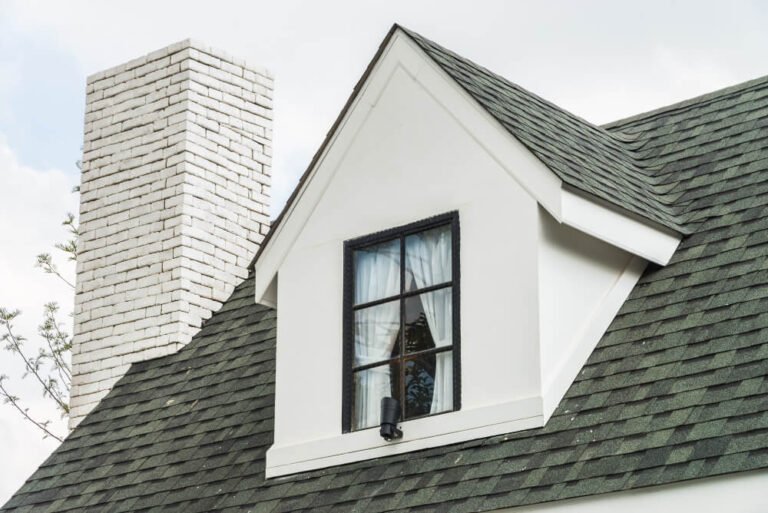
Asphalt shingles are fiberglass mat coated in asphalt and surfaced with ceramic granules. They work by overlap, not by seal. Water runs down each course and off the eave. Remove the slope and the system fails.
Three grades cover almost the entire residential market.
| Shingle Grade | 2026 Installed Cost | Wind Rating | Typical Life |
|---|---|---|---|
| 3-tab | $3.43 to $5.00 per sq ft | Up to 60 mph | 15 to 20 years |
| Architectural (dimensional) | $4.00 to $8.50 per sq ft | 110 to 130 mph | 25 to 30 years |
| Luxury / designer | $7.00 to $16.00 per sq ft | 130 mph plus | Up to 50 years |
Standard 3-tab shingles are rated to withstand up to 60 mph winds, while architectural shingles can withstand up to 130 mph. That gap is why 3-tab has effectively disappeared from new installs in coastal and hail-belt states.
Roof Slope Decides the Winner
This is the single most important section of the comparison, and most homeowners skip it.
The Shingle Cutoff: 2:12
Under IRC Section R905.2.2, asphalt shingles shall be used only on roof slopes of 2 units vertical in 12 units horizontal or greater. For slopes from 2:12 up to 4:12, double underlayment application is required.
Below 2:12, asphalt shingles are not permitted under any circumstances because water does not drain fast enough to prevent backflow under the shingle tabs.
The Membrane Cutoff: 1/4:12
Per IRC Section R905.13.1, thermoplastic single-ply membrane roofs must have a design roof slope of 1/4:12 or greater, which is a 2 percent slope. That means membranes cover essentially every roof shingles can cover, plus the entire flat and near-flat range shingles cannot.
Practical takeaway: If your roof is under 2:12, this is not a comparison. Membrane is the only compliant option. Measure your pitch with the free roof pitch calculator before requesting quotes.
Manufacturer Warranties Are Stricter Than Code
Shingle manufacturers add their own conditions on top of the IRC. GAF requires a minimum slope of 2/12, and for slopes between 2/12 and 4/12 mandates either two layers of underlayment or a peel-and-stick ice and water barrier over the entire roof. Owens Corning uses the same 2/12 minimum. CertainTeed requires two-ply underlayment for slopes below 4/12.
2026 Cost Comparison
Membrane pricing swings far wider than shingle pricing because insulation, attachment method and tear-off versus recover change the total dramatically. Shingle pricing is comparatively tight.
Total Project Cost by Roof Size
| Roof Area | Architectural Shingles | TPO Membrane | EPDM Membrane | PVC Membrane |
|---|---|---|---|---|
| 800 sq ft (addition or porch) | $3,200 to $6,800 | $3,200 to $8,000 | $3,400 to $11,400 | $4,100 to $11,700 |
| 1,500 sq ft | $6,000 to $12,750 | $6,000 to $15,000 | $6,300 to $21,400 | $7,700 to $22,000 |
| 1,700 sq ft (US average) | $6,800 to $14,450 | $6,800 to $17,000 | $7,100 to $24,200 | $8,800 to $24,900 |
| 2,500 sq ft | $10,000 to $21,250 | $10,000 to $25,000 | $10,500 to $35,600 | $12,900 to $36,600 |
For an average 1,700-square-foot roof, the national average cost of an asphalt shingle roof lands around $10,000 in 2026.
Where the Money Actually Goes
- Labor dominates both systems. Labor typically accounts for 60 percent of total shingle cost, with 2026 residential roofing labor rates averaging around $78 per hour.
- Tear-off is a separate line item. Tear-off and disposal typically cost between $1.00 and $4.00 per square foot, including stripping labor, dumpster rental and landfill tipping fees.
- Membrane insulation is not optional. On low-slope roofs, above-deck insulation is part of the assembly and often the largest material cost.
- Recover saves the most on membrane. Installing a new roof system over an existing roof does not normally require adding new insulation and can produce a very large reduction in material and labor costs, but it is only an option if there is just one existing roof in place.
Lifespan and Durability
Headline warranty numbers mislead on both sides. Here is what field data supports.
| System | Realistic Service Life | Primary Failure Mode | Extends Life |
|---|---|---|---|
| EPDM | 25 to 35 years, 40 plus documented | Seam adhesive breakdown | Fully adhered, thicker mil, flashing detail |
| PVC | 20 to 30 years | Plasticizer loss, embrittlement | 80-mil membrane, quality formulation |
| TPO | 15 to 25 years, 30 fully adhered | Weathering and seam separation | Reputable manufacturer, thicker mil |
| Architectural shingles | 25 to 30 years | Granule loss, thermal cracking, wind lift | Adequate attic ventilation, 6-nail pattern |
| 3-tab shingles | 15 to 20 years | Tab lift, granule loss | Rarely worth the upgrade cost gap |
Typical membrane lifespans run about 15 to 25 years for TPO, 20 to 30 years for PVC, and 15 to 25 years for EPDM under conservative estimates, with low-slope assemblies succeeding or failing on detailing and drainage.
The variable most people underestimate is climate. Asphalt shingles and EPDM rubber roofs should both be expected to last on the low end of their predicted range in a place like El Paso, Texas, because asphalt in general and semi-cured EPDM flashings are highly vulnerable to sunlight.
Energy Performance and Cool Roof Codes
This is where membranes take a decisive lead, and where several states now force the issue by code.
The Cool Roof Rating Council certifies reflective membranes as reducing rooftop surface temperatures by 50 to 60 degrees Fahrenheit versus black membranes. In hot climates this translates directly into lower cooling costs, and a typical Sun Belt installation can save $300 to $600 annually in HVAC costs.
California Title 24 in 2026
The 2025 Building Energy Efficiency Standards, Title 24 Part 6, took effect January 1, 2026, and set requirements for thermal emittance, three-year aged reflectance and Solar Reflectance Index.
Low-slope roofs in the affected zones require three-year aged solar reflectance of at least 0.63 and thermal emittance of at least 0.75, or an SRI of at least 75. Steep-slope roofs above 2:12 in climate zones 10 through 15 require aged reflectance of at least 0.20 and emittance of at least 0.75.
The practical consequence is that most low-slope projects in California now use white single-ply membrane, since white single-ply from Carlisle SynTec, GAF EverGuard and Firestone UltraPly all exceed the 0.63 threshold easily, while older gravel-surfaced built-up and dark modified bitumen systems do not.
Shingles can comply on steep slopes, but only in specific product lines. Cool-rated asphalt shingle options include GAF Timberline Cool Series, Owens Corning Duration Cool Plus and CertainTeed Landmark Solaris, with a typical premium of $0.75 to $2.00 per square foot over standard dark shingle in climate zones 10 through 14.
Hail, Wind, Snow and UV
Hail
Shingles have a clearer consumer rating system. Roofing materials tested for impact resistance are classified Class 1 through Class 4, with a Class 4 roof covering receiving the highest premium credit. Membranes are rated under FM 4473 instead, which is a commercial specification most homeowners never see quoted.
Impact-rated roof systems meeting FM 4473 SH or UL 2218 Class 4 are increasingly required by insurers in hail-prone areas north of Interstate 10.
Wind
Membranes fail at the perimeter and corners, not in the field. Wind uplift design accounts for basic wind speed, building height and exposure category, roof shape and slope, and the specific roof zone, with corners experiencing the highest uplift forces, followed by perimeters, and the field area experiencing the lowest.
Shingles fail tab by tab, which is more forgiving. A partially damaged shingle roof still sheds water. A membrane with a lifted edge can take on water across the whole deck.
Snow and Freeze-Thaw
EPDM is the standout in cold climates because it stays flexible through deep temperature swings. Shingles on low-slope sections are the classic ice dam failure point, which is exactly why northern codes mandate ice and water barrier.
UV
Black EPDM and dark shingles both age fastest under intense sun. White TPO and PVC age slowest. In Texas and Louisiana heat, a white TPO membrane reflects UV rather than absorbing it.
How the Answer Changes by US State
Building code, insurance regulation and climate all shift the membrane roof vs shingles balance regionally. The IRC baseline applies almost everywhere, but state amendments layer on top.
| Region | Representative States | Dominant Factor | Practical Recommendation |
|---|---|---|---|
| Gulf Coast and Southeast | FL, LA, TX coast, MS, AL | Hurricane wind uplift, product approval | Shingles on pitched, NOA-approved PVC or TPO on flat |
| Hail Belt | TX, OK, KS, NE, CO, WY, SD | Hail claim frequency, insurance credits | Class 4 architectural shingles on pitched roofs |
| Desert Southwest | AZ, NV, NM, west TX | Extreme UV, flat roof prevalence | White TPO or PVC, avoid black EPDM |
| California | CA | Title 24 cool roof mandates | White single-ply on low slope, cool-rated shingle on steep |
| Pacific Northwest | WA, OR, northern CA | Persistent rain, moss growth | Architectural shingles with algae resistance |
| Upper Midwest and Northeast | MN, WI, MI, NY, MA, ME | Freeze-thaw, ice damming, snow load | EPDM on flat sections, shingles with full ice barrier |
| Mid-Atlantic and Ohio Valley | PA, OH, IN, VA, MD | Mixed climate, row-house flat roofs | EPDM on rowhouse decks, architectural shingles elsewhere |
| Mountain West | UT, ID, MT, CO | UV plus heavy snow load | Fully adhered EPDM, Class 4 shingles on pitched |
Florida: Product Approval Governs Everything
The Florida Building Code 8th Edition sets design wind speeds of 175 mph in Miami-Dade and 170 mph in Broward for Risk Category II construction. In the High-Velocity Hurricane Zone, asphalt shingles require six nails per shingle minimum regardless of slope or shingle type, and self-adhered underlayment is required across the entire roof deck.
All exterior building components in the HVHZ must carry a valid Miami-Dade County Notice of Acceptance and pass large missile impact resistance, cyclic pressure testing and water resistance after impact. HVHZ-compliant products typically carry a 30 to 60 percent cost premium over standard zone products.
Texas: The Class 4 Economics
Texas was the first state, in 1998, to require insurance companies to offer discounts for hail-resistant roofing, with Class 4 materials in the highest hail-frequency areas qualifying for as much as 35 percent annually.
Texas also has the largest concentration of commercial roofing contractors, which keeps labor costs roughly 5 to 10 percent below the national average, and cool roof compliance is mandatory in many Texas municipalities, favoring white TPO and PVC systems.
Colorado and the Northern Hail Belt
State Farm offers impact-resistant roofing discounts across a long list of states including Colorado, Kansas, Nebraska, Oklahoma, Texas, Missouri, Minnesota, Iowa and the Dakotas. Because membranes on residential roofs rarely carry a consumer-facing hail class, the insurance math in these states usually favors shingles wherever slope allows them.
Insurance and Permits
What carriers actually look at:
- Roof age. Many carriers move to actual cash value settlement on roofs over 15 to 20 years, regardless of material.
- Impact class documentation. The UL 2218 certification sheet from your contractor is what activates the discount, not the invoice.
- Product approval numbers. In Florida, an FBC Product Approval or Miami-Dade NOA is required for every component, including membrane, fasteners and edge metal.
- Ponding water. Some carriers exclude or surcharge flat roofs with documented drainage problems.
Both systems require a permit in nearly every jurisdiction for a full replacement. Membrane work on commercial or multifamily buildings often adds an energy code compliance document that shingle re-roofs on steep slopes avoid.
Maintenance and Repair
| Task | Membrane Roof | Shingle Roof |
|---|---|---|
| Inspection frequency | Twice yearly plus after storms | Annually plus after storms |
| Common repair | Seam re-weld, puncture patch | Replace blown or cracked shingles |
| Who can repair it | Membrane specialist with welding gear | Most general roofers |
| Emergency patch | Manufacturer-matched material needed | Bundle from any supply house |
| Life extension option | Reflective coating over sound membrane | None meaningful |
Membrane failure points concentrate at penetrations. PVC roofing usually needs attention around flashings, edges and spots where vents and HVAC units penetrate, since those areas show wear first, while EPDM roofs usually fail at the seams as adhesives break down over time.
Which Should You Choose?
Choose a Membrane If
- Your roof pitch is below 2:12. Code leaves you no alternative.
- You have a flat addition, porch roof, dormer deck or rowhouse roof.
- You are in a hot climate and want the cooling load reduction that white single-ply delivers.
- Your roof carries HVAC equipment or sees regular foot traffic.
- You need to meet a low-slope cool roof prescriptive requirement.
Choose Shingles If
- Your pitch is 4:12 or steeper and appearance matters.
- You are in a hail-active state and want the Class 4 insurance credit.
- You want the widest contractor pool and simplest future repairs.
- Budget is the binding constraint on a standard pitched roof.
- You plan to sell within a few years and want conventional curb appeal.
Many homes need both. A pitched main roof in architectural shingles with an EPDM or TPO section over the flat rear addition is extremely common and entirely correct. Do not force one material across two different slope conditions.
Before you commit either way, get accurate numbers. Measure your roof area with the roof square footage calculator, then compare against a third option using the metal roof cost calculator.
Frequently Asked Questions
Can I put shingles on a flat roof?
No. IRC R905.2.2 prohibits asphalt shingles below a 2:12 slope, and no manufacturer will warranty them there. Installing shingles on a flat roof will fail inspection, void the material warranty and typically leak within the first heavy rain season.
Is a membrane roof more expensive than shingles?
Usually yes, but the overlap is larger than people expect. A basic ballasted EPDM recover can start near $4.20 per square foot, which competes with mid-grade architectural shingles. A fully adhered PVC system with R-30 insulation runs to $14.65 per square foot, which is well above almost any shingle option.
Which lasts longer, a membrane roof or shingles?
EPDM has the strongest longevity record of the group, with documented service beyond 40 years in some installations. Architectural shingles realistically deliver 25 to 30 years. TPO is the shortest at 15 to 25 years. Installation quality and drainage matter more than the material label in every case.
Can a membrane roof be installed over existing shingles?
Not directly. Shingle granules would puncture the membrane. A cover board or separation layer is required, and most codes limit total roof layers. On low-slope sections the shingles almost always come off first, since they were non-compliant to begin with.
Do membrane roofs qualify for hail insurance discounts?
Rarely on residential policies. Consumer hail credits are built around the UL 2218 Class 1 to Class 4 system, which is applied to shingles, tiles, shakes and metal panels. Membranes are typically rated under FM 4473, a commercial standard most homeowner carriers do not price against. Confirm with your specific carrier before assuming either way.
Which membrane is best for a hot climate?
White TPO or PVC. Reflective membranes cut rooftop surface temperature by 50 to 60 degrees Fahrenheit compared with black surfaces. Black EPDM is the weakest choice in high-UV desert and Sun Belt conditions, though white EPDM is available.
What slope do I need for a membrane roof?
A minimum design slope of 1/4 inch per foot, which is roughly 2 percent, under IRC R905.13.1 for thermoplastic single-ply. That is deliberately shallow, but it is not zero. Dead-flat decks with no drainage design will pond, and ponding shortens every membrane type’s service life.
Does a membrane roof hurt resale value?
Not when it is on the section of roof that requires it. Buyers and inspectors expect membrane on flat additions and porch roofs. Where it hurts is when a membrane is visible from the street on what should be a pitched architectural roofline, which reads as a repair rather than a design choice.
How do I know my roof pitch before getting quotes?
Measure the vertical rise over 12 inches of horizontal run using a level and tape measure, or run the numbers through a pitch calculator. Knowing whether you are above or below 2:12 tells you immediately whether this is a real choice or a code-mandated one.
Is TPO or EPDM better for a residential flat roof?
It depends on climate. EPDM has the longer proven track record and better cold-weather flexibility, making it strong in the Midwest and Northeast. TPO’s white reflective surface and heat-welded seams make it the better pick in hot southern climates where cooling load and seam strength matter more than freeze-thaw performance.
Free Roofing Calculators
Roof Pitch Calculator
Find your exact pitch and slope multiplier before choosing a roofing system.
Open CalculatorRoof Square Footage Calculator
Convert house footprint into true roof area for accurate material estimates.
Open CalculatorMetal Roof Cost Calculator
Price a third option and compare lifetime cost against membrane and shingles.
Open CalculatorSources
- International Code Council, 2021 and 2024 International Residential Code, Sections R905.2.2 and R905.13.1 (slope requirements for asphalt shingles and thermoplastic single-ply membrane).
- Roof Observations, EPDM Rubber Roof Cost Guide 2026 Update and PVC Membrane Roof Cost Guide 2026 Update.
- Roof Observations, Asphalt Shingle Roof Cost Guide 2026 Update.
- HomeGuide, Rubber Roof Cost and Asphalt Shingle Roof Cost data.
- EPDM Roofing Association, 2025 survey of 569 roofing professionals on service life.
- Cool Roof Rating Council, California Title 24 resource page, 2025 Building Energy Efficiency Standards effective January 1, 2026.
- California Energy Commission, Title 24 Part 6 Sections 150.1 and 150.2.
- Texas Department of Insurance, Products Qualifying for Impact-Resistant Roofing Credits.
- Florida Building Code, Building, 8th Edition, Chapters 15 and 16, and Miami-Dade County Notice of Acceptance program.
- Underwriters Laboratories, UL 2218 Impact Resistance of Prepared Roof Covering Materials.
Cost figures in this guide are national ranges compiled from 2026 contractor and cost-database sources and are intended for planning purposes only. Actual pricing varies with roof complexity, access, deck condition, local labor rates and material availability. Building code requirements are summarized from model code language and may be amended by your state, county or municipality. Always confirm current requirements with your local building department and obtain written quotes from licensed roofing contractors before making a decision.