The median Rochester Hills home was built in 1984, and about 44 percent of the city’s housing went up between 1980 and 1999. Those roofs are hitting the end of a 20 to 30 year service life at roughly the same time. Before ordering shingles, four things deserve attention: algae resistance on shaded slopes, attic insulation and ventilation, deck condition at tear-off, and your HOA’s architectural guidelines.
If you own a home in one of Rochester Hills’s established subdivisions built during the 1980s or 90s boom, your roof may be approaching, or already past, the point where replacement is genuinely on the table.
Searches like “how long does a roof last in Michigan” and “why is my roof covered in black streaks” both point to the same underlying issue: a roof from this era reaching the natural end of its service life under conditions specific to this part of Oakland County.
Why So Many Rochester Hills Roofs Are Hitting This Point at Once
Subdivisions built throughout the 1980s and 90s across Rochester Hills, Oakland Township, and the areas around the Paint Creek and Clinton River corridors used asphalt shingle products with a typical service life in the 20 to 30-year range.
That means a huge share of the area’s housing stock is reaching replacement age within a similar window, which is part of why this exact question shows up so often in local homeowner groups and searches right now.
Census-based housing data puts numbers behind the pattern. The median Rochester Hills home was built in 1984. Roughly 26.9 percent of the city’s housing went up between 1980 and 1989, and another 16.8 percent between 1990 and 1999, so about 44 percent of local homes were built inside that twenty-year stretch. Add the 21.1 percent built in the 1970s and close to two-thirds of the city predates 2000.
Why Wooded, North-Facing Lots Add a Specific Complication
A lot of Rochester Hills subdivisions back up to mature tree cover, near Bloomer Park, the Paint Creek Trail corridor, or the wooded lots common around Oakland University and Oakland Township.
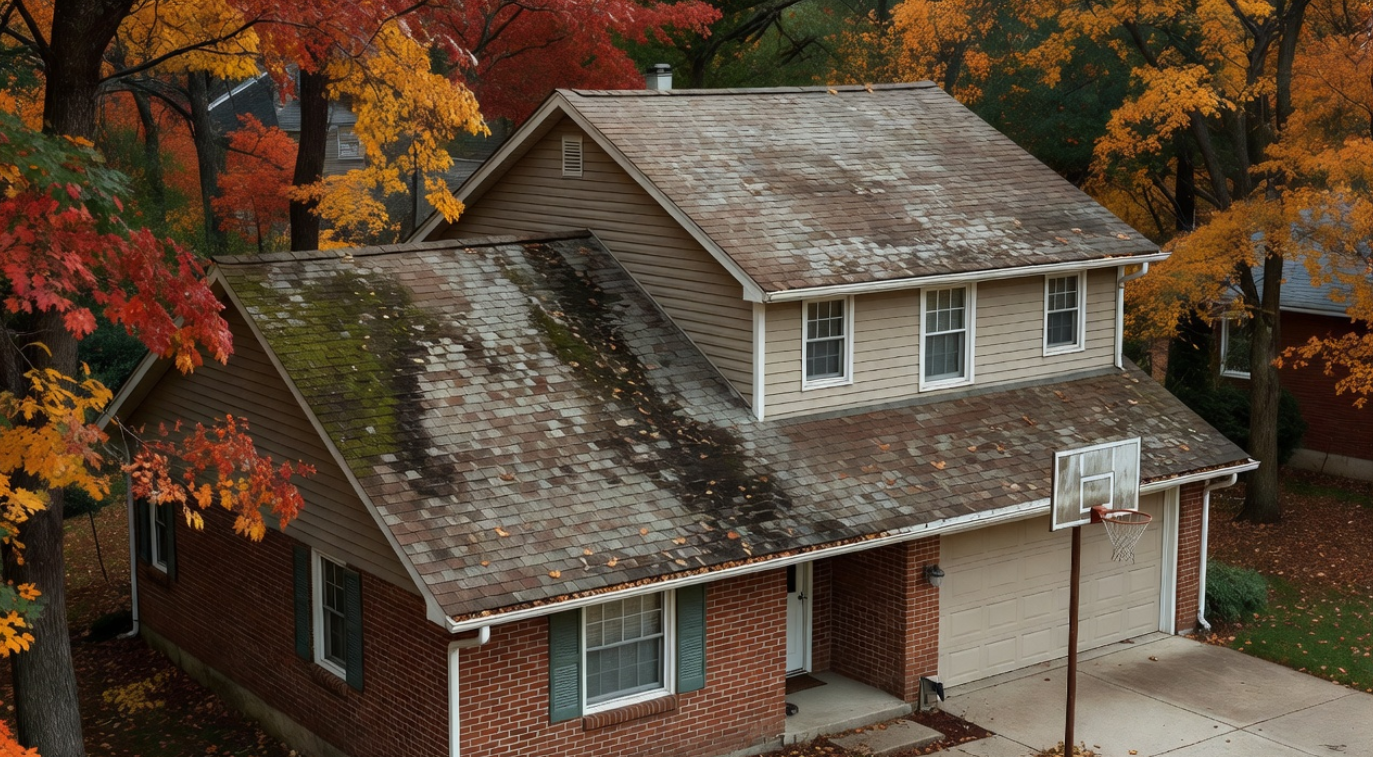
On north-facing slopes that stay shaded for much of the day, algae and moss growth is a genuine, recurring problem, showing up as the dark streaking homeowners often first notice, or in more advanced cases, moss that actually holds moisture against the shingle surface and accelerates granule loss.
Rochester Hills roofers who work this specific market regularly see this pattern concentrated on exactly these kinds of lots, which is why algae-resistant shingle products have become a standard recommendation here rather than an optional upgrade.
What the Black Streaks Actually Are, and What AR Shingles Do About It
The dark streaking is not dirt, mildew, or deteriorating asphalt. It is a cyanobacterium called Gloeocapsa magma, sometimes loosely described as blue-green algae. It needs moisture to colonize, which is exactly why it concentrates on the slopes that stay damp longest between rains.
Algae-resistant shingles work by mixing copper, or in some formulations zinc, into the surface granules. Rain gradually washes copper ions across the shingle surface, and those ions disrupt the organism’s ability to establish. One consequence is worth knowing before you buy: because the protection depends on copper slowly washing away, it weakens as the roof ages rather than lasting forever.
| Manufacturer program | Stain warranty term |
|---|---|
| GAF StainGuard Plus (Timberline HDZ) | 25-year limited |
| GAF StainGuard Plus PRO (Timberline UHDZ) | 30-year limited |
| CertainTeed StreakFighter (Landmark) | 25-year |
| Owens Corning StreakGuard | Confirm the current term with the manufacturer |
Two practical notes. Algae resistance is usually limited to mid-tier and premium product lines, so confirm that the specific shingle quoted actually includes it rather than assuming the brand covers it across the board. And the stain warranty is separate from the material and workmanship warranties, with its own term and its own conditions.
Why Ice Dams Are a Recurring, Underappreciated Factor
Michigan’s genuine winter cold, combined with the kind of attic insulation and ventilation standards common in 1980s and 90s construction, creates ideal conditions for ice dams: heat escaping unevenly into the attic melts snow near the roof’s peak, while the eaves stay cold enough for that meltwater to refreeze and back up under shingles.
This cycle, repeated across multiple winters, is a leading cause of the water staining and shingle damage that eventually forces a replacement decision, and it’s worth having attic insulation and ventilation assessed alongside the roofing material itself, not as a separate, unrelated project.
The local snow pattern gives that cycle plenty of raw material. The Detroit area averages about 45 inches of snow across roughly 38 snow days a year, and the 2010s ran higher at about 50 inches. More telling than the seasonal total is how long it sits: there are about 47 days a year with at least an inch of snow on the ground and about 30 days with at least three inches. January alone averages 14 inches and leads the year with roughly 17 days of snow cover.
This is the part that gets skipped most often. A tear-off and reshingle addresses the damage an ice dam caused, but it does nothing about the uneven heat loss that created the dam. Ask for insulation depth and ventilation balance to be assessed and quoted as part of the same project.
Why Freeze-Thaw Cycling Affects the Decking, Not Just the Shingles
Beyond ice dams specifically, the repeated freeze-thaw cycling typical of a Michigan winter stresses the roof deck and fasteners underneath the visible shingle layer.
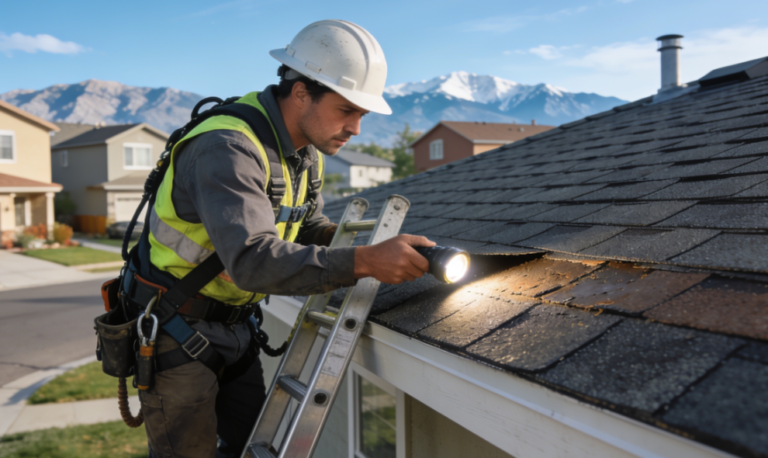
A roof replacement that only addresses the surface material without checking deck condition underneath can miss damage that’s been developing for years, which is why a thorough tear-off inspection matters as much as the shingle brand you ultimately choose.
Budget for it rather than being surprised by it. Replacing rotted or soft plywood found after tear-off commonly runs about $70 to $100 per sheet in this market, so ask for that unit price in writing before work starts and confirm how the contractor documents what gets replaced.
Why HOA Architectural Guidelines Matter More Here Than Homeowners Expect
Many Rochester Hills subdivisions, particularly the more established planned communities, maintain architectural guidelines covering exterior changes, including roofing material, color, and sometimes specific brand approval.
Installing a new roof without confirming these requirements first can mean being asked to redo work that doesn’t comply, an entirely avoidable expense. It’s worth requesting your HOA’s current guidelines directly and confirming your planned material and color before finalizing an order, not after.
| Confirm before ordering | Why it matters |
|---|---|
| Approved materials and profiles | Some associations restrict metal, cedar, or specific shingle styles |
| Approved color palette | Color is the most commonly regulated element, and shingle colors are not standardized across brands |
| Brand or product approval | A few associations name specific approved products |
| Submission and review timeline | A review period can add weeks between signing and starting |
| Written approval on file | Verbal sign-off is hard to rely on if a dispute follows |
| Who submits the request | Some contractors handle it; others leave it entirely to the homeowner |
What a Replacement Costs in Metro Detroit
Knowing the going range helps you read a quote, and it helps you spot a number that is too low to include the work this kind of project actually needs.
| Item | Typical 2026 Metro Detroit cost |
|---|---|
| Asphalt shingle replacement, overall range | $7,500 – $18,000 |
| Typical 1,800 sq ft single-story, one layer removed | $9,000 – $13,500 |
| Installed cost per square foot | About $4.50 – $8.00 |
| Architectural shingles, per square | $450 – $800 |
| Single-layer tear-off and disposal | $1,000 – $3,000 |
| Deck replacement, per sheet | $70 – $100 |
| Architectural shingle warranty range | 30 to 50 years, with proration terms worth reading |
To estimate your own project, measure the roof with our roof square footage calculator, then check the slope with the roof pitch calculator, since pitch affects both labor and material waste.
How to Actually Vet a Local Roofing Contractor for This Kind of Project
A few concrete questions help separate a contractor with genuine local experience from one simply covering a broad regional territory:
- How many roofs have you actually completed in Rochester Hills and the immediate surrounding townships specifically?
- What’s your process for checking deck condition and attic ventilation during tear-off, not just replacing the visible shingle layer?
- Can you walk me through how you’d handle an HOA approval requirement if my subdivision has one?
- What warranty, both material and workmanship, backs this specific installation?
- Does the shingle you are quoting include algae resistance, and what is the stain warranty term?
- What is your per-sheet price for replacing bad decking, and how do you document what you replaced?
- Will ice and water shield be installed at the eaves, and how far up the slope does it run?
Why Local Track Record Matters for a Decision This Significant
A roof replacement is one of the larger single investments a homeowner makes in a property, and it’s worth choosing a contractor whose experience reflects genuine depth in this specific market, not just general roofing competence somewhere in Metro Detroit.
Schoenherr Roofing has installed thousands of roofs across Michigan over more than three decades, which is exactly the kind of sustained, regional track record worth looking for when a subdivision roof from the 1980s or 90s finally reaches the point where repair isn’t the realistic answer anymore.
Frequently Asked Questions
How long does a roof last in Michigan?
Asphalt shingle roofs from the 1980s and 90s were typically built around a 20 to 30 year service life. Michigan’s freeze-thaw cycling, ice dam exposure, and shaded wooded lots tend to push real-world performance toward the shorter end of that range rather than the longer end.
Why are so many Rochester Hills roofs needing replacement at the same time?
Because the housing went up in a concentrated window. The median Rochester Hills home was built in 1984, with about 26.9 percent of housing built in the 1980s and 16.8 percent in the 1990s. Homes built across one twenty-year stretch reach the end of a 20 to 30 year roof life across roughly the same stretch.
What causes the black streaks on my roof?
A cyanobacterium called Gloeocapsa magma, sometimes loosely called blue-green algae. It needs moisture to establish, which is why it concentrates on north-facing slopes and shaded areas that stay damp longest between rains. The staining itself is largely cosmetic, though the persistent moisture associated with algae and moss can accelerate granule loss.
Do algae-resistant shingles actually work?
Yes, within limits. They use copper or zinc in the surface granules, and rain gradually washes copper ions across the shingle to disrupt the organism. Because the protection depends on that copper slowly depleting, it weakens as the roof ages. Stain warranties commonly run 25 to 30 years and are separate from the material and workmanship warranties.
Are algae-resistant shingles standard or an upgrade?
Algae resistance is usually found on mid-tier and premium product lines rather than across every product a brand sells. On a shaded Rochester Hills lot it is worth treating as a requirement, and worth confirming that the specific shingle being quoted includes it.
Why do ice dams keep happening on my roof?
Heat escaping unevenly into the attic melts snow near the roof’s peak, and that meltwater refreezes when it reaches the colder eave, which sits past the heated wall line. Water then backs up under the shingles. Insulation and ventilation standards common in 1980s and 90s construction make this pattern more likely.
Will a new roof stop ice dams?
Not on its own. New shingles and ice and water shield handle the damage an ice dam causes, but they do not change the uneven attic heat loss that creates the dam. Have insulation depth and ventilation balance assessed and quoted as part of the same project.
How much does a roof replacement cost in the Rochester Hills area?
Metro Detroit asphalt shingle replacements generally run $7,500 to $18,000, with a typical 1,800 square foot single-story home at $9,000 to $13,500 with one layer removed. That works out to roughly $4.50 to $8.00 per square foot installed, or about $450 to $800 per square for architectural shingles.
What if the contractor finds bad decking during tear-off?
Expect some on a roof of this age. Replacing rotted or soft plywood commonly runs about $70 to $100 per sheet in this market. Get that per-sheet price in writing before work begins and ask how the contractor documents which sheets were replaced.
Do I need HOA approval to replace my roof?
In many established Rochester Hills subdivisions, yes. Guidelines can cover material, color, and sometimes specific brand approval. Request your association’s current guidelines and get written approval of your material and color before finalizing an order, since noncompliant work may have to be redone.
Free Roofing Calculators
Sources
- Point2Homes, Rochester Hills MI housing age data from American Community Survey estimates (median year built, share by decade)
- Roof Metro Detroit, New Roof Cost in Michigan 2026 (cost ranges, per-square pricing, tear-off, deck replacement per sheet, warranty ranges)
- Current Results, Detroit MI snowfall totals and accumulation averages, 1991 to 2020 normals (annual snowfall, snow days, days with snow cover)
- Owl Roofing, Algae-Resistant Shingle Technology Compared (Gloeocapsa magma, how copper granules work, manufacturer stain warranty terms)
Disclaimer: Costs, warranty terms, and climate figures in this guide are 2026 estimates compiled from published contractor, manufacturer, and public data sources for planning purposes only. Pricing depends on roof size, pitch, complexity, deck condition, and material selection. HOA requirements vary by association. Confirm warranty terms with the manufacturer and get written quotes from licensed, insured Michigan roofing contractors.