
In Cumming and North Metro Atlanta, a cool-coated metal roof reflects 60 to 85 percent of sunlight, while dark asphalt shingles reflect just 5 to 15 percent. Metal costs roughly twice as much upfront, but it lasts 40 to 70 years, trims cooling costs, and often costs less than two asphalt roofs over the same period.
When North Georgia homeowners compare metal roofing to asphalt shingles, the conversation usually starts and ends with price. That leaves out two things that matter a lot in this climate: how much heat the roof pushes into your attic every summer, and how many times you will pay to replace it.
Quick Comparison
| Factor | Architectural Asphalt | Standing Seam Metal |
|---|---|---|
| Installed cost, metro Atlanta | $5.80 – $10.70 / sq ft | $8.70 – $15.50 / sq ft (up to ~$24 premium) |
| Typical 2,000 sq ft roof | $9,600 – $16,000 | $25,000 – $50,000+ (screw-down metal $15,000 – $28,000) |
| Lifespan | 15 – 30 years | 40 – 70 years |
| Solar reflectance | 0.05 – 0.15 (dark); 0.25 – 0.35 (cool-rated) | 0.60 – 0.85 with cool coatings |
| Summer surface temperature | 150 – 170 F (dark) | 100 – 120 F (cool roof) |
| Cooling cost impact | Baseline | Often 7 – 15% lower; up to 25% cited |
| Maintenance | Low; shingle repairs after storms | Very low with concealed fasteners |
North Georgia Heat by the Numbers
Cumming sits in Forsyth County, about 40 miles north of downtown Atlanta. It shares the metro’s long, humid cooling season, and the data shows that season is getting longer.
- 90-degree days: Atlanta averages 47 days at or above 90 F per year under 1991-2020 climate normals.
- Hot years run far higher: Atlanta logged 70 days of 90+ F in 2024 and a record 91 days in 2019.
- A long season: The average first 90-degree day arrives June 2, and the average last one lands September 10.
- A warming trend: Atlanta’s average summer temperature has risen about 2.9 F since 1970, with roughly 18 more 90-degree days per year based on the trend.
- Costly peak hours: Georgia Power’s summer peak runs 2 to 7 p.m. on weekdays from June through September, exactly when roofs absorb the most heat.
Georgia Power residential customers paid about 15.5 cents per kilowatt-hour on average in its latest annual filing. Every hour your air conditioner runs harder to fight roof heat shows up on that bill.
Why Upfront Cost Tells Half the Story
The upfront gap is real. Asphalt shingles cost less in both materials and labor, and metal installation takes more specialized skill and time. In Georgia, standing seam metal typically costs two to three times more than architectural shingles.
But the comparison is not apples to apples. Asphalt shingles generally last 15 to 30 years. Georgia’s heat and UV exposure push many shingle roofs toward the shorter end of that range. Metal roofing commonly lasts 40 to 70 years. A homeowner who stays put for 40 years will likely buy two asphalt roofs, or one metal roof.
How Roof Reflectivity Works
Two properties decide how hot a roof gets:
- Solar reflectance (SR): the share of sunlight a surface bounces away, on a scale of 0 to 1. A roof with SR 0.65 reflects 65 percent of sunlight.
- Thermal emittance: how efficiently the roof releases the heat it does absorb.
The Solar Reflectance Index (SRI) combines both into one number. ENERGY STAR requires a minimum initial solar reflectance of 0.25 for steep-slope roofs. The Cool Roof Rating Council publishes independent test results for specific products, so you can compare real numbers instead of marketing claims.
| Roof Surface | Solar Reflectance | Sunlight Absorbed |
|---|---|---|
| Standard dark asphalt shingles | 0.05 – 0.15 | 85 – 95% |
| Cool-pigment asphalt shingles | 0.25 – 0.35 | 65 – 75% |
| Metal with reflective paint | 0.60 – 0.70 | 30 – 40% |
| Cool-coated metal (best performers) | up to 0.85 | as low as 15% |
| White coatings and membranes | 0.80 – 0.90+ | 10 – 20% |
Climate zone matters too. Forsyth County falls in IECC climate zone 3, and research shows cool roofs are most cost-effective in zones 1 through 3. In colder northern states, reduced winter solar heat gain can offset a large share of summer savings. In North Georgia, that winter penalty is much smaller.
What Energy Savings Are Realistic?
Cool roofs typically reduce cooling energy use by about 7 to 15 percent, and some metal roofing sources cite up to 25 percent in hot climates. Your result depends on attic insulation, ductwork location, ventilation, shade, and roof color.
The simplest way to estimate your own savings is to start with what you spend on cooling each year:
| Annual Cooling Spend | Savings at 7% | Savings at 15% | 15% Over 40 Years |
|---|---|---|---|
| $600 | $42 / yr | $90 / yr | $3,600 |
| $900 | $63 / yr | $135 / yr | $5,400 |
| $1,200 | $84 / yr | $180 / yr | $7,200 |
| $1,800 | $126 / yr | $270 / yr | $10,800 |
These figures use today’s rates. Georgia Power bills have climbed repeatedly in recent years, so savings measured in dollars tend to grow over a roof’s life. Keep expectations grounded, though: energy savings alone rarely pay back metal’s premium. They compound with the lifespan advantage, and that combination is what changes the math.
Ducts in the attic? Many North Georgia homes run HVAC ducts through the attic. A cooler roof lowers attic temperature, which reduces heat gain through duct walls. Homes with attic ductwork often see results toward the higher end of the savings range.
40-Year Cost Comparison for a 2,000 Sq Ft Roof
This illustrative model uses midpoint metro Atlanta pricing and a 40-year ownership horizon. Energy savings assume a $1,200 annual cooling spend. It excludes inflation, financing, and rising utility rates.
| Roof Option | Install Cost | Roofs in 40 Years | Energy Savings | Est. Net 40-Year Cost |
|---|---|---|---|---|
| Standard architectural asphalt | $12,800 | 2 | $0 | ~$25,600 |
| Cool-rated asphalt shingles | $13,150 | 2 | ~$2,900 (6%) | ~$23,400 |
| Cool-coated standing seam metal | $24,000 | 1 | ~$5,800 (12%) | ~$18,200 |
The takeaway is not that metal always wins. If you plan to sell in 8 years, asphalt is usually the better financial choice. The longer you own the home, the more both halves of metal’s value, lifespan and energy performance, work in your favor. Measure your roof with our roof square footage calculator, then price options with the metal roof cost calculator.
Color and Coating Choices
Reflectivity depends far more on the paint system than on the metal underneath. Modern cool coatings use infrared-reflective pigments, which means a medium bronze or gray metal roof can sometimes outperform a light-colored conventional shingle.
| Choice | What to Look For | Why It Matters in Georgia |
|---|---|---|
| Paint system | PVDF (Kynar 500 type) finish with cool pigments | Holds color and reflectance under years of intense UV |
| Color | Light or cool-rated medium tones | Lighter colors reflect more; cool-rated darks close part of the gap |
| Ratings | ENERGY STAR label and CRRC product listing | Independent tests confirm real reflectance numbers |
| Finish warranty | Written chalk and fade coverage | Protects appearance and performance over decades |
| HOA rules | Approved colors and profiles | Many Forsyth County subdivisions regulate roof materials and colors |
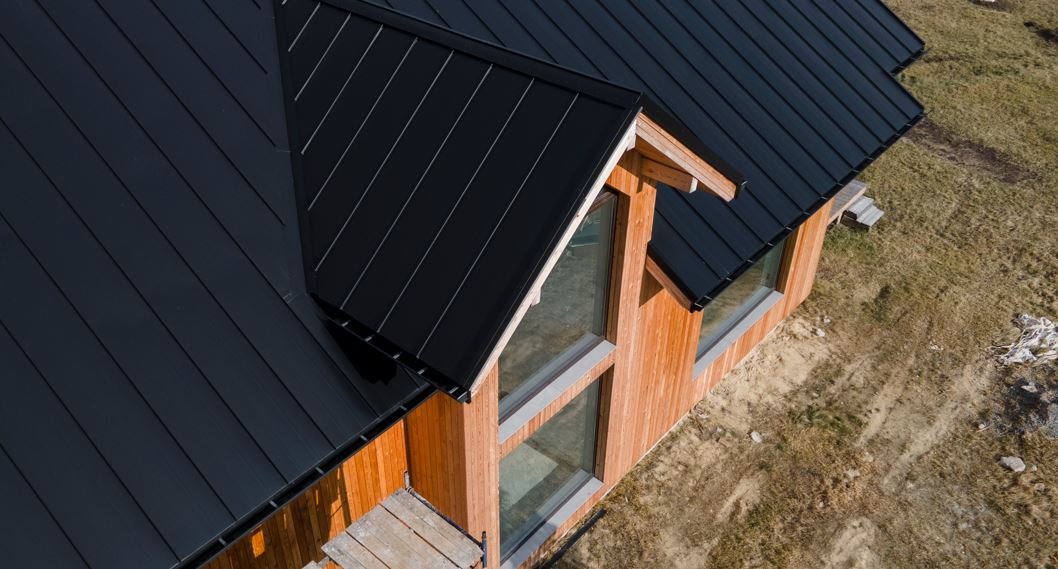
Why Installation Quality Matters More for Metal
Most metal roofing problems trace back to installation rather than the material itself. Metal is less forgiving than shingles, and small mistakes can let water in no matter how good the panels are.
| Installation Mistake | What Happens | What Good Installers Do |
|---|---|---|
| Inadequate fastening | Panels loosen, lift in wind, or leak at screws | Follow manufacturer fastener spacing and tested wind assemblies |
| Incorrect panel overlap | Water wicks between panels during heavy rain | Use correct side laps, end laps, and sealant placement |
| Poorly sealed penetrations | Leaks at vents, pipes, skylights, and chimneys | Use proper pipe boots, curbs, and custom-fabricated flashing |
| No room for expansion | Oil canning, stressed fasteners, and elongated screw holes | Use floating clips and slotted fastening on standing seam |
| Over-driven screws | Crushed washers that leak within a few years | Set screws to proper torque; inspect exposed fasteners |
| Skipped underlayment | Condensation and leak risk under panels | Install high-temperature synthetic underlayment |
Noise and Thermal Movement
Rain noise
Metal can be louder during heavy rain, especially over open framing on barns or porches. On a home with solid decking, underlayment, and attic insulation, most homeowners notice little difference from shingles. A good installer specifies the deck and underlayment with noise in mind.
Expansion and contraction
Roof surfaces in North Georgia swing from below freezing on winter nights to well over 100 F in summer sun. Metal moves with those swings. Using standard expansion coefficients, a 40-foot steel panel can change length by roughly 0.4 inches across a 130 F swing, and a 40-foot aluminum panel by roughly 0.8 inches.
Standing seam systems handle this with clips that let panels slide. Exposed-fastener systems pin panels in place, so screws and washers take the stress and need periodic inspection. This is one reason installer experience matters so much.
Choosing a Metal Roofing Contractor
Because installation decides whether metal delivers on its promise, the contractor matters as much as the material. A roof with poor fastening or unsealed seams undermines the entire value that justified the higher price.
- Ask whether the crew is trained or certified by the panel manufacturer.
- Ask how many standing seam roofs they installed in the last year, and request local addresses.
- Confirm whether they roll-form panels or fabricate trim in-house.
- Get the panel profile, gauge, paint system, underlayment, and clip type in writing.
- Request both the manufacturer finish warranty and a written workmanship warranty.
- Be cautious of shingle-focused companies that treat metal as a side offering.
What to Weigh Before Deciding
A few questions help clarify whether metal roofing’s premium makes sense for your specific situation:
- How long do you realistically plan to stay in the home? Metal’s value proposition strengthens considerably the longer you own the property.
- How significant is your current cooling cost, and how much would reflectivity genuinely reduce it? This varies by home size, insulation, and orientation.
- Is your chosen contractor genuinely experienced with metal-specific installation details? Look for real metal work, not just asphalt shingle work with metal added as a secondary offering.
Because the real value comparison between metal and asphalt depends on your specific home’s cooling demands and how long you plan to own it, not just the sticker price difference, it’s worth getting an honest breakdown of both.
A metal roofing contractor in Cumming with genuine manufacturer certification and metal-specific installation experience can walk through the real numbers for your home rather than a generic upfront cost comparison that misses the reflectivity and lifespan factors that matter most in this specific climate.
Frequently Asked Questions
Is a metal roof worth it in Cumming, GA?
It often is for homeowners planning to stay long-term. Metal costs roughly two to three times more than architectural shingles upfront but lasts 40 to 70 years versus 15 to 30 for asphalt, and cool-coated metal can reduce cooling costs by about 7 to 15 percent. Over a 40-year ownership period, metal can cost less than two asphalt roofs.
How much does a metal roof cost in metro Atlanta?
Standing seam metal typically runs about $8.70 to $15.50 per square foot installed in metro Atlanta, with premium systems reaching about $24. For a typical Georgia home, standing seam commonly costs $25,000 to $50,000 or more, while screw-down metal runs about $15,000 to $28,000.
How much does an asphalt shingle roof cost in Cumming?
Architectural asphalt shingles cost roughly $5.80 to $10.70 per square foot installed in metro Atlanta. A typical 2,000 sq ft roof runs about $9,600 to $16,000 with tear-off.
Do metal roofs really keep a house cooler?
Yes. Cool-coated metal roofs can reflect 60 to 85 percent of sunlight, while dark asphalt shingles reflect only 5 to 15 percent. Research shows cool roofs can run 50 to 60 degrees F cooler than dark roofs on hot days, which reduces heat moving into the attic and living space.
How much can a metal roof save on energy bills in Georgia?
Cool roofs typically cut cooling energy use by about 7 to 15 percent, with some sources citing up to 25 percent in hot climates. A household spending $1,200 a year on cooling might save roughly $84 to $180 per year. Homes with attic ductwork and weak insulation often save more.
Does metal roof color affect energy savings?
Yes. Lighter colors reflect more sunlight, but modern cool coatings with infrared-reflective pigments help darker colors perform much better than standard dark roofing. Check the product’s ENERGY STAR status and Cool Roof Rating Council listing for tested reflectance values.
Are metal roofs noisy in the rain?
Metal can be louder over open framing, but on a home with solid decking, underlayment, and attic insulation, most homeowners notice little difference from shingles. Proper specification by the installer keeps rain noise to a minimum.
What are the most common metal roof problems?
Most metal roof problems come from installation errors rather than the material. Common issues include inadequate fastening, incorrect panel overlaps, poorly sealed penetrations, over-driven screws, and panels installed without room for thermal expansion.
Is standing seam or screw-down metal better for North Georgia?
Standing seam generally performs better long-term because concealed clips allow panels to expand and contract and keep fasteners out of the weather. Screw-down metal costs less upfront but relies on exposed screws and washers that need periodic inspection and replacement.
How long does a metal roof last in Georgia?
A properly installed metal roof commonly lasts 40 to 70 years in Georgia. Paint systems such as PVDF finishes help maintain color and reflectivity under North Georgia’s intense UV exposure, while asphalt shingles generally last 15 to 30 years.
Free Roofing Calculators
Sources
- Red Roofing and Gutters, How Much Does a Roof Cost in Atlanta? 2026 Price Guide
- DOM Roofing, How Much Does a Roof Replacement Cost in Georgia? (2026)
- American Commercial Roofing, Residential Roof Replacement Cost in the Atlanta Metro (2026)
- Pinnacle Home Improvements, Roof Replacement Cost in Georgia 2026 Guide
- WSB-TV and 11Alive, Atlanta 90-degree day climate normals and records
- WABE and Climate Central, Atlanta summer temperature trends since 1970
- WattCosts, Georgia Power average residential rate (EIA filing data, 2026)
- Georgia Power, Residential Rate Plans (summer peak hours)
- RoofVista, Cool Roofs and Reflective Roofing Guide (2026)
- 1000 Squares Roofing, Cool Roof Materials Guide
- Sheffield Metals, Cool Metal Roofing, Reflectance, Emissivity, and SRI
- Hinkle Roofing, How Reflective Roofing Materials Improve Energy Efficiency (2026)
Disclaimer: Costs, reflectance values, and energy savings in this guide are 2026 estimates compiled from published contractor, utility, and industry sources for planning purposes only. The 40-year model is illustrative, and thermal movement figures are approximate. Actual savings depend on your home’s insulation, ventilation, ductwork, shade, and HVAC system. Get written quotes and product specifications from licensed, insured roofing contractors before deciding.