A roofer’s claim assistance usually means documenting damage, tying it to a verified storm date, meeting the adjuster on site, providing an itemized scope of work, and supporting a supplement if the first estimate falls short. It does not mean negotiating your settlement, guaranteeing an outcome, or covering your deductible.
Hearing that a roofing company “helps with insurance claims” sounds reassuring, but a lot of homeowners aren’t actually sure what that assistance involves in practice. Knowing the real steps helps you understand what your roofer should be doing on your behalf, and what still requires your own direct involvement.
Why This Process Genuinely Benefits From a Roofer’s Involvement
An insurance adjuster reviewing storm damage is typically not a roofing specialist, and their assessment, however well-intentioned, can miss damage that isn’t immediately obvious from a general inspection.
A roofing contractor experienced with storm damage claims knows specifically what to document and how to present it in terms an adjuster’s process actually recognizes, which can make a real difference in whether a claim is approved fully, partially, or denied.
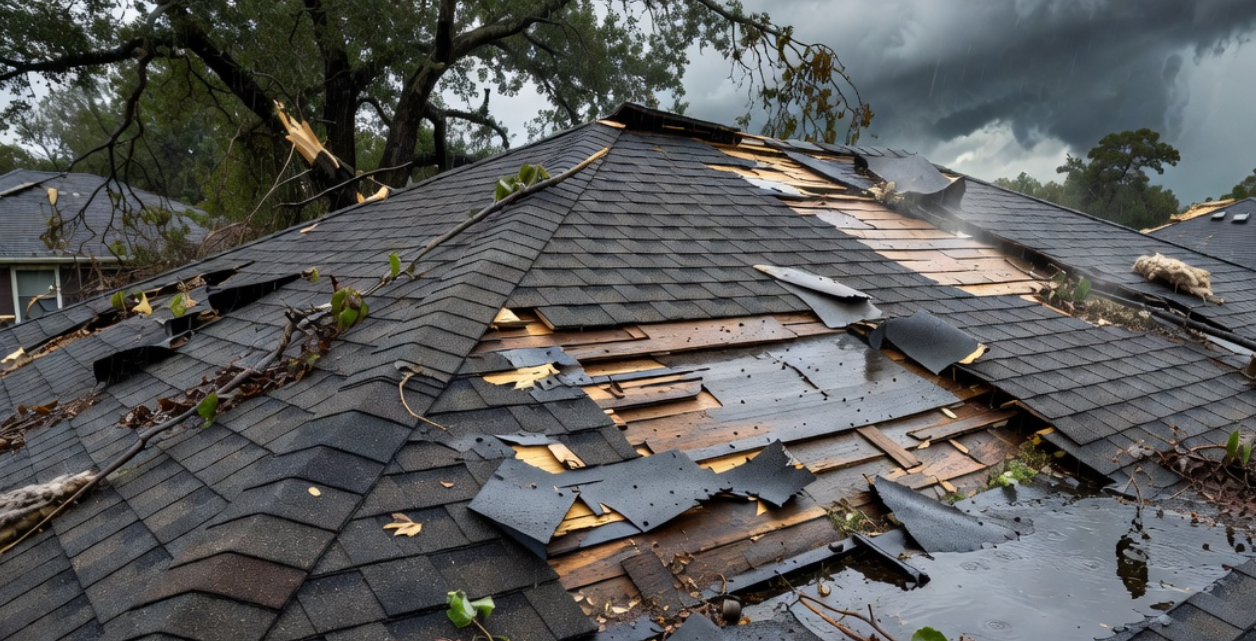
It helps to know how adjusters work. Most mark a test square, often a 10 by 10 foot area on each slope, and count damage within it to judge how widespread the storm damage is. They are looking to establish three things: what caused the damage, when it happened, and whether the policy covers it. The central judgment is whether the damage is sudden and storm-related, which tends to be directional, recent, and concentrated on storm-facing slopes, or gradual wear, which is not covered.
The Five Steps at a Glance
| Step | What the Roofer Does | What You Do |
|---|---|---|
| 1. Inspection | Photographs and documents all damage, including subtle hail bruising | Provide access; avoid permanent repairs before the adjuster visits |
| 2. Storm verification | Pins the damage to a specific date using verified weather data | Note when you first saw damage; check your policy’s filing window |
| 3. Adjuster meeting | Walks the roof with the adjuster and points out specific damage | File the claim yourself; be present or available |
| 4. Scope of work | Provides an itemized scope of the actual repair or replacement needed | Compare it against the carrier’s estimate |
| 5. Supplement | Supplies added documentation where the estimate falls short | Approve the work; pay your deductible; request depreciation release |
Step One: A Thorough, Documented Inspection
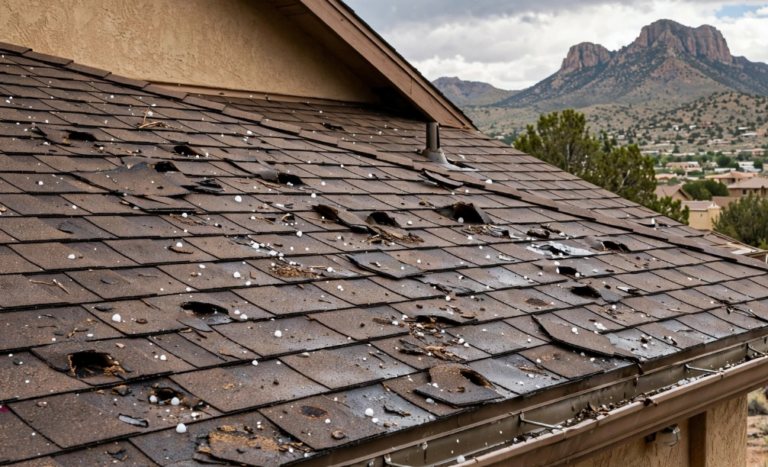
Before any conversation with the insurance company happens, a proper roofer-led process starts with a detailed inspection of the actual damage, photographing and documenting everything from missing or lifted shingles to more subtle hail bruising that’s easy to miss without training specifically in identifying it. This documentation becomes the foundation for everything that follows.
The specifics an adjuster will look for are worth knowing, because they are what the documentation needs to capture:
- Shingle creasing, tears, and missing tabs
- Hail bruises where granules have been knocked loose
- Impact patterns and their concentration by slope
- Damage to flashing, vents, and other penetrations
- Granule accumulation in gutters and at downspouts
Step Two: Confirming the Damage Ties to a Specific, Verifiable Storm
Insurance carriers work from specific weather event records, and claims tied to a clearly identified storm date, confirmed against verified weather data, are far stronger than vague claims describing damage from “a storm sometime recently.”
A roofer experienced with this process helps pin down the specific event and document conditions, wind speed, hail size where relevant, that support the claim. This matters for more than credibility. Most policies run their filing clock from the date of loss, not the date you noticed the problem, so establishing the event date also establishes where you stand against the deadline.
Step Three: Being Present During the Adjuster’s Inspection
Many roofing companies that genuinely assist with claims will meet the insurance adjuster at the property during their inspection, walking the roof together and pointing out specific damage that might otherwise be overlooked or underestimated.
This isn’t universal. Some companies limit their involvement to providing documentation beforehand, so it’s worth asking directly whether in-person adjuster meetings are part of the service.
Step Four: Providing a Detailed Scope of Work
If the adjuster’s initial assessment doesn’t fully match what the roofer’s own inspection found, a legitimate contractor will provide a detailed, itemized scope of the actual repair or replacement work needed, which can support a supplemental claim if the initial insurance estimate falls short of what the job genuinely requires.
An itemized scope is also what makes two estimates comparable. Without line items, a difference of several thousand dollars between the carrier’s number and the contractor’s is just two totals that disagree.
Step Five: Helping Navigate Supplements If the Initial Estimate Falls Short
It’s fairly common for an initial insurance estimate to undervalue the actual scope of repair, particularly for less visually obvious damage.
A roofer familiar with this process can help file a supplemental claim with additional documentation, rather than leaving you to either accept an inadequate settlement or navigate that process alone.
How the Payments Actually Work
One of the most common surprises in a roof claim has nothing to do with the roofer. It is how the money arrives.
Actual cash value (ACV) policies subtract depreciation permanently when the claim is approved. What you receive is the final settlement, with no second payment.
Replacement cost value (RCV) policies hold back that depreciation and release it after the work is finished and documented. That creates two payments rather than one.
| Stage | What the Carrier Pays | What Triggers It |
|---|---|---|
| First payment (RCV) | Approved scope minus withheld depreciation minus your deductible | Claim approval |
| Second payment (RCV) | The withheld depreciation | Final invoice, completion photos, and a request for release |
| Single payment (ACV) | Approved scope minus depreciation minus deductible | Claim approval; no further payment follows |
Two details catch people out. The depreciation release is usually not automatic: you have to request it and submit matching documentation. And if the work is never completed, or is completed after the policy’s deadline, which commonly runs 12 to 24 months from the date of loss, that withheld amount can be forfeited permanently.
What This Assistance Does NOT Typically Include
It’s worth understanding the limits here too. A roofer isn’t your insurance advocate in a legal sense, and final claim decisions rest with your insurance company, not the contractor.
Be wary of any company that promises to “guarantee” a specific claim outcome or that suggests waiving your deductible, since that practice is illegal in most states and a common sign of insurance fraud schemes that ultimately put you at legal risk, not the contractor.
Several states go further and draw a hard line between roofing and adjusting. In Texas, for example, a contractor cannot act as a public insurance adjuster on a claim they are also performing the work for, and the law prohibits advertising both roles together. Banned conduct there includes offering to negotiate a settlement, offering to file the claim for you, and promising to recover a maximum amount from the insurer. Texas also requires contracts of $1,000 or more involving an insurance settlement to carry written notice that the policyholder must pay the deductible, and carriers may ask for proof that you did.
| Legitimate Roofer Assistance | Red Flag |
|---|---|
| Documents damage with dated photos | Promises a guaranteed claim approval |
| Identifies the storm date from weather records | Offers to waive, absorb, or rebate your deductible |
| Meets the adjuster on site | Offers to file or negotiate the claim as your representative |
| Provides an itemized scope of work | Gives a single lump-sum number with no line items |
| Supplies documentation for a supplement | Pressures you to sign before the adjuster has inspected |
| Explains what the carrier decides, not the contractor | Describes itself as both your roofer and your adjuster |
Deadlines That Can End a Claim
Most carriers allow a claim to be filed within a year of the loss, but windows vary widely, from as little as 30 days to as long as two years, and each insurer sets its own. The clock typically starts on the date of the storm rather than the date you discovered the damage, which is exactly the problem with hail: it can cause hidden damage that only shows up as a leak months later.
Two practical takeaways follow. Get a professional inspection after a significant storm even when nothing looks wrong from the ground, and check your own policy’s filing window rather than assuming it is a year.
What to Ask Before Choosing Who Handles This Process
A few direct questions clarify what you’re actually getting:
- Will you meet the adjuster in person during their inspection?
- What specific documentation do you provide to support a claim?
- Have you helped file supplemental claims before, and can you describe how that process worked?
- Is your estimate itemized by line so I can compare it against the carrier’s?
- What happens to my price if the carrier approves less than your scope?
Getting Genuine Support Through the Claims Process
Because storm damage claims genuinely benefit from a contractor’s documentation and adjuster-facing experience, it’s worth confirming upfront exactly what level of support a roofing company actually provides, rather than assuming “we help with insurance claims” means the same thing at every company you’re comparing.
Why Choosing the Right Partner for This Process Matters
Given how much a thorough inspection and confident adjuster interaction can affect your claim’s outcome, it’s worth prioritizing a roofing company with a genuine, demonstrated track record of successfully navigating this exact process, not just a general mention of insurance assistance buried in a longer list of services.
Frequently Asked Questions
What does it mean when a roofer says they help with insurance claims?
In practice it usually means documenting the damage, identifying the storm date from weather records, meeting the adjuster on site, providing an itemized scope of work, and supplying documentation for a supplement if the carrier’s estimate falls short. The level of help varies by company, so ask which of those steps they actually perform.
Can a roofer file or negotiate my insurance claim for me?
Generally no. Filing the claim and dealing with coverage decisions is between you and your carrier. Several states prohibit a contractor from acting as a public adjuster on a claim they are also doing the work for. In Texas, for example, offering to negotiate a settlement or file a claim on your behalf is banned conduct for a roofer doing the work.
Is it legal for a roofer to waive my deductible?
No. Waiving, rebating, or absorbing a property insurance deductible is illegal in most states and is a common sign of insurance fraud. Texas requires contracts of $1,000 or more involving an insurance settlement to state in writing that the policyholder must pay the deductible, and carriers can ask for proof of payment.
What does an insurance adjuster look for on a roof?
Adjusters typically mark a test square, often a 10 by 10 foot area on each slope, and count damage inside it to judge how widespread the storm damage is. They look at shingle creasing, tears, missing tabs, hail bruises with broken granules, flashing and vent damage, and granule buildup in gutters, and they work to separate sudden storm damage from gradual wear.
Why should my roofer be there when the adjuster inspects?
Adjusters are generalists working under time pressure, not roofing specialists. A contractor walking the roof alongside them can point out damage that might otherwise be missed or underestimated. Not every company offers this, so ask directly whether in-person adjuster meetings are included.
What is a supplemental claim?
It is a request for additional payment when the carrier’s initial estimate does not cover the full scope the job actually requires. It is fairly common, especially for damage that is not visually obvious. An experienced contractor supports a supplement with an itemized scope and added documentation.
What is the difference between ACV and RCV on a roof claim?
An actual cash value policy subtracts depreciation permanently and pays once. A replacement cost value policy withholds that depreciation and releases it as a second payment after the work is completed and documented. RCV generally leaves you paying only your deductible out of pocket.
What is recoverable depreciation and how do I get it?
It is the amount the carrier holds back from the first payment on an RCV policy. You get it by completing the work and submitting the final invoice, completion photos, and any other documentation the carrier requires. The release is usually not automatic, and missing the policy’s deadline, commonly 12 to 24 months from the date of loss, can forfeit it.
How long do I have to file a roof storm damage claim?
Many carriers allow one year from the date of loss, but windows range from about 30 days to two years depending on the insurer and state. The clock usually starts on the storm date, not when you noticed the damage, which is why a post-storm inspection matters even if nothing looks wrong.
What are warning signs of a roofing insurance scam?
Promising a guaranteed claim approval, offering to cover or waive your deductible, offering to file or negotiate the claim as your representative, pressuring you to sign before the adjuster inspects, or presenting a lump-sum price with no itemized lines.
Free Roofing Calculators
Sources
- Texas Department of Insurance, Roofing and insurance: Know the law (deductible rules, public adjuster restrictions, contract notice)
- Global Roofing, What Does a Roof Insurance Adjuster Look For (test squares, damage indicators, storm versus wear)
- Cupcake Home Improvements, Recoverable Depreciation Explained (ACV versus RCV, two-payment process, release deadlines)
- OneClick Code, How long do homeowners have to claim hail damage on a roof (filing windows, date-of-loss rule)
Disclaimer: This article is general information about the roof insurance claim process, not legal, insurance, or coverage advice. Policy terms, filing deadlines, deductible rules, and contractor licensing laws vary by carrier and by state. Read your own policy and confirm state requirements with your insurance department before acting.