Wind-driven hail hits vertical walls as well as horizontal roof surfaces, so the same storm that bruises shingles often chips or cracks stucco. New Mexico has logged more than 5,000 hail events since 1955, with May and June the peak months. A hairline stucco crack costs $150 to $450 to repair now, and $1,000 to $6,000 or more once moisture reaches the sheathing.
After a significant hailstorm moves through Albuquerque, a lot of homeowners focus entirely on checking their roof and never think to look at their stucco exterior, even though the same storm that damaged one very often damaged the other. Understanding why these two types of damage tend to travel together helps you avoid filing a roof claim while a second, equally real repair need goes unnoticed.
Why Hail Doesn’t Discriminate Between Roof and Wall Surfaces
Hail falls at an angle in most storms, driven by accompanying wind, which means it doesn’t just strike horizontal roof surfaces; it also impacts vertical exterior walls directly.
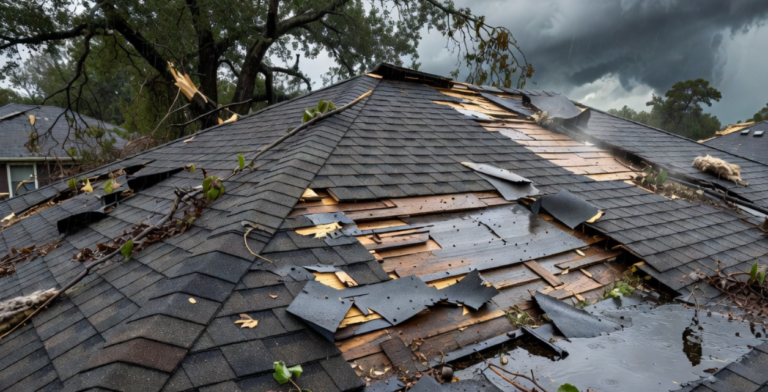
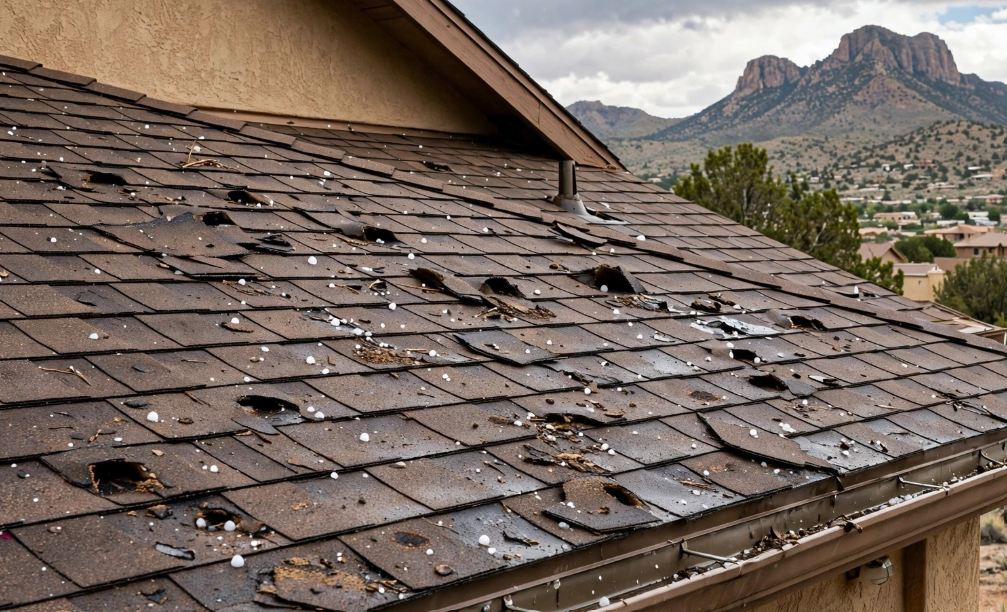
Stucco, a common exterior finish throughout Albuquerque and the wider Central New Mexico area, is vulnerable to exactly this kind of impact damage, cracking, chipping, or denting on the same storm that’s simultaneously bruising shingles or denting metal roofing above.
Because wind drives the hail, the damage usually concentrates on the elevations facing the storm rather than spreading evenly around the house. That is why inspecting only the street-facing wall can miss the worst of it entirely.
Albuquerque’s Hail Season by the Numbers
New Mexico recorded 5,060 hail events between 1955 and 2024. The season concentrates sharply: June leads with 1,466 recorded events and May follows with 1,410, which together account for well over half the state’s total. The 2010s averaged roughly 168 events a year, the highest rate on record.
The largest hailstone documented in New Mexico measured 4.5 inches, about softball size. Damage does not require stones anywhere near that large, though. Hail driven hard enough by wind can chip stucco at far smaller sizes.
Why Stucco Damage Is Often Less Obvious Than Roof Damage
Roof damage tends to get noticed first, since homeowners are primed to check their roof after a storm and may spot missing shingles or obvious dents from the ground.
Stucco damage can be considerably more subtle: a hairline crack, or a small chip near a window header, that’s easy to miss on a casual walk around the property, especially on walls that aren’t directly facing the most frequently used entrances.
What Hail Damage on Stucco Actually Looks Like
| Where to Look | What You May Find |
|---|---|
| Storm-facing walls | Small chips, pockmarks, or divots clustered on one or two elevations rather than spread evenly |
| Window and door headers | Hairline cracks radiating from corners, chipping at the trim line |
| Parapets and wall tops | Chipping on exposed upper edges that take direct impact |
| Corners and control joints | Cracking where the finish is already under stress |
| Window screens and frames | Dents or torn screens, which indicate wall-level impact force |
| Gutters, downspouts, AC fins | Dents and bent fins, useful corroborating evidence of hail severity |
| Painted surfaces | Chipped paint exposing the stucco beneath, often the first visible sign |
Soft metal items around the property are worth checking even if the walls look fine. Dented gutters, screens, or air conditioner fins show the storm carried enough force to mark stucco too, and they help establish severity when documenting a claim.
Why Overlooking Stucco Damage Costs More in the Long Run
A small, unaddressed crack in stucco isn’t just a cosmetic issue. It’s an entry point for moisture, and once water gets behind the stucco’s protective layer, it can lead to damage to the underlying structure that’s considerably more expensive to repair than the original crack would have been.
This is exactly the kind of problem that’s cheap to fix immediately after a storm and expensive to fix once it’s had months or years to work on compromised material. The pricing gap in New Mexico makes the point plainly.
| Repair Scope | Typical New Mexico Cost |
|---|---|
| Hairline crack repair | $150 – $450 |
| Small patch, under 10 sq ft | $350 – $800 |
| Medium patch, 10 to 50 sq ft | $800 – $2,800 |
| General stucco repair | $8 – $25 per sq ft |
| Moisture behind the finish | $1,000 – $6,000 or more |
| Full exterior resurfacing | $7,500 – $18,000 |
Why Insurance Claims Benefit From Checking Both at Once
If a hailstorm caused damage significant enough to warrant a roof insurance claim, it’s worth having the same inspection also evaluate stucco condition, since documenting both types of damage from the same verified storm event strengthens the overall claim and ensures you’re not leaving a legitimate, storm-related repair unaddressed simply because it wasn’t the most visually obvious damage.
A few documentation habits help regardless of who inspects:
- Photograph damage from multiple angles, with date stamps where possible
- Measure hailstones during or right after the storm if you safely can
- Record the storm’s date, time, and duration
- Photograph all four elevations, not only the ones that look damaged
- Avoid permanent repairs before the adjuster inspects
What a Thorough Post-Storm Inspection Should Actually Cover
A complete assessment after a significant Albuquerque hailstorm should include the roof surface and all roof penetrations, visible metal flashing and vents, and a walk around the entire exterior checking stucco for cracking, chipping, or denting, not just a glance at whichever side of the house faces the street.
| Area | What Should Be Checked |
|---|---|
| Roof surface | Bruising, granule loss, cracked or missing shingles, dents on metal |
| Roof penetrations | Vents, pipe boots, skylights, and the flashing around each |
| Metal components | Flashing, drip edge, gutters, and downspouts |
| All four stucco elevations | Cracks, chips, divots, and exposed substrate, including walls out of plain view |
| Openings | Window and door headers, sills, screens, and frames |
| Soft metal around the property | AC condenser fins, mailboxes, and vents as corroborating evidence |
Why Working With a Company That Handles Both Services Simplifies This
Coordinating separate roofing and stucco contractors after a storm means managing two different inspection schedules, two different assessments, and potentially two different insurance claim processes for damage that came from the same single event. One company that documents both puts all of it on a single timeline, tied to the same storm date, which keeps the claim coherent and the repairs sequenced sensibly.
What to Ask If You’re Dealing With Recent Storm Damage
A few questions worth raising directly:
- Did the inspection include both the roof and the full exterior stucco, not just the roof alone?
- If stucco damage was found, is it being documented as part of the same storm event for insurance purposes?
- Can the same company handle both repairs, or will this require coordinating two separate contractors?
- Were all four elevations photographed, including walls not visible from the street?
Getting Both Types of Damage Addressed From the Same Storm
Because hail that’s severe enough to damage a roof is very often severe enough to damage stucco too, it’s worth having both checked together rather than assuming a roof-only inspection tells the whole story.
An Albuquerque Roofing Company experienced with both roofing and stucco repair can give you a complete picture of what a specific storm actually cost your home, and address all of it through one coordinated process.
Frequently Asked Questions
Can hail really damage stucco?
Yes. Hail falls at an angle in most storms because wind drives it, so it strikes vertical walls as well as the roof. Stucco can crack, chip, or dent from the same impacts that bruise shingles overhead.
When is hail season in Albuquerque?
Late spring and early summer. Across New Mexico, June leads with about 1,466 recorded hail events and May follows with about 1,410 out of 5,060 total events logged between 1955 and 2024.
What does hail damage on stucco look like?
Small chips, pockmarks, or divots clustered on the elevations that faced the storm, hairline cracks radiating from window and door corners, chipping along parapets and wall tops, and chipped paint exposing the stucco beneath.
Why do people miss stucco damage after a storm?
Roof damage is what homeowners are primed to look for, and it is often visible from the ground. Stucco damage can be a hairline crack or a small chip near a window header, easy to overlook on a quick walk around, especially on walls that are not near the main entrance.
How much does stucco repair cost in Albuquerque?
Hairline crack repair typically runs $150 to $450, a small patch under 10 square feet runs $350 to $800, and a medium patch of 10 to 50 square feet runs $800 to $2,800. General stucco repair runs about $8 to $25 per square foot, and a full exterior resurfacing runs $7,500 to $18,000.
What happens if a stucco crack is left alone?
It becomes an entry point for moisture. Once water gets behind the finish, repair costs climb to roughly $1,000 to $6,000 or more, because the work then involves removing deteriorated material, addressing rotted sheathing, replacing mesh or board, and rebuilding from the substrate up.
Should I file one claim for both roof and stucco damage?
If both were caused by the same storm, documenting them together generally strengthens the claim. Tying both to one verified storm date avoids leaving a legitimate, storm-related repair unaddressed just because it was less visually obvious.
What should a post-storm inspection include?
The roof surface and all penetrations, flashing and vents, gutters and downspouts, and a walk around all four stucco elevations checking for cracking, chipping, and denting, rather than only the side of the house facing the street.
How do I document hail damage for insurance?
Photograph damage from multiple angles with date stamps, record the storm’s date, time, and duration, measure hailstones if you can do so safely, photograph all four elevations even where damage is not obvious, and avoid permanent repairs before the adjuster inspects.
Is it better to use one company for roof and stucco repair?
It simplifies the process. Separate contractors mean two inspection schedules, two assessments, and potentially two claim processes for damage from a single event. One company documenting both keeps everything tied to the same storm date and sequences the repairs together.
Free Roofing Calculators
Sources
- MapScaping, New Mexico Hailstorms Map, 5,060 events 1955 to 2024 (event totals, peak months, largest hailstone)
- Happy Homes LLP, Stucco Repair Cost Albuquerque NM 2026 Guide (crack, patch, resurfacing, and moisture-damage pricing)
- Great Roofing, Hail Damage Siding: Detection, Repair and Insurance Guide (storm-facing elevations, documentation practices)
Disclaimer: Costs and storm statistics in this guide are 2026 estimates compiled from published contractor and climate data sources for planning purposes only. Actual repair pricing depends on damage extent, wall access, finish type, and what is found once material is opened. Insurance coverage varies by policy. Get written assessments from licensed, insured contractors and confirm coverage with your carrier.