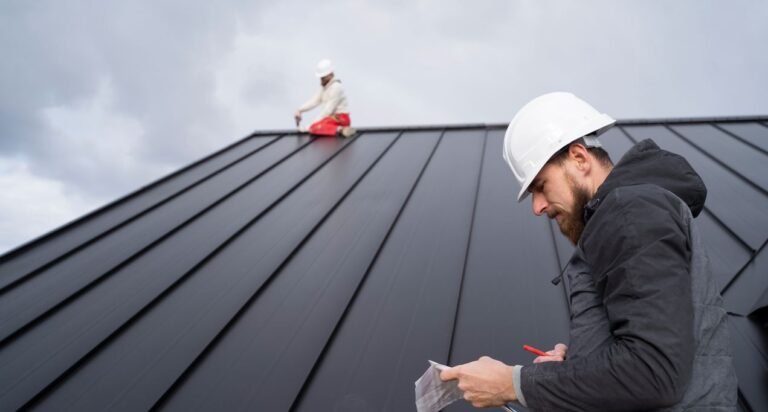
Repair usually makes sense when damage is isolated, the surrounding material is still performing, and the deck is sound. Replacement takes over when damage spans more than about a quarter of the roof, the roof is past roughly 60 percent of its expected life, or the decking is compromised. Age alone decides neither.
Discovering a leak or visible damage on your roof immediately raises the same question for almost every Quad Cities homeowner: is this something a repair can fix, or is it a sign the whole roof needs to come off? Getting this right matters, since choosing the wrong path means either wasting money on a replacement you didn’t need, or patching a roof that was already past the point where repair makes sense.
Why This Decision Shouldn’t Be Based on Age Alone
It’s tempting to use roof age as the deciding factor, assuming anything under 15 years gets repaired, and anything older gets replaced.
In reality, a well-maintained 18-year-old roof with a single isolated issue might be an excellent repair candidate, while a poorly installed 8-year-old roof with widespread problems might already warrant full replacement. Age is a relevant data point, not the deciding factor on its own.
That said, age is worth putting in context. Asphalt shingles commonly last 20 to 28 years in Iowa’s climate, where ice damming at the eaves, rather than UV exposure, tends to be what ends a roof’s service life. Knowing roughly where your roof sits in that span tells you how much remaining life a repair is actually protecting.
Signs That Generally Point to Repair Being the Right Call
The damage is isolated to a specific area. A single section with missing or damaged shingles, one problematic flashing detail around a chimney or vent, or a localized leak traceable to a specific, fixable cause are all good candidates for targeted repair rather than full replacement.
The rest of the roof shows normal, age-appropriate wear. If an inspection confirms the surrounding roofing material is still performing well, granules intact, shingles still flexible and properly sealed, that’s a strong sign the roof’s remaining life justifies a repair rather than a full tear-off.
The underlying deck is sound. If the roof deck beneath the damaged area is solid, without rot or significant water damage, a repair can address the surface issue without needing to address a structural problem underneath.
Signs That Generally Point to Full Replacement
Damage is widespread rather than isolated. If multiple areas of the roof show significant wear or damage simultaneously, repairing each individually often ends up costing more in cumulative labor than a single, comprehensive replacement.
The roof has a history of repeat problems. A roof that’s needed several separate repairs over a relatively short span is often signaling that it’s reached a point where ongoing patching is a losing proposition compared to addressing everything at once.
Significant granule loss or widespread curling shingles. These are signs of advanced material aging across the whole roof, not an isolated problem a targeted repair can fix.
Deck damage discovered during inspection. If the underlying decking shows rot or significant water damage, that’s a structural issue a surface-level repair won’t resolve, and it often makes sense to address during a full replacement rather than as a standalone fix.
Three Thresholds That Usually Settle the Question
Contractors commonly use three practical tests. Any one of them being true tends to tip the decision toward replacement.
| Threshold | Repair Still Makes Sense | Replacement Takes Over |
|---|---|---|
| Share of roof affected | Damage confined to a section or two | More than about 25 percent of the roof area |
| Position in lifespan | Roof is early or mid-life for its material | Past roughly 60 percent of expected life, such as a 22-year-old 30-year shingle |
| Deck condition | Sheathing is solid underfoot and dry | Spongy or rotted decking, which a surface repair cannot fix |
| Repair history | First or second isolated issue | Several separate repairs in a short span |
| Material condition elsewhere | Granules intact, shingles flexible and sealed | Widespread granule loss, curling, or brittleness |
What Each Path Actually Costs
Putting numbers beside the decision helps. Most homeowner roof repairs land between $450 and $1,100, while a full Iowa asphalt replacement commonly runs $5,244 to $13,110, or roughly $4 per square foot installed for architectural shingles.
| Repair Type | Typical Cost |
|---|---|
| Service call minimum | $150 – $350 |
| Missing shingles, 1 to 3 tabs | $200 – $500 |
| Pipe boot or vent flashing | $150 – $450 |
| General leak patch | $300 – $800 |
| Ridge cap replacement | $250 – $900 |
| Chimney flashing repair | $400 – $1,800 |
| Valley repair | $600 – $2,200 |
| Decking patch, single sheet | $400 – $1,000 |
| Decking patch, multiple sheets | $800 – $3,000 |
| Full Iowa replacement | $5,244 – $13,110 |
The arithmetic is what matters here. Two or three repairs in the $800 to $2,200 range on an aging roof can approach half the cost of replacing it outright, while buying only a few more years. For a deeper comparison, see our guide to roof repair vs. roof replacement, and measure your own roof with the roof square footage calculator.
Why Hail and Storm History Matters for This Decision in the Quad Cities Specifically
Given how frequently this region deals with significant hail events, a roof that’s absorbed multiple storms over its lifespan, even without an obvious active leak, may have accumulated enough bruising and granule loss that a full inspection reveals it’s genuinely closer to replacement than a quick repair would suggest.
Iowa ranks seventh nationally for hail frequency, with 15,266 events logged between 1955 and 2024. June alone accounts for about 3,800 of them and May adds roughly 3,625, so the bulk of the risk lands in a narrow window each year.
The practical consequence is cumulative. A roof here may take hail several times across its life without ever producing a leak, and the bruising and granule loss from those storms shows up as reduced remaining lifespan rather than as an obvious failure. This is exactly why Quad Cities trusted roof repair experts who are familiar with this region’s storm history can spot patterns a generic inspection checklist might miss.
Why a Real Inspection Beats Guessing From the Ground
None of these signs can be reliably assessed just by looking up at your roof from the driveway. A proper inspection, checking the full roof surface, the deck condition where accessible, and any history of prior repairs, is what actually determines which path makes sense for your specific situation.
| What an Inspection Should Establish | Why It Decides the Path |
|---|---|
| How much of the roof is affected | Determines whether per-square replacement economics take over |
| Condition of material away from the damage | Tells you whether a repair is protecting a roof with real life left |
| Deck soundness | Spongy sheathing rules out a surface-only fix |
| Prior repair history | Repeat patching signals a roof at the end of its useful run |
| Storm damage patterns | Bruising and granule loss from past hail reduce remaining lifespan |
| Flashing and penetrations | Many leaks start here rather than in the field of the roof |
Frequently Asked Questions
How do I know if my roof needs repair or replacement?
Repair generally fits when damage is isolated, the surrounding material still performs well, and the deck is sound. Replacement takes over when damage spans more than about 25 percent of the roof, the roof is past roughly 60 percent of its expected lifespan, or the decking is rotted or spongy.
Is roof age enough to decide?
No. A well-maintained 18-year-old roof with one isolated issue can be a good repair candidate, while a poorly installed 8-year-old roof with widespread problems may already warrant replacement. Age is useful context, not the deciding factor.
How long do asphalt shingles last in Iowa?
Typically 20 to 28 years. Iowa’s cooler summers help, but ice damming at the eaves rather than UV exposure is usually what limits a roof’s service life here.
How much does roof repair cost?
Most homeowner repairs run $450 to $1,100, with service call minimums of $150 to $350. Specific jobs vary: $200 to $500 for a few missing shingle tabs, $300 to $800 for a leak patch, $400 to $1,800 for chimney flashing, and $600 to $2,200 for valley repair.
How much does a roof replacement cost in Iowa?
A typical asphalt shingle replacement with full tear-off runs about $5,244 to $13,110, or roughly $4 per square foot installed for architectural shingles. A 1,800 square foot home commonly lands near $7,900.
At what point does repairing stop making financial sense?
When the repairs start stacking up against replacement cost. Two or three repairs in the $800 to $2,200 range on an aging roof can approach half the cost of replacing it while buying only a few more years, and that is before the next problem appears.
Does hail damage affect the repair or replace decision?
Yes. A roof can absorb hail several times across its life without ever leaking, and the accumulated bruising and granule loss reduce remaining lifespan. A roof with that history may be closer to replacement than a surface-level look suggests.
How often does hail hit the Quad Cities region?
Iowa ranks seventh nationally for hail frequency, with 15,266 events recorded between 1955 and 2024. June leads with about 3,800 events and May adds roughly 3,625, so most of the annual risk lands in late spring and early summer.
Can I judge my roof’s condition from the ground?
Not reliably. Share of area affected, condition of material away from the damage, deck soundness, and storm-related bruising all require a closer look. A proper inspection checks the full surface, the deck where accessible, and any prior repair history.
What should an inspection tell me?
How much of the roof is affected, whether the material away from the damage is still performing, whether the deck is solid, what repairs have been done before, whether past storms left bruising or granule loss, and the condition of flashing and penetrations where many leaks begin.
Free Roofing Calculators
Sources
- MapScaping, Iowa Hailstorms Map, 15,266 events 1955 to 2024 (event totals, national ranking, peak months)
- The Roofing Brief, How Much to Repair a Roof 2026 (repair cost ranges by damage type, the 25 percent and 60 percent thresholds)
- Roofing Calculator USA, Iowa State Guide 2026 (replacement cost range, per square foot pricing, shingle lifespan in Iowa)
Disclaimer: Costs and thresholds in this guide are 2026 estimates compiled from published contractor and climate data sources for planning purposes only. Actual pricing depends on roof size, pitch, material, access, and what an inspection finds. Get written assessments from licensed, insured Quad Cities roofing contractors before deciding.