Architectural Shingles vs 3 Tab:
Architectural shingles are laminated multi-layer shingles rated for 110 to 130 mph wind that last 25 to 30 years. 3 tab shingles are single-layer, rated near 60 mph, and last 15 to 20 years. Architectural costs roughly 25 to 40 percent more upfront but less per year of service.
If you have collected roof replacement quotes, you have seen both terms. They are both asphalt shingles. They are both Class A fire rated. They both install three bundles to the square. Past that, they are different products with different failure modes, different code standing, and different insurance treatment.
This guide compares architectural shingles vs 3 tab using 2026 pricing, published ASTM wind classifications, manufacturer specifications, and state-level code and insurance rules. Every number below is sourced.
Price your own roof before you compare quotes
Get a square-footage-based estimate for both shingle types in under a minute.
Open the Roof Replacement Cost CalculatorTable of Contents
- Head to Head at a Glance
- How Each Shingle Is Built
- 2026 Cost Comparison
- Lifespan and Cost Per Year
- Wind Resistance and Code
- Hail, Impact Rating and Insurance
- Weight, Nails and Installation
- Appearance and Resale Value
- State by State Comparison
- Is 3 Tab Being Phased Out?
- When 3 Tab Still Wins
- How to Decide
- Frequently Asked Questions
- Free Roofing Calculators
- Sources
Architectural Shingles vs 3 Tab: Head to Head at a Glance
The table below is the short version. Every row is expanded further down the page with the source behind it.
| Specification | 3 Tab Shingles | Architectural Shingles |
|---|---|---|
| Construction | Single layer, two cutouts forming three tabs | Two or more layers laminated together |
| Installed cost per sq ft | $3.10 to $6.40 | $4.50 to $9.00 |
| Installed cost per square | $300 to $500 | $450 to $900 |
| Rated service life | 15 to 20 years | 25 to 30 years |
| Typical wind warranty | 60 mph | 110 to 130 mph |
| Weight per square | 200 to 250 lbs | 240 to 400 lbs |
| Fire rating | UL 790 Class A | UL 790 Class A |
| Class 4 impact option | Rarely available | Widely available |
| Warranty term | 20 to 30 year limited | Limited lifetime on most lines |
| Share of new asphalt installs | Roughly 5 to 10 percent | Roughly 90 to 95 percent |
How Each Shingle Is Actually Built
The performance gap between these two products traces back to one manufacturing decision: whether the shingle is one layer or laminated.
3 Tab Construction
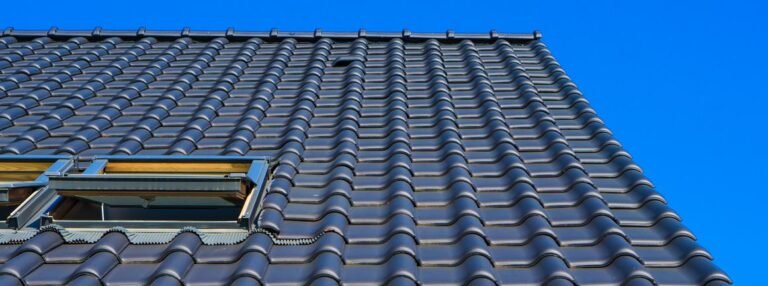
A 3 tab shingle is a single layer thick, usually 12 inches wide and 36 inches long, with two notches called cutouts that split the lower portion into three visible tabs. The whole strip is one continuous piece of asphalt-coated fiberglass mat topped with ceramic granules.
That single layer carries every load the roof sees. Wind uplift, hail impact, thermal expansion, and UV degradation all act on approximately 3/16 of an inch of material. The cutouts also create channels where runoff concentrates, which accelerates granule loss along the tab slots.
Architectural Construction
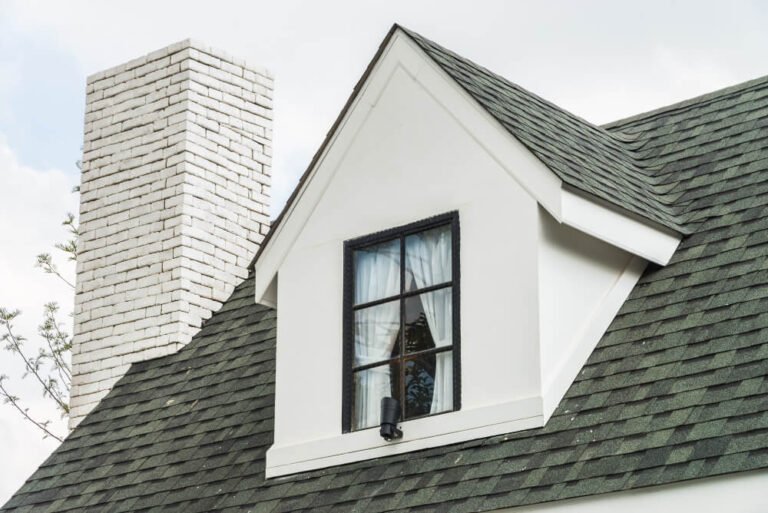
Architectural shingles, also called laminated or dimensional shingles, bond two or more shingle layers together over a heavier fiberglass base mat. There are no cutouts. Instead, a randomized bottom layer creates the shadow lines that produce the dimensional look.
The laminated section is where the nails go and where the sealant strip sits, so both the fastening zone and the wind-hold-down zone are doubled up. That is the structural reason architectural shingles carry higher wind classifications.
2026 Cost Comparison: What You Actually Pay
Installed pricing includes tear-off, underlayment, fasteners, flashing, labor, and cleanup. Material-only prices are much lower and are not what appears on a quote.
| Cost Basis | 3 Tab | Architectural | Difference |
|---|---|---|---|
| Material only, per sq ft | $0.80 to $1.20 | $1.25 to $2.50 | +$0.45 to $1.30 |
| Installed, per sq ft | $3.10 to $6.40 | $4.50 to $9.00 | +25 to 40 percent |
| Installed, per square (100 sq ft) | $300 to $500 | $450 to $900 | +$150 to $400 |
| 1,500 sq ft roof surface | $4,650 to $9,600 | $6,750 to $13,500 | +$2,100 to $3,900 |
| 2,000 sq ft roof surface | $6,200 to $12,800 | $9,000 to $18,000 | +$1,400 to $2,000 typical |
| 3,000 sq ft roof surface | $9,300 to $19,200 | $13,500 to $27,000 | +$4,200 to $7,800 |
On a 2,000 square foot roof, published 2026 contractor data puts the upfront gap at roughly $1,400 to $2,000. Wider ranges appear when comparing a bottom-tier 3 tab job against a premium architectural job with upgraded underlayment and ventilation.
Watch the denominator
Quotes are priced on roof surface area, not home square footage. A 2,000 sq ft single-story home at a 6/12 pitch has roughly 2,400 to 2,500 sq ft of roof surface once overhangs and slope are counted. Run your numbers through the roof square footage calculator before comparing any bid.
Why the Labor Side Narrows the Gap
Material is the smaller half of the equation. The Bureau of Labor Statistics reports a median roofer wage of $24.51 per hour, and contractors typically bill $75 to $78 per hour to homeowners after overhead. Tear-off, deck inspection, underlayment, flashing, drip edge, ridge vent, and disposal are identical between the two shingle types.
Because that fixed labor and accessory cost applies either way, upgrading from 3 tab to architectural raises the total bill by far less than the material price ratio suggests.
Lifespan and Cost Per Year of Service
This is where the comparison flips. Architectural shingles carry a rated lifespan of 25 to 30 years and often reach 30 to 35 with adequate attic ventilation, while 3 tab shingles last 15 to 20 years.
| Scenario (2,000 sq ft roof) | 3 Tab | Architectural |
|---|---|---|
| Typical installed cost | $8,000 | $10,000 |
| Conservative service life | 17 years | 27 years |
| Cost per year of service | $471 | $370 |
| Replacements needed in 30 years | 2 | 1 |
| 30-year total (ignoring inflation) | $16,000 | $10,000 |
The second tear-off is the item most homeowners leave out. Paying for demolition, disposal, underlayment, and labor twice inside 30 years erases the initial savings and then some.
What Shortens Both Products
- Poor attic ventilation. Trapped heat cooks asphalt from underneath and is the single most common cause of premature failure.
- Intense UV exposure. In South Florida, architectural shingles marketed as 30-year products commonly deliver 15 to 20 years of real service.
- Freeze-thaw cycling. Repeated expansion and contraction cracks aged asphalt, particularly on single-layer 3 tab.
- Algae staining. Cosmetic, but it drives early replacement decisions in humid climates. Most modern lines of both types offer algae-resistant granules.
Wind Resistance and Building Code Compliance
This is the section that decides the question in a lot of states, because it is not a preference. It is code.
How Shingles Are Wind Classified
Two ASTM standards govern this. ASTM D3161 delivers a stream of air across test decks at 60, 90, or 110 mph for two hours, while ASTM D7158 calculates uplift force against the shingle sealant strip and assigns Class D, G, or H.
| Standard and Class | Qualifying Wind Speed | Typical Product |
|---|---|---|
| ASTM D3161 Class A | 60 mph | Entry-level 3 tab |
| ASTM D3161 Class D | 90 mph | Upgraded 3 tab |
| ASTM D3161 Class F | 110 mph | Architectural |
| ASTM D7158 Class D | 90 mph | 3 tab |
| ASTM D7158 Class G | 120 mph | Architectural |
| ASTM D7158 Class H | 150 mph | Premium architectural |
IRC R905.2.4.1 requires asphalt shingle packaging to bear a label showing compliance with the required classification for the design wind speed at your address. Your local building department checks the wrapper, not the brochure.
The Practical Consequence
The chart above states the problem plainly. Long Island nor’easters regularly produce gusts of 70 to 80 mph, which already exceeds the 60 to 70 mph rating on most 3 tab shingles. The same holds for Midwest derechos and Gulf Coast squall lines.
Note also that wind classification is a product test, not an installation guarantee. The ASTM standards do not test the fasteners used to attach shingles to the roof deck. A Class H shingle nailed wrong performs like a Class A shingle.
Hail, Impact Rating and the Insurance Angle
Impact resistance is graded by UL 2218 on a scale of Class 1 to Class 4. Class 4 requires the shingle to survive a 2-inch steel ball dropped from 20 feet with no cracking, splitting, or fracture on the underside after two strikes in the same spot.
This is a decisive practical difference. Class 4 products are built almost exclusively on architectural platforms using SBS-modified asphalt. If you want an impact-rated roof, 3 tab is essentially off the table.
Insurance Discounts by State
Insurance is regulated at the state level, so discounts track historical hail loss.
| State | Reported Class 4 Discount Range | Practical Note |
|---|---|---|
| Texas | 5 to 28 percent | Varies widely by county and carrier |
| Colorado | 20 to 30 percent | Among the largest approved discounts |
| Kansas | 10 to 25 percent | Strong hail-belt program availability |
| Oklahoma | 10 to 20 percent | Discount applies to wind and hail portion |
| Nebraska | 10 to 20 percent | Confirm carrier participation first |
| Minnesota | 10 to 15 percent | Smaller discount, high hail frequency |
| Low-hail states | 0 to 10 percent | Financial case rests on durability, not premiums |
In hail-belt states, the wind and hail portion can represent 30 to 50 percent of your total premium, so a 20 percent discount on that portion translates to roughly 6 to 10 percent off the annual bill.
The roof age problem cuts both ways
Carriers commonly shift coverage from Replacement Cost Value to Actual Cash Value once a roof passes 15 to 20 years. A 3 tab roof reaches that threshold near the end of its rated life. An architectural roof reaches it with a decade of service still ahead.
Weight, Nails and Installation Differences
3 tab shingles impose 200 to 250 lbs per square, light enough that no engineering assessment is needed on standard wood-frame roofs. Standard architectural runs 240 to 350 lbs per square, and heavyweight lines reach 400 lbs or more.
On a healthy modern truss or rafter system, that difference is not a structural concern. It matters on older homes with undersized framing, or when a second layer is being installed over an existing roof. If your framing is in question, size it with the roof truss calculator before ordering material.
Fastening
- Standard pattern. Four nails per shingle, which works out to roughly 320 nails per square on 3 tab.
- High-wind pattern. Six nails per shingle, roughly 480 nails per square, required in high-wind zones and on mansards.
- Exposure. Traditional imperial 3 tab uses a 5-inch exposure. Laminated shingles vary by product, with maximum exposure reaching 10 inches on certain lines.
- Bundles. Both types are commonly packaged three bundles to the square, though heavier designer laminates can require four or five. Run your numbers through the shingle calculator to get an exact bundle count.
Installation speed favors 3 tab. Uniform strips lay faster with less cutting, which is part of why total labor comes in lower. Architectural shingles are more forgiving of a slightly uneven deck because the dimensional profile hides minor plane irregularities that telegraph clearly through flat 3 tab.
Appearance, Curb Appeal and Resale Value
3 tab produces a flat, uniform, repeating pattern. It reads correctly on mid-century ranches and simple gable roofs, and it is the look most people associate with 1980s and 1990s subdivisions.
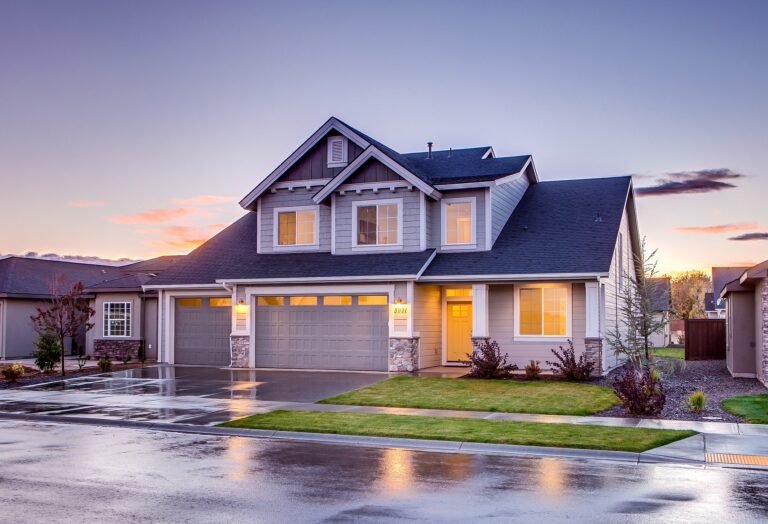
Architectural shingles produce depth through randomized tab widths and multi-tonal granule blends, approximating cedar shake or slate at street distance. Color selection is also far broader. Flagship architectural lines offer roughly two dozen colors, while a typical 3 tab line offers under ten.
What the Resale Data Says
Roofing does not return its full cost at sale, regardless of type. Cost vs Value reporting puts asphalt shingle roof replacement at roughly 68 percent cost recovery at resale, with other analyses citing a 60 to 68 percent range.
One nuance worth knowing: standard architectural shingles return a higher percentage than premium designer or luxury lines, because the extra spend on designer products does not fully transfer into appraised value. The sweet spot for resale is mid-range architectural, not the top shelf.
Architectural Shingles vs 3 Tab by US State
The right answer changes by geography for three reasons: design wind speed written into code, hail frequency and its insurance treatment, and local labor rates. Below is how the comparison plays out region by region.
| Region and States | Primary Driver | 3 Tab Viability | 2026 Architectural Installed Range |
|---|---|---|---|
| South Florida (Miami-Dade, Broward) | HVHZ, 170 to 175 mph design wind, Miami-Dade NOA required | Effectively excluded | $7.00 to $11.00 per sq ft |
| Rest of Florida | 140 to 160 mph wind-borne debris zones, strict roof age underwriting | Very poor fit | $5.50 to $9.00 per sq ft |
| Gulf Coast (TX coast, LA, MS, AL) | Hurricane exposure, six-nail patterns | Poor fit near coast | $5.00 to $8.50 per sq ft |
| Hail Belt (TX, OK, KS, NE, CO, SD) | Class 4 insurance discounts of 10 to 30 percent | Poor value, no Class 4 path | $4.50 to $8.00 per sq ft |
| Northeast (NY, NJ, MA, CT, PA) | Nor’easter gusts of 70 to 80 mph, high labor rates | Below typical storm exposure | $6.00 to $10.00 per sq ft |
| Midwest (OH, IL, IN, MI, MO) | Derechos, freeze-thaw, competitive labor | Marginal, cheapest market | $4.50 to $7.50 per sq ft |
| Southeast inland (GA, TN, NC, SC) | Heat, humidity, algae staining | Workable on outbuildings | $4.50 to $7.50 per sq ft |
| West Coast (CA, OR, WA) | High labor, wildfire codes, seismic requirements | Labor cost erases savings | $7.50 to $12.00 per sq ft |
| Mountain and Southwest (AZ, NV, NM, UT) | Extreme UV, low humidity | Shortest realized life | $4.50 to $8.00 per sq ft |
Florida: The Strictest Case in the Country
The Florida Residential Code allows ASTM D3161 Class D or ASTM D7158 Class G shingles only where Vasd is 100 mph or less. Class F, TAS 107, or Class H products are acceptable at all wind speeds. Almost no jurisdiction in Florida sits at or below that 100 mph threshold.
Inside the High Velocity Hurricane Zone covering Miami-Dade and Broward, every roof component must carry a current Miami-Dade Notice of Acceptance and be installed with the HVHZ six-nail pattern. Design wind speeds run 170 to 175 mph for standard residential construction.
Florida underwriting compounds it. Senate Bill 76, passed in 2021, prohibits insurers from refusing coverage solely because of roof age when the roof is under 15 years old. A 3 tab roof hits 15 years right as it approaches the end of its rated life, which lines up badly with carrier appetite.
Texas and the Hail Belt
Texas is where the insurance math dominates. Class 4 impact-resistant architectural shingles unlock discounts reported between 5 and 28 percent depending on county and carrier. 3 tab offers no equivalent path, because Class 4 products are not manufactured on single-layer platforms in meaningful volume.
Coastal Texas adds a second constraint: six-nail fastening is required in high-wind zones, and coastal design wind speeds put entry-level 3 tab outside code compliance entirely.
California and the West Coast
Wind is a minor factor here. Labor is the deciding one. BLS data puts California roofer wages among the highest in the country at approximately $30.50 per hour. Because labor and accessories dominate the bill and are identical either way, the percentage saved by choosing 3 tab shrinks to a rounding error against a $12,000 to $20,000 job.
The Midwest and Northeast
Midwest markets have the lowest architectural pricing in the country, which makes the upgrade cheap in absolute terms. Northeast markets have high labor, which makes the upgrade cheap in relative terms. Both regions face gust speeds that exceed entry-level 3 tab ratings during ordinary storm seasons.
Is 3 Tab Being Phased Out?
The supply side has already moved, and this is the trend most homeowners have not heard about.
- Laminated architectural shingles account for roughly 95 percent of asphalt shingle demand.
- Itel research found a 68 percent decrease in available 3 tab SKUs across the United States between 2019 and 2024.
- Owens Corning discontinued its Supreme 3 tab line in select markets in January 2025.
- GAF Royal Sovereign remains that manufacturer’s only current 3 tab asphalt shingle line.
The practical consequence is repair availability. If your 3 tab roof loses shingles in a storm eight years from now, matching color and profile gets progressively harder as SKUs disappear. Insurance adjusters treat unmatched repairs as a partial loss argument, which can complicate a claim.
When 3 Tab Still Makes Sense
Choose 3 tab when
- The structure is a detached garage, shed, barn, or workshop
- You will sell or demolish within 3 to 5 years
- It is a rental property where appearance is not a pricing factor
- You are matching an existing 3 tab roof on a partial replacement
- Local design wind speed is genuinely low and code permits it
- Budget is hard-capped and the alternative is deferring the roof entirely
Choose architectural when
- It is your primary residence and you plan to stay past 7 years
- Design wind speed at your address exceeds 90 mph
- You live in a hail-belt state with a Class 4 discount available
- Your insurer applies roof-age restrictions on renewals
- Curb appeal affects your resale market
- Your roof has multiple planes, dormers, or an uneven deck
The last budget point deserves emphasis. A deferred roof leads to deck rot, insulation damage, and interior repairs that dwarf the shingle upgrade. A 3 tab roof installed on time beats an architectural roof installed two years late.
How to Decide in Four Steps
- Look up your design wind speed. Call your building department and ask for the ultimate design wind speed and adopted code edition at your address. If it exceeds 90 mph, entry-level 3 tab is likely non-compliant.
- Call your insurance agent before you sign anything. Ask specifically: what is the premium discount for UL 2218 Class 4 shingles at my address, and what documentation is required? Get it in writing.
- Measure the actual roof surface. Use the roof shingle calculator to convert footprint and pitch into squares and bundles so you can normalize competing bids.
- Price both options from the same contractor. Require both quotes to specify identical underlayment, ventilation, decking allowance, and nailing pattern. A $2,000 gap frequently disappears once scope is matched.
Ask for the wrapper
Before work starts, ask the contractor for the shingle wrapper label showing the ASTM D7158 or D3161 classification, plus the manufacturer installation instructions for your wind zone. Both are code-required documents, and a contractor who cannot produce them is a problem.
Frequently Asked Questions
Are architectural shingles worth the extra cost over 3 tab?
For a primary residence held longer than about seven years, yes. Using midpoint 2026 pricing on a 2,000 sq ft roof, architectural runs roughly $370 per year of service versus $471 for 3 tab, and avoids a second tear-off inside 30 years. For a shed, rental, or a home you are selling shortly, the math does not support the upgrade.
How much more do architectural shingles cost than 3 tab?
Roughly 25 to 40 percent more installed. Published 2026 data puts the gap at about $1,400 to $2,000 on a typical 2,000 sq ft roof. Per square, expect $300 to $500 for 3 tab and $450 to $900 for architectural.
Can you install architectural shingles over 3 tab shingles?
Physically yes in some jurisdictions, but it is rarely a good idea. The flat 3 tab profile telegraphs through, the added weight can reach 650 lbs per square combined, and you lose the chance to inspect the deck. Many municipalities now limit roofs to a single covering layer. Check with your building department first.
What wind speed can 3 tab shingles handle?
Entry-level 3 tab typically carries a 60 mph wind warranty, corresponding to ASTM D3161 Class A. Upgraded 3 tab products reach Class D at 90 mph. Architectural shingles typically carry 110 to 130 mph ratings, with premium lines qualifying for ASTM D7158 Class H at 150 mph.
Do architectural shingles lower homeowners insurance?
Sometimes, and Class 4 impact-resistant architectural shingles definitely can. Reported discounts run 20 to 30 percent in Colorado, 5 to 28 percent in Texas, and 10 to 25 percent in Kansas, applied to the wind and hail portion of the premium. Standard architectural shingles may earn smaller discounts. Confirm with your carrier in writing before purchasing.
Are 3 tab shingles banned anywhere?
No state bans 3 tab outright, but wind classification requirements exclude it in practice across large areas. Florida permits ASTM D7158 Class G products only where Vasd is 100 mph or less, and the Miami-Dade and Broward HVHZ additionally requires a current Notice of Acceptance for every roof component.
How long do architectural shingles actually last?
Rated at 25 to 30 years, and many installations reach 30 to 35 with adequate attic ventilation. Real-world life is shorter in extreme climates. In South Florida, intense UV commonly reduces architectural shingle service life to 15 to 20 years despite the 30-year marketing designation.
Do 3 tab and architectural shingles use the same number of bundles?
Usually yes, three bundles per 100 sq ft square for both standard types. Bundle weights differ, at roughly 50 to 80 lbs for 3 tab and 60 to 100 lbs for architectural. Heavier designer laminates can require four or five bundles per square, so always verify coverage printed on the wrapper. The shingle calculator converts roof area into bundles for either type.
Does a lifetime warranty mean the shingles last a lifetime?
No. Limited lifetime warranties on architectural shingles typically provide full non-prorated coverage for manufacturing defects during an initial period of about 10 years, after which coverage prorates sharply. Warranties also void if shingles are installed outside the manufacturer application instructions, including improper exposure and nailing.
Which shingle is better for resale value?
Architectural. Asphalt shingle roof replacement recovers roughly 60 to 68 percent of cost at resale nationally, and buyers perceive dimensional roofs as higher quality. Notably, standard architectural returns a higher percentage than premium designer lines, so the mid-range product is the resale sweet spot.
Free Roofing Calculators
Roof Pitch Calculator
Find your pitch and slope factor before estimating any material.
Calculate PitchSources
- International Code Council, 2021 IRC Section R905.2.4.1, Wind Resistance of Asphalt Shingles
- Asphalt Roofing Manufacturers Association, Using ASTM D7158 Where Standard Conditions Do Not Apply, 2026
- ASTM D7158 and ASTM D3161 wind classification thresholds, via Professional Roofing
- Florida Residential Code Section R905.2.6.1, Classification of Asphalt Shingles, via UpCodes
- Florida Building Code 8th Edition, HVHZ design wind speeds and Miami-Dade NOA requirements
- Florida Senate Bill 76 (2021), roof age underwriting provisions
- UL 2218 Class 4 impact test methodology
- InterNACHI, Mastering Roof Inspections: Asphalt Composition Shingles
- Mordor Intelligence, laminated shingle share of asphalt shingle demand, 2025
- Itel, 3 tab SKU availability analysis 2019 to 2024
- US Bureau of Labor Statistics, Occupational Employment and Wage Statistics, roofers
- Zonda Remodeling Cost vs Value Report, asphalt shingle roof replacement cost recovery
- 2026 regional contractor pricing surveys and manufacturer product data sheets
Cost ranges, wind classifications, insurance discounts, and code requirements on this page are reference figures compiled in 2026 and vary by address, carrier, and adopted code edition. Design wind speeds and product approval requirements are set by your local Authority Having Jurisdiction. Verify all figures with a licensed roofing contractor, your building department, and your insurance carrier before making a purchasing decision.