Roof Replacement Cost in Illinois in 2026
Roof replacement in Illinois costs $7,500 to $40,000 for most homes in 2026, and can exceed $80,000 with premium materials on a large roof. Small homes with basic asphalt start near $7,500; large homes with metal or slate can run well past $40,000. Home size, material, and whether you are inside Chicago city limits are the three biggest cost drivers.
Illinois roofing carries a few quirks most states do not have. It is one of only two trades in the state with a statewide contractor license, hail-driven storm damage is a near-annual event in the Chicago suburbs, and Cook County and its collar counties require specific ice-dam protection by code. This guide breaks every one of those variables down using current 2026 pricing data, so you can budget with real numbers instead of a single average figure.
Skip the math. Get an exact number for your roof by size, material, and Illinois zip code.
Try the Roof Replacement Cost CalculatorQuick Cost Summary by Home Size
Roof replacement cost in Illinois scales mainly on three things: how much roof surface you have, which material you pick, and whether you are inside Chicago and its collar counties or downstate. This table gives a fast, blended-material overview by home size. The sections below break the same numbers down by exact material and by region.
| Home size | Approx roof area | Typical cost range |
|---|---|---|
| Small (under 1,500 sq ft) | 10 – 15 squares | $7,500 – $12,000 |
| Medium (1,500 – 2,500 sq ft) | 15 – 25 squares | $15,000 – $20,000 |
| Large (2,500 sq ft and up) | 25+ squares | $22,000 – $40,000 |
These ranges reflect a mix of common materials, mostly asphalt shingles. Chicago and its collar counties, and premium materials like metal or slate, can push any size well above these figures, sometimes past $80,000 on a large roof.
How These Numbers Are Calculated
Roof area is not the same as home square footage. Overhangs, eaves, and pitch typically add 10 to 30 percent more surface area than the finished floor plan. A 2,000 sq ft Illinois home with a standard 6:12 pitch and a 15 percent waste factor needs about 26.6 roofing squares of material, not 20.
The per-square-foot figures in this guide come from cross-referencing multiple 2026 Illinois contractor and marketplace sources, and reflect a fully installed job: tear-off, disposal, underlayment, drip edge, and flashing. Shingle removal typically adds $1,000 to $1,500, and most contractors build in that same 10 to 15 percent material waste factor. For a concrete example, several sections below use a 2,000 sq ft roof (20 squares), a common average size, to show what the per-square-foot rates translate to in dollars.
Homes in Cook, DuPage, Lake, Will, Kane, and McHenry counties carry an extra line item for code-required ice and water shield membrane at every eave, which pushes costs toward the higher end of every range in this guide. To price your own roof exactly, use the roof’s square footage calculator and multiply by the per-square-foot rate for your material below.
Cost by Roofing Material
Material choice is the single largest lever on total cost, regardless of home size. The table below gives the per-square-foot installed rate for each option, plus what that comes to on a 2,000 sq ft roof (20 squares) as a worked example.
| Material | Cost per sq ft | Example total (2,000 sq ft roof) | Typical lifespan |
|---|---|---|---|
| 3-tab asphalt shingles | $4.00 – $5.50 | $8,000 – $11,000 | 15 – 20 years |
| Architectural (dimensional) shingles | $4.50 – $8.00 | $9,000 – $16,000 | 20 – 30 years |
| Impact-resistant (Class 4) shingles | $6.00 – $9.50 | $12,000 – $19,000 | 25 – 35 years |
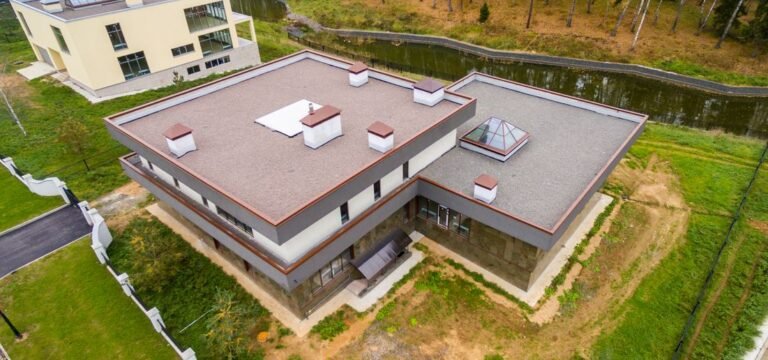
| Flat / low-slope TPO or EPDM | $4.00 – $7.00 | $8,000 – $14,000 | 15 – 25 years |
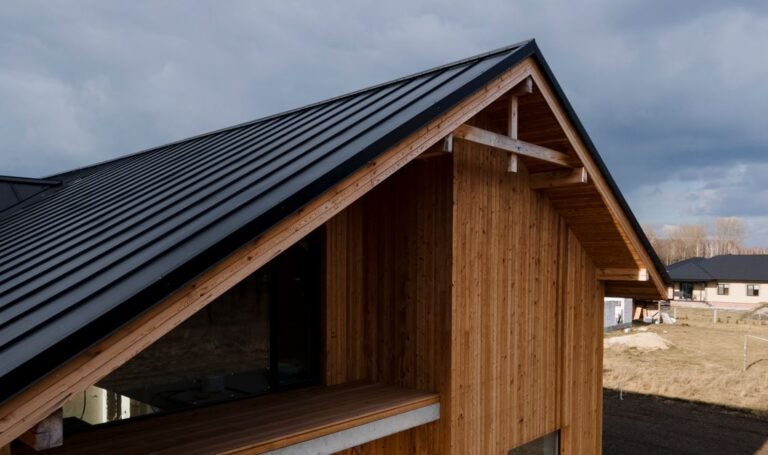
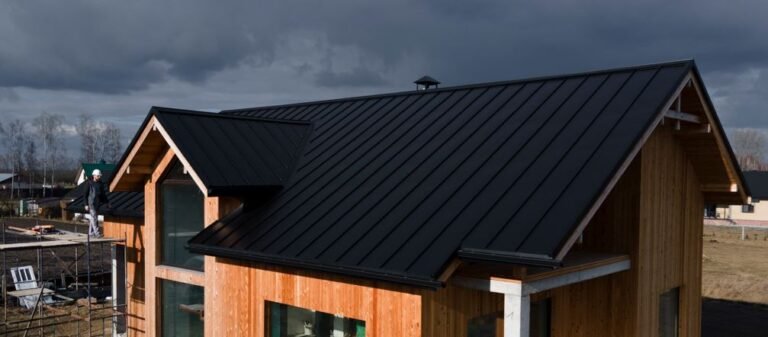
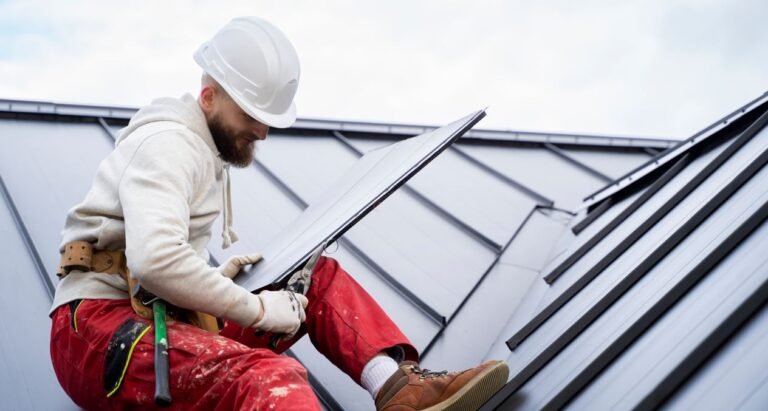
| Metal (exposed-fastener to standing seam) | $6.00 – $17.00 | $12,000 – $34,000 | 30 – 50 years |
| Slate and copper (niche) | $15.00 – $41.00 | $30,000 – $82,000 | 75 – 150 years |
3-Tab Asphalt Shingles
The most affordable option at $4.00 to $5.50 per sq ft. This is a shrinking category statewide as more homeowners move to architectural or impact-resistant products for better hail performance.
Architectural (Dimensional) Shingles
The default choice for 75 to 80 percent of Illinois homeowners, at $4.50 to $8.00 per sq ft. Expect 20 to 30 years, though repeated freeze-thaw cycles and hail exposure tend to trim actual results toward the lower end.
Impact-Resistant (Class 4) Shingles
Rated to UL 2218 Class 4 and increasingly common given Illinois’s hail exposure, at $6.00 to $9.50 per sq ft. The upgrade often pays for itself through the insurance discounts covered later in this guide.
Flat and Low-Slope: TPO and EPDM
Common on ranch-style homes, additions, and Chicago’s two-flats and three-flats, at $4.00 to $7.00 per sq ft. Proper slope and drainage matter enormously here; a quarter-inch of ponding water shortens the life of a flat roof faster than almost anything else.
Metal (Exposed-Fastener to Standing Seam)
Metal ranges from $6.00 per sq ft for exposed-fastener panels to $17.00 for standing seam. Standing seam installations have grown 22 percent across DuPage and Will counties since 2023, driven by homeowners seeking 40 to 50 year lifespans and better wind resistance.
Slate and Copper
Natural slate and copper run $15.00 to $41.00 per sq ft, rare outside high-end and historic homes. Clay and concrete tile, common in warmer states, are unusual in Illinois since repeated freeze-thaw cycles crack tile roofing over time.
What Is Included in the Price
Labor typically makes up roughly half of total cost in 2026, with materials, tear-off, and permitting making up the rest. The breakdown below reflects a typical architectural shingle project of any size.
- Shingle removal: $1,000 to $1,500 for most homes, more for multiple existing layers.
- Ice and water shield: code-required on all eaves in Cook, DuPage, Lake, Will, Kane, and McHenry counties, extending at least 24 inches past the interior wall line, at $2 to $4 per linear foot.
- Ventilation: Illinois code requires 1 sq ft of net free ventilation per 150 sq ft of attic floor space; adding ridge and soffit vents during a re-roof runs $400 to $1,200 and helps prevent ice dams.
- Flashing and drip edge: usually included, but confirm this line item in writing.
- Permits: $50 to $650 by city, detailed below.
Cost by Illinois Region
Illinois pricing splits mainly along one line: Chicago and its collar counties versus downstate. Union labor availability, higher permit fees, and stricter disposal rules keep the Chicago metro well above the rest of the state for an identical roof.
| Region | Typical installed range | Price driver |
|---|---|---|
| Chicago | $9,000 – $20,000 | Union labor, city licensing, stricter disposal rules |
| Collar Counties (DuPage, Lake, Will, Kane, McHenry) | $13,000 – $25,000 | Suburban labor premium, code-required ice and water shield |
| Rockford & Northern Illinois | $8,000 – $17,000 | Runs about 19 percent below the statewide average |
| Springfield, Peoria & Downstate | $7,500 – $16,000 | Lower labor cost of living, most affordable region |
Why Illinois Roofing Costs What It Does
Hail Alley and Severe Storm Frequency
NOAA data shows billion-dollar weather disasters affecting Illinois averaged 2.8 per year from 1980 to 2024, but that number jumped to 8.7 per year between 2022 and 2024, with severe storms accounting for 92 of the 128 billion-dollar disasters on record. Northern Illinois averages 10 to 15 days a year with damaging hail of an inch or larger, and a March 10, 2026 storm system produced hailstones up to 4.8 inches across DuPage and Cook counties. More storms mean more demand, and demand drives price.
Ice Dams and the Code-Required Ice and Water Shield
Illinois code requires self-adhering ice and water shield membrane on all eaves in Cook, DuPage, Lake, Will, Kane, and McHenry counties, the collar counties that ring Chicago. This membrane, required to extend at least 24 inches past the interior wall line, is the primary defense against ice dams, widely cited as the number one winter roofing problem in northern Illinois.
Illinois’s Unique Statewide Roofing License
Illinois has no statewide general contractor license, but roofing is one of only two trades, alongside plumbing, that require one. Under the Illinois Roofing Industry Licensing Act, every roofing contractor in the state must hold a Limited or Unlimited license from the Illinois Department of Financial and Professional Regulation (IDFPR), carry a $10,000 or $25,000 surety bond, and maintain at least $250,000 in property damage and $500,000 in personal injury liability coverage. Unlicensed roofing work is a criminal offense in Illinois, a level of enforcement most states do not have.
Chicago’s Separate Building Code and Union Labor
Chicago enforces its own Chicago Building Code rather than the 2021 IBC/IRC that governs the rest of the state, and the city licenses contractors separately through its Department of Buildings on top of the state roofing license. Union labor and prevailing wage requirements push Chicago labor rates 15 to 25 percent above the suburbs and downstate.
Permit Costs by Region
Chicago uses a flat permit fee schedule for straightforward re-roofs; other jurisdictions vary more.
| Region | Permit fee | Notes |
|---|---|---|
| Chicago | $450 flat | Flat fee for re-roofs up to 5,000 sq ft under the city fee schedule |
| Collar Counties | $150 – $400 | Higher than downstate due to stricter local review |
| Rockford & Northern Illinois | $180 – $650 | Varies by jurisdiction and project scope |
| Springfield, Peoria & Downstate | $50 – $300 | Lowest permit costs in the state |
Insurance and Your Roof Replacement
Wind and Hail Deductibles
Many Illinois insurers now apply a separate wind and hail deductible calculated as 1 to 2 percent of your home’s insured value, rather than a flat dollar amount. On a $300,000 home at 2 percent, that is $6,000 out of pocket before coverage applies, and some policies run as high as 5 percent.
ACV Shift and the Two-Check RCV Structure
Illinois carriers are increasingly shifting roofs older than 10 to 15 years from replacement cost value (RCV) to actual cash value (ACV) settlement, meaning a $15,000 replacement can yield as little as $6,000 after depreciation. Even on an RCV policy, insurers commonly withhold 20 to 40 percent of the payout as recoverable depreciation until the work is completed and invoiced, a two-check structure that surprises many first-time claimants.
The Matching Coverage Question
Illinois has no specific statute requiring insurers to match undamaged shingles after a partial repair. However, the Seventh Circuit held in Windridge of Naperville v. Philadelphia Indemnity Ins. Co. (2019) that replacement cost coverage requires aesthetic matching when materials of like kind and quality are unavailable, treating the building as a whole rather than as individual panels. Every policy still needs to be checked individually.
Cosmetic Exclusions and Contractor Protections
Cosmetic hail damage that does not impair function is increasingly excluded from Illinois policies in 2026, which makes a written contractor inspection report valuable before an adjuster visit. Separately, it is illegal for a roofing contractor to waive or absorb your insurance deductible in Illinois, and only IDFPR-licensed contractors should be trusted with claim documentation.
How Long a New Roof Lasts in Illinois
Illinois’s freeze-thaw cycles, hail exposure, and heavy snow loads tend to push real-world roof life toward the lower end of manufacturer-rated ranges, especially for materials not suited to repeated freezing and thawing.
Replacement Timeline
Most Illinois roof replacements take 1 to 3 days of on-site work for an average-size home with asphalt shingles. The full process, including permitting and inspections, typically spans 2 to 4 weeks.
- Inspection and quote: a few days to a week for a written estimate; get at least three bids before signing.
- Permitting: Chicago processes flat-fee re-roof permits quickly; some suburban and downstate jurisdictions can take up to 4 weeks.
- Tear-off and installation: asphalt or impact-resistant shingles take 1 to 3 days; metal or slate can run longer.
- Final inspection: confirms ventilation and, in the collar counties, ice and water shield compliance.
Illinois’s roofing season runs roughly March through November, with May through September considered peak scheduling and pricing. Winter installations are possible but require cold-weather adhesive handling and can extend timelines.
Getting an Accurate Quote
Use these checks to compare bids on an apples-to-apples basis rather than by bottom-line price.
- Get at least three written estimates stating roof area in squares, not just a lump sum.
- Verify the contractor holds a current IDFPR Roofing Industry Licensing Act license, Limited or Unlimited as appropriate for your project.
- In Chicago, confirm the contractor also holds the required city Department of Buildings license on top of the state license.
- Confirm the quote includes code-required ice and water shield if your property is in Cook, DuPage, Lake, Will, Kane, or McHenry county.
- Ask whether the quote is a tear-off or a layover, and get the material brand and warranty length in writing.
- Never work with a contractor who offers to waive or absorb your insurance deductible; this is illegal in Illinois.
Before you request quotes, use the roof pitch calculator to confirm your slope, and the roof’s square footage tool for a precise area instead of relying on this guide’s estimate ranges. Weighing metal against shingles? The metal roof cost calculator breaks down that comparison for your home.
Want numbers specific to your exact roof, not just a size estimate?
Calculate Your Roof’s Square FootageFrequently Asked Questions
How much does a roof replacement cost in Illinois in 2026?
Most homeowners pay $9,000 to $25,000, with Chicago and the collar counties often higher. Small homes start near $7,500; large homes with metal or slate can exceed $40,000.
How does home size affect roof replacement cost in Illinois?
Small homes under 1,500 sq ft typically run $7,500 to $12,000, medium homes run $15,000 to $20,000, and large homes over 2,500 sq ft run $22,000 to $40,000 or more before premium materials.
What is the cheapest roofing material in Illinois?
Basic 3-tab asphalt shingles, at $4.00 to $5.50 per sq ft. They carry the shortest lifespan at 15 to 20 years, and many homeowners now choose impact-resistant shingles instead given Illinois’s hail exposure.
Do I need a permit to replace a roof in Illinois?
Yes, in every jurisdiction. Chicago charges a flat $450 fee for re-roofs up to 5,000 sq ft; other cities typically run $50 to $650 depending on location.
Does Illinois require roofing contractors to be licensed?
Yes. Roofing is one of only two trades with a statewide Illinois license, issued by IDFPR under the Illinois Roofing Industry Licensing Act. Unlicensed roofing work is a criminal offense in the state.
What is the ice and water shield requirement in Illinois?
Cook, DuPage, Lake, Will, Kane, and McHenry counties require self-adhering ice and water shield membrane on all eaves, extending at least 24 inches past the interior wall line, to prevent ice dams.
How do wind and hail deductibles work in Illinois?
Many insurers apply a separate deductible of 1 to 2 percent of your home’s insured value rather than a flat amount. On a $300,000 home at 2 percent, that is $6,000 out of pocket before coverage applies.
Will my insurance match my existing shingles after a partial repair?
Illinois has no specific matching statute, but a 2019 Seventh Circuit ruling found replacement cost coverage requires aesthetic matching when like-kind materials are unavailable. Check your policy language directly.
How long does a roof replacement take in Illinois?
Asphalt shingles take 1 to 3 days of on-site work. The full process including permitting and inspections typically spans 2 to 4 weeks, longer for metal, slate, or winter installations.
How can I get an accurate roof replacement quote?
Get three written estimates listing roof area in squares and the contractor’s IDFPR roofing license number. Compare by cost per square, not just the bottom-line total.
Free Roofing Calculators
Roof Pitch Calculator
Find your roof’s slope and pitch in seconds.
Calculate now → 📏Roof Square Footage Calculator
Get an exact roof area instead of an estimate range.
Calculate now → 💰Metal Roof Cost Calculator
Compare metal against shingles for your exact home.
Calculate now →Sources
- Illinois Roofing Industry Licensing Act (225 ILCS 335) and IDFPR licensing requirements
- NOAA billion-dollar weather and climate disaster data, and NWS Chicago hail-day records
- Illinois Department of Insurance policy and deductible guidance
- Windridge of Naperville v. Philadelphia Indemnity Ins. Co., 7th Cir. (2019)
- Regional Illinois roofing contractor pricing guides and national cost aggregators, cross-referenced for 2026 Illinois-specific per-square-foot pricing
This guide is for general budgeting purposes. Get a written, in-person inspection before finalizing any roof replacement decision, and confirm current permit fees, licensing status, and insurance terms directly with your city and carrier, since all three change over time.