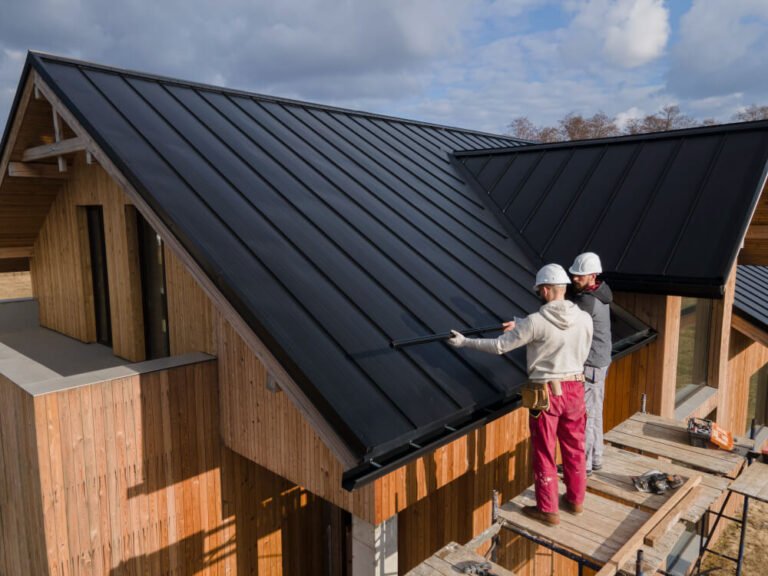

Reputation claims are easy to make and hard to verify, but Massachusetts gives you unusually concrete tools: HIC registration you can look up in seconds, a written-contract requirement on any job over $1,000, a legal cap of one-third on deposits, and a Guaranty Fund that compensates homeowners up to $25,000 on unpaid judgments against registered contractors. Referral share, owner involvement, and years served in town specifically are the questions that go beyond a star rating.
“How do I know if a roofer is actually good, not just good at marketing?” is one of those questions homeowners rarely type directly into a search bar, but it’s exactly what’s behind searches like “best roofing company near me” and “roofing contractor reviews.”
In a town like Lynnfield, where word of mouth still carries real weight, there are specific, concrete ways to answer that question rather than relying on star ratings alone.
Why Referral Volume Tells You Something Star Ratings Don’t
A star rating tells you how happy past customers were. It doesn’t tell you how many of a contractor’s new customers actually come from those past customers recommending them directly.
A company where a large share of new business comes from referrals and repeat customers is signaling something a rating alone can’t: that people who’ve actually lived with the finished work are comfortable putting their own name behind the recommendation. It’s reasonable to ask a contractor directly what share of their work comes from referrals versus advertising.
Lynnfield’s size is part of why this question carries weight here. The town has roughly 13,000 residents across about 4,600 housing units, and 87 percent of occupied homes are owner-occupied. In a community that small, with that many long-term owners, a contractor who has done poor work has limited room to keep finding new customers through word of mouth.
Why “Owner On-Site” Claims Are Worth Verifying, Not Just Hearing
Plenty of roofing companies advertise personal, hands-on ownership involvement. Whether that’s genuinely true, or just a phrase on the homepage, matters for how a project actually gets managed day to day.
Ask directly how often the owner is actually on-site during a typical project, and whether that’s standard practice or reserved for larger jobs only.
A useful follow-up: ask who your point of contact will be if a question comes up mid-project, and whether that person is on-site or in an office. The answer tells you more than the claim itself.
Why Longevity in the Specific Town Matters More Than Longevity in General
A company that’s operated in the broader region for decades isn’t automatically the same as one with a genuine, established reputation in Lynnfield specifically.
Local reputation is built through specific, visible work in a specific community, roofs your neighbors have seen go up, referrals that have circulated through the same social and civic circles for years. It’s worth asking how long a contractor has specifically served Lynnfield, not just the greater Boston area broadly.
Lynnfield’s housing stock gives this a practical dimension too. The median home here was built in 1964, and about 43 percent predate 1960. Older homes bring older framing, original board decking in places, and the ventilation retrofits that come with mid-century construction. A contractor who has worked these specific streets for years has seen what is under these roofs before the tear-off begins.
What You Can Actually Verify in Minutes
Massachusetts makes several reputation claims checkable rather than taking them on faith. Before the first meeting ends, these are worth looking up.
| What to check | Where to check it | What it tells you |
|---|---|---|
| HIC registration | The state’s Home Improvement Contractor lookup at mass.gov | Whether they are registered, under what name, and for how long |
| Construction Supervisor License | The state’s CSL lookup at mass.gov | Required for structural work such as rafters, dormers, or load-bearing changes |
| Business name history | Registration records cross-referenced against review history | Catches a company that closed and reopened under a new name |
| Physical address | A map and street view, not just a listing | Separates an established local operation from a transient one |
| Review history by date | The timeline of reviews, not only the average rating | Reviews spread across years read differently than a post-storm cluster |
| Insurance certificate | Request it, then call the insurer listed on it | Confirms the policy is active rather than lapsed or fabricated |
One point worth knowing before you look: HIC registration is required for home improvement work over $1,000, which roofing nearly always exceeds. If a roofer is not registered, that is not a technicality. It also removes your access to the state’s Guaranty Fund, which only covers work by registered contractors.
Why a Detailed Inspection Report Signals Real Accountability
A contractor who provides a thorough inspection report, with photos and a clear explanation of what they found, is giving you something you can actually evaluate and compare, rather than a verbal assessment you’re asked to simply trust.
This documentation also protects you later if a question comes up about what condition the roof was actually in before work began.
It is also what makes competing bids comparable. Two quotes built from two documented inspections can be read side by side. Two bottom-line numbers with no findings behind them cannot.
Why Scam Awareness Matters More Right After a Storm
Following any significant regional storm, it’s common for unfamiliar names to start canvassing neighborhoods with urgent-sounding pitches.
A locally rooted contractor with a genuine, years-long presence in the community is a meaningfully safer bet in this situation than an unfamiliar name that showed up right after the storm and may not be around if a warranty issue comes up two years later.
Massachusetts gives you a specific protection in exactly this scenario. A contract signed at your home after door-to-door solicitation carries a three business day right to cancel without penalty. Cancellation should be in writing, and the contractor must return your deposit within 10 business days. If the contractor left the required written cancellation notice out of the contract, the window stays open until proper notice is given.
Why Checking How Long a Company Has Held the Same Business Name Matters
Some contractors with a genuinely poor track record close and reopen under a new business name to escape negative reviews or unresolved complaints.
Checking how long a company has operated under its current name, and cross-referencing that against licensing records, is a simple way to catch this pattern before it becomes your problem rather than someone else’s.
The registration record is the useful anchor here, because it carries a date. A company presenting itself as a thirty-year local fixture whose HIC registration was issued eighteen months ago is worth a direct question about what the business was called before.
The Protections Massachusetts Already Gives You
Reputation checks matter most because they happen before anything goes wrong. But it helps to know what the state already requires, because a contractor’s willingness to follow these rules is itself a reputation signal.
| Protection | What it means |
|---|---|
| HIC registration | Required for home improvement work over $1,000, and verifiable by name or number at mass.gov |
| Written contract | Required on work over $1,000, with scope, specific materials, dates, price breakdown, payment schedule, warranty terms, permit responsibility, and a change-order process |
| Deposit cap | A contractor may not take more than one-third of the contract price before work begins |
| Three-day cancellation | Applies to contracts signed at your home after door-to-door solicitation, with the deposit returned within 10 business days |
| Arbitration program | The state’s HIC program maintains an arbitration process for homeowner and contractor disputes |
| Guaranty Fund | Compensates eligible homeowners up to $25,000 from the fund for unpaid judgments against contractors |
| CSL requirement | A Construction Supervisor License applies to structural work, such as replacing rafters or altering load-bearing components |
To sanity-check the numbers behind any quote, measure your roof with our roof square footage calculator and confirm the slope with the roof pitch calculator.
What to Actually Ask During a First Consultation
A few direct questions help you evaluate reputation beyond the surface:
- Can you provide references from Lynnfield homeowners specifically, not just the broader region?
- How often is the owner personally involved in a project like mine?
- What does your documented inspection process actually include?
- How long have you worked specifically in this community, and how would I verify that?
- What is your HIC registration number, and has the business operated under any other name?
- Will this job require a Construction Supervisor License, and who holds it?
- What share of your work comes from referrals rather than advertising?
- What is your deposit, and what milestones trigger the remaining payments?
Why This Matters More Than Picking the Lowest Bid
A slightly higher quote from a contractor with a genuine, verifiable local reputation is often the better value than the lowest bid from an unfamiliar name, since the real cost of a poorly managed roofing project, redone work, warranty disputes, and a company that’s hard to reach after the job, usually outweighs whatever was saved upfront.
Getting Answers You Can Actually Verify
Because reputation claims are easy to make and harder to verify, it’s worth asking specific, pointed questions rather than accepting a general impression of trustworthiness.
A Lynnfield roofing company with genuine community roots, built on decades of hands-on, referral-driven work, should be able to answer each of these questions directly and specifically, which tells you far more than a star rating or a well-designed website ever could.
Frequently Asked Questions
How do I know if a roofer is actually good and not just good at marketing?
Ask for things you can verify rather than impressions. Request references from Lynnfield homeowners specifically, ask what share of their work comes from referrals versus advertising, ask for a documented inspection report with photos, and look up their HIC registration to confirm how long the business has operated under its current name.
Does a roofing contractor need a license in Massachusetts?
Contractors performing home improvement work over $1,000 must hold a valid Home Improvement Contractor registration, which roofing nearly always exceeds. Structural work, such as replacing rafters or altering load-bearing components, also requires a Construction Supervisor License. Both can be looked up at mass.gov.
Why does HIC registration matter beyond being a legal requirement?
Because it is also your access to state remedies. The Guaranty Fund compensates eligible homeowners for unpaid judgments against contractors, and that protection applies to registered contractors. Hiring an unregistered roofer removes that backstop entirely.
How much can a Massachusetts contractor ask for as a deposit?
No more than one-third of the total contract price before work begins. Remaining payments should follow completed work, with the final payment due after completion and your inspection. A contractor pushing past that limit is asking you to waive a protection state law provides.
What has to be in a Massachusetts roofing contract?
For work over $1,000, a written contract is required. It should include the contractor’s details and HIC registration number, a detailed scope with specific materials, start and completion dates, total price with a line-item breakdown and payment schedule, warranty terms, permit responsibility, cleanup obligations, a written change-order process, and notice of the three-day cancellation right.
Can I cancel a roofing contract I signed at my door?
Yes. For contracts signed at your home after door-to-door solicitation, you have three business days to cancel without penalty. Cancel in writing, and the contractor must return your deposit within 10 business days. If the required written cancellation notice was left out of the contract, the window stays open until proper notice is given.
What is the Massachusetts Guaranty Fund?
A state fund administered through the Home Improvement Contractor program that compensates eligible homeowners up to $25,000 for unpaid judgments against contractors. The program also maintains an arbitration process for homeowner and contractor disputes. Check current eligibility rules and procedures with the state before relying on it.
Why ask what share of a contractor’s work comes from referrals?
A star rating tells you how satisfied past customers were. Referral share tells you how many are willing to put their own name behind a recommendation. In a town of roughly 13,000 residents with 87 percent owner-occupancy, a contractor doing poor work has limited room to keep finding customers that way.
How do I catch a contractor who closed and reopened under a new name?
Check how long the company has operated under its current name and cross-reference that against registration records, which carry a date. A business presenting itself as a decades-old local fixture whose registration was issued recently is worth a direct question about prior names.
Should I hire the contractor with the lowest bid?
Not by default. A modestly higher quote from a contractor with a verifiable local reputation is often better value, because redone work, warranty disputes, and a company that becomes hard to reach after the job usually cost more than the initial savings.
Why does a documented inspection report matter?
Three reasons. It gives you findings you can evaluate rather than a verbal assessment to trust, it makes competing bids genuinely comparable, and it documents the roof’s condition before work began in case a question arises later.
Free Roofing Calculators
Sources
- Mass.gov, Home Improvement Contractor Arbitration and Guaranty Fund (registration requirement, arbitration program, $25,000 Guaranty Fund compensation for unpaid judgments)
- RoofVista, Massachusetts Roofing Payment Law and Consumer Rights 2026 (one-third deposit limit under MGL 142A, written contract requirements, HIC and CSL thresholds, three-day cancellation and 10-day deposit return)
- Point2Homes, Lynnfield MA demographics from 2019-2023 American Community Survey estimates (population, housing units, median year built, owner-occupancy rate)
Disclaimer: This article is general information about vetting a roofing contractor in Massachusetts, not legal advice. Registration thresholds, deposit limits, cancellation rights, arbitration eligibility, and Guaranty Fund terms are set by state law and can change. Verify current requirements and registration status directly with the Massachusetts Office of Consumer Affairs and Business Regulation, and consult an attorney about contract or dispute questions.