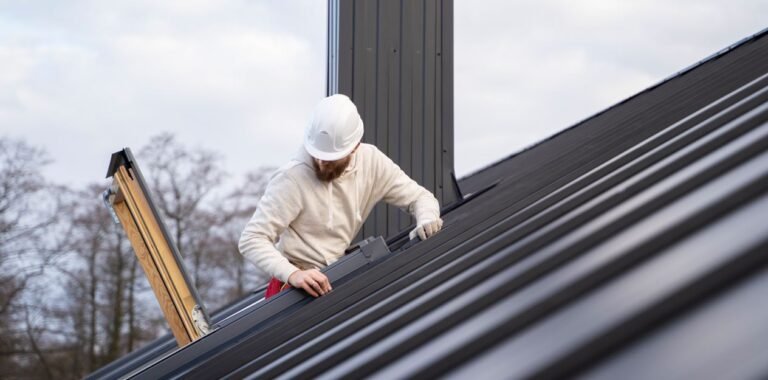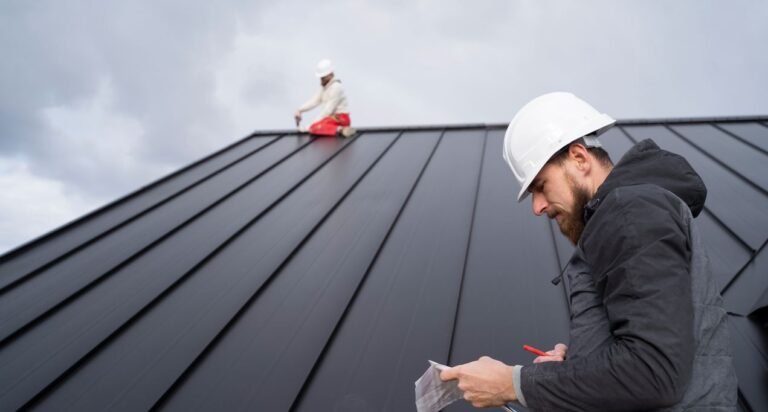
Yes, but the installation has to change. Below 40 F, shingles stiffen and the factory sealant stops bonding on its own, so manufacturers require hand-sealing with roof cement, warm overnight storage, and attention to membrane temperature. That matters more than it sounds: wind ratings are measured on sealed shingles, and at least one major warranty excludes damage from a failure to hand-seal in cold weather.
Yes, a roof can be replaced in Bismarck after the weather turns, but below 40 F the shingles stop behaving the way they do in summer, and the installation has to change to match. That threshold arrives fast here. A 2025 Minot Daily News report on the winter outlook noted that Bismarck’s average high drops from 66 F on October 1 to just 34 F by the end of November.
What happens to asphalt shingles below 40 F?
Asphalt shingles get stiffer and slower to seal once air and surface temperatures fall to 40 F or below. Most architectural shingles have a factory-applied strip of sealant that bonds each shingle to the course beneath it. Owens Corning’s cold-weather technical bulletin explains that this sealant is thermally activated by direct sun, so shingles installed in cold weather may not seal until warmer temperatures arrive. The same bulletin notes that cold shingles can take longer to lay flat.
That gap matters in a windy place. Climate-zone.com’s long-term averages put Bismarck’s mean wind speed at about 10 mph in every month from October through March. An unsealed shingle is more exposed to wind lifting it until the sealant finally bonds, which on a late-fall roof can mean the following spring.
Cold also makes shingles more brittle. Fiberglass shingles can crack if they are bent hard or nailed carelessly in low temperatures, so cold-weather jobs move slower and need more care at hips, ridges and valleys.
How do roofers adjust a cold-weather installation?
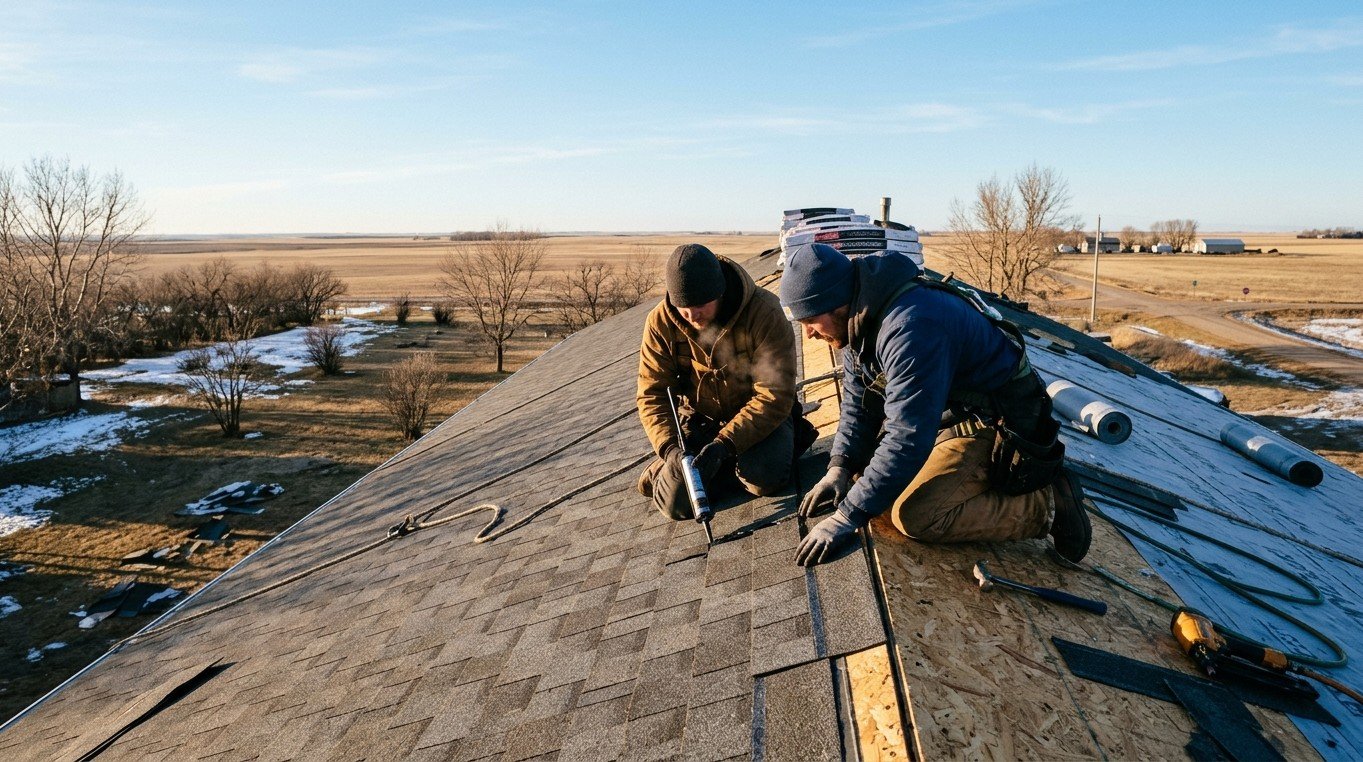
Manufacturers publish specific steps for cold installs, and a good crew follows them rather than hoping for a warm week. The most common adjustments include:
- Hand-sealing shingles with roofing cement. Owens Corning calls for four 1-inch dabs under each laminate shingle along the roof perimeter in cold weather.
- Storing shingles somewhere warm before they go up. GAF recommends keeping them in an area heated above 70 F the day before installation.
- Watching membrane temperatures. GAF’s guidance says self-adhering underlayment membranes should be at least 45 F when applied if the air temperature is below 40 F.
- Working with the sun. Malarkey’s cold-weather bulletin advises crews to follow the sun across the roof, and notes that south- and west-facing slopes and darker shingles tend to seal faster.
- Choosing valley details carefully. Roofing Magazine notes that open metal valleys are often suggested in cold weather because closed and woven valleys require bending shingles.
Before you sign, ask how the crew plans to handle each of these. Roofing contractors in Bismarck, ND who work through the shoulder seasons should be able to tell you exactly when they hand-seal, where they stage materials overnight, and what temperature makes them stop for the day.
One more product limit worth adding to that list. Roof cements and adhesives carry their own labeled minimums, and they do not all match the shingle guidance. Some wet-patch cements work down to around 20 F, ice and water shield generally wants 40 F or higher, and certain roof cements call for 45 F and rising. There is no single universal cutoff, so the right question is which product the crew is using and what its label says.
Which months fall below the 40 F line in Bismarck?
Average daytime highs give a quick sense of how much of the year sits on each side of that threshold. These figures come from climate-zone.com’s long-term monthly averages for Bismarck.
| Month | Average high | Average low |
|---|---|---|
| October | 58.7 F | 32.5 F |
| November | 39.3 F | 17.8 F |
| December | 24.5 F | 3.3 F |
| March | 38.5 F | 17.8 F |
| April | 54.9 F | 31.0 F |
October and April usually still offer workable afternoons. November and March sit right at the line, so the job depends on the forecast for that specific week. December through February is cold enough that most full replacements are done only when something forces the timing.
Snow is the other half of the scheduling problem. Bismarck averages about 50.5 inches of snow a year, and a roof has to be clear and frost-free before anyone walks it, which can cost a day or two after a storm even when the temperature cooperates.
What the Warranty Actually Says About Unsealed Shingles
This is the question most homeowners do not think to ask, and it is the one with real money behind it.
Shingle wind ratings are not measured on loose shingles. ASTM D7158, the standard behind the high mph figures on a product sheet, measures the force needed to lift shingles that are sealed. Its classes run Class D at 115 mph, Class G at 150 mph, and Class H at 190 mph. The Insurance Institute for Business and Home Safety has found that the strength of the seal between shingles is a key factor in wind performance, and shingles that never sealed can blow off below their rated speed.
That has a direct warranty consequence. GAF’s shingle warranty excludes damage caused by a failure to hand-seal shingles installed in cold weather. In other words, hand-sealing is not an optional nicety a careful crew adds, it is the step that keeps your wind coverage intact on a cold install.
What to get in writing on a late-season job: that the crew will hand-seal per the manufacturer’s cold-weather bulletin, which manufacturer’s instructions they are following, and that the wind warranty remains in force. Ask for the hand-sealing to appear as a line item on the scope rather than as a verbal assurance.
High wind warranties also commonly depend on using the manufacturer’s own starter strip and hip and ridge products, and in some cases a specific nail count. Mixing accessory brands to save a little can quietly reduce the coverage you are paying for, which matters more on a roof that will spend its first winter unsealed.
Should you replace the roof now or wait for spring?
It depends on what the roof is doing right now. A few situations make waiting a bad idea:
- An active leak that is already wetting insulation or drywall
- Hail or wind damage that has exposed the deck or torn underlayment
- A pending home sale or insurance deadline with a fixed date
In those cases, a cold-weather install done to manufacturer guidance is far better than a winter of water getting into the house. If the deck is exposed and full replacement can’t happen yet, a temporary repair or tarp can buy time until conditions improve.
If the roof is simply old, with worn granules or curling edges but no leaks, spring is usually the better choice. You’ll have warmer days for the sealant to bond, more flexible shingles, and a longer window to compare bids. The catch is that spring calendars fill quickly after a snowy winter, so it helps to get estimates in late winter and reserve a spot.
| Situation | Reasonable call |
|---|---|
| Active leak wetting insulation or drywall | Replace now, to manufacturer cold-weather guidance |
| Storm damage with exposed deck or torn underlayment | Replace now, or tarp and schedule the permanent work |
| Fixed deadline from a sale or insurance claim | Replace now, with hand-sealing in the written scope |
| Old roof, worn granules, no leaks | Wait for spring; get estimates in late winter |
| A few missing shingles, deck intact | Targeted repair now, full replacement in spring |
| Ice dam leaking at the eaves | Safe ice removal now, plus an insulation and ventilation assessment |
What a Replacement Costs in North Dakota
Cold-weather work takes longer and needs more care, so a late-season quote can sit above a summer one. Knowing the baseline helps you tell a legitimate seasonal difference from an opportunistic number.
| Item | Typical North Dakota figure |
|---|---|
| Average roof replacement | About $7,908 |
| Overall range by material and home size | $6,148 – $20,468 |
| Asphalt shingles, installed | About $4.42 per sq ft |
| Metal roofing, installed | About $8.53 per sq ft |
| Best scheduling window | Late spring through early fall |
| Peak season premium | Summer brings higher prices and longer waits |
Metal is worth a look in this climate for a different reason than cost. It sheds snow and ice more readily, which helps with ice damming, and it handles large temperature swings well. To turn these per-square-foot figures into a real number, measure your roof with our roof square footage calculator, then compare options with the metal roof cost calculator.
What should you ask before a late-season replacement?
Whatever you decide, a few questions will tell you whether a contractor is taking the cold seriously:
- Which manufacturer’s cold-weather instructions will you follow, and can I see them?
- Will you hand-seal the shingles, and where on the roof?
- What is the lowest temperature you will install at, and what happens if the forecast changes mid-job?
- How will you protect the open deck overnight if the job runs more than a day?
- Does the warranty cover shingles that don’t seal until spring?
- Where will the shingles be stored the night before, and at what temperature?
- Will you use open metal valleys, and if not, how will you avoid bending cold shingles?
- Are you using the manufacturer’s own starter and hip and ridge products, so the wind warranty stays at its full rating?
Clear answers to those questions matter more than the season itself. A careful crew in November can deliver a better roof than a rushed crew in June.
Frequently Asked Questions
Can you replace a roof in winter in Bismarck?
Yes, but the installation has to change. Below 40 F, shingles stiffen and the factory sealant will not activate on its own, so manufacturers require hand-sealing with roof cement, warm overnight storage, and attention to membrane temperature. Done to those instructions, a cold install is sound. Done as though it were July, it is not.
What happens to shingles below 40 F?
They get stiffer and slower to seal. The factory sealant strip is thermally activated by direct sun, so shingles installed cold may not bond until warmer weather arrives. Cold shingles also take longer to lay flat and become more brittle, so they can crack if bent hard or nailed carelessly, especially at hips, ridges and valleys.
What is hand-sealing and why does it matter?
It is applying dabs of roofing cement under each shingle so it holds while the factory sealant is inactive. Owens Corning calls for four 1-inch dabs under each laminate shingle along the roof perimeter in cold weather. It matters because GAF’s shingle warranty excludes damage caused by a failure to hand-seal shingles installed in cold weather.
Does a wind warranty still apply if the shingles have not sealed?
Be careful here. ASTM D7158, the standard behind the high mph ratings on product sheets, measures the force needed to lift shingles that are sealed, and IBHS has found seal strength is a key factor in wind performance. Shingles that never sealed can blow off below their rated speed. Ask for written confirmation that hand-sealing is in the scope and the wind warranty stays in force.
How should shingles be stored before a cold install?
GAF recommends keeping them in an area heated above 70 F the day before installation. Ask the contractor where materials will be staged overnight and at what temperature, since bundles left outside in a Bismarck November will be stiff and harder to handle without cracking.
Which months are too cold for roofing in Bismarck?
October and April usually still offer workable afternoons, with average highs near 58.7 F and 54.9 F. November and March sit right at the line at 39.3 F and 38.5 F, so those weeks depend on the forecast. December through February, with an average high of 24.5 F in December, is cold enough that most full replacements happen only when something forces the timing.
Should I replace my roof now or wait for spring?
Replace now if there is an active leak wetting insulation or drywall, storm damage that has exposed the deck or torn underlayment, or a fixed deadline from a sale or insurance claim. Wait for spring if the roof is simply old with worn granules or curling edges and no leaks. Get estimates in late winter either way, since spring calendars fill fast.
What if the deck is exposed and a full replacement cannot happen yet?
A temporary repair or a properly anchored tarp can buy time until conditions improve. That is far better than leaving the deck open through a winter of melting and refreezing, and it keeps the permanent work on a schedule where the materials can perform as intended.
Why are open metal valleys recommended in cold weather?
Because closed and woven valleys require bending shingles, and cold shingles crack when bent hard. Roofing Magazine notes open metal valleys are often suggested for cold installs for that reason. If a contractor plans closed valleys on a late-season job, ask how they will avoid cracking.
Do roof cements and membranes have their own temperature limits?
Yes, and they do not all match the shingle guidance. GAF says self-adhering underlayment membranes should be at least 45 F when applied if air temperature is below 40 F. Separately, some wet-patch cements work down to around 20 F, ice and water shield generally wants 40 F or higher, and certain roof cements call for 45 F and rising. Ask which products the crew is using and what their labels say.
How much does a roof replacement cost in North Dakota?
The average is about $7,908, with a range of roughly $6,148 to $20,468 depending on material and home size. Asphalt shingles run about $4.42 per square foot installed and metal about $8.53. Late spring through early fall is the best scheduling window, and summer brings both higher prices and longer waits.
Is metal roofing a better choice for this climate?
It is worth comparing. Metal sheds snow and ice more readily, which helps with ice damming, and it handles large temperature swings well. It costs roughly twice as much per square foot as asphalt, so the case depends on how long you plan to own the home.
Free Roofing Calculators
Sources
- Owens Corning cold-weather technical bulletin (thermally activated sealant, four 1-inch dabs along the perimeter, shingles slower to lay flat)
- GAF cool-weather roofing guidance (storage above 70 F the day before, self-adhering membranes at 45 F or higher when air is below 40 F)
- Malarkey cold-weather bulletin (following the sun, faster sealing on south and west slopes and darker shingles)
- Roofing Magazine on cold-weather valley details (open metal valleys preferred over closed and woven)
- Climate-zone.com long-term monthly averages for Bismarck (monthly highs and lows, mean wind speed October through March)
- Minot Daily News 2025 winter outlook report (average high falling from 66 F on October 1 to 34 F by late November)
- Climate of Bismarck, North Dakota (average annual snowfall of 50.5 inches)
- Shamrock Restoration, Shingle Wind Ratings Explained (ASTM D7158 classes measured on sealed shingles, IBHS findings on seal strength, GAF warranty exclusion for failure to hand-seal in cold weather, accessory requirements for high wind warranties)
- The Roofing Brief, Roof Repair in Winter (product-specific temperature ranges for cements, membranes and ice and water shield)
- This Old House, Roof Replacement Cost in North Dakota (average and range, per-square-foot pricing by material, seasonal scheduling notes)
Disclaimer: Costs, temperature thresholds, and climate figures in this guide are 2026 estimates compiled from published manufacturer, contractor, and climate sources for planning purposes only. Manufacturer cold-weather requirements and product temperature ranges vary, so follow the bulletin for the specific products being installed. Warranty terms and exclusions differ by manufacturer and change over time; confirm coverage in writing before a late-season installation.