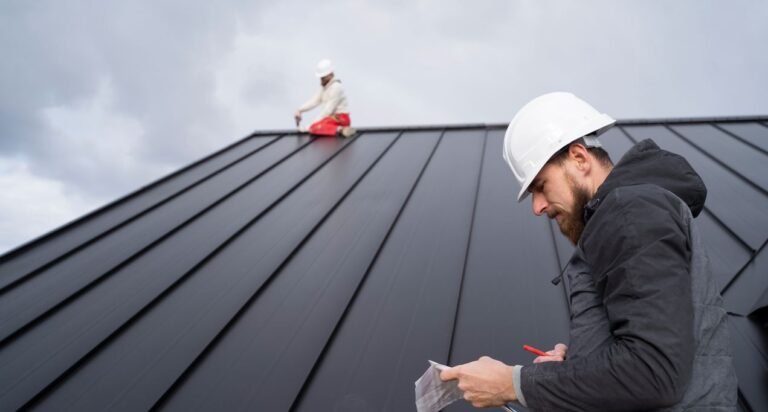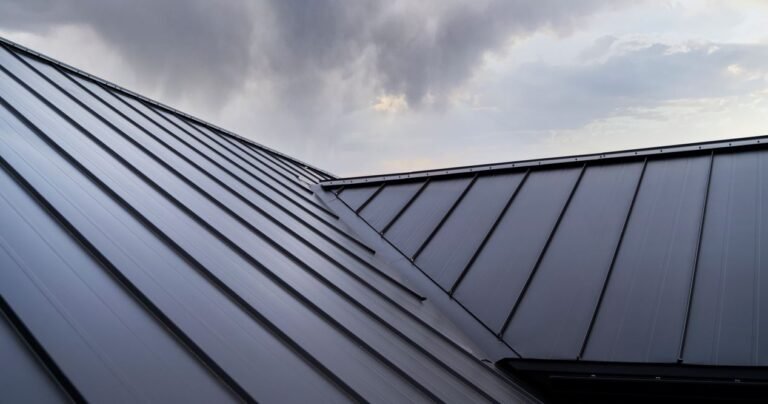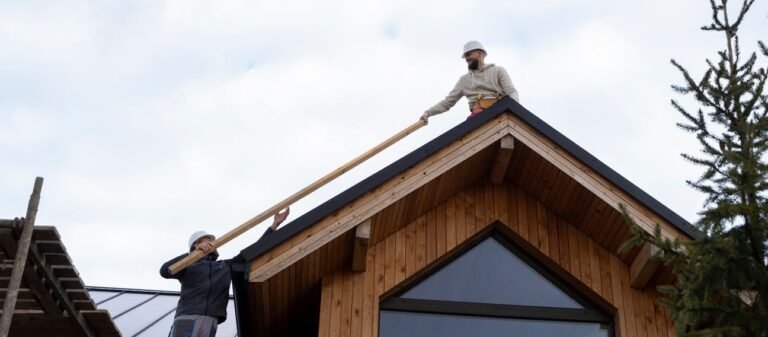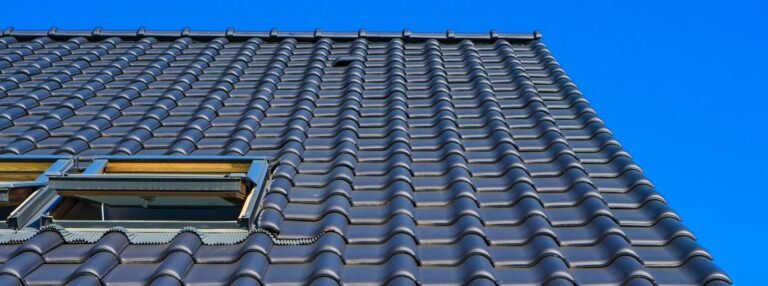
Pitch matters less than most people expect. Almost anything between 3/12 and 9/12 lands within a few percent of ideal, and direction matters more: a shallow south slope beats a steep north one every time. What actually decides your system size is roof shape and the fire setbacks, which can eat half the usable area on a small hip face.
I built a free tool that measures a roof from satellite imagery and lays out solar panels on it, and the question I get asked most is some version of “is my roof even any good for this.” Pitch is a big part of the answer. Here is how it works, in plain terms, from someone who has looked at a lot of roofs.
The ideal pitch is close to your latitude
A panel makes the most power when the sun hits it square on. Over a whole year, the angle that gets closest to square on average is roughly your latitude. Phoenix is at about 33 degrees, so a roof pitched around 7/12 or 8/12 is close to perfect there. Minneapolis is at 45 degrees, so a steeper roof does a little better.
That said, the difference between perfect and ordinary is smaller than people think. A 4/12 roof in Phoenix gives up maybe 5 percent against the ideal. A flat roof with panels laid nearly flat gives up more, around 10 to 15 percent, and collects dust faster. Almost any pitch between 3/12 and 9/12 is fine.
The industry numbers back this up, and they are even more forgiving than the latitude rule suggests. The Department of Energy puts the optimal south-facing tilt at 15 to 40 degrees, and typical roof pitches from 0 to 55 degrees come in only a few percent below ideal. EnergySage’s San Diego example makes the point concretely: at 33 degrees latitude the ideal tilt is 30 degrees, and an 18 degree roof loses about 2 percent. The practical rule is latitude, but somewhat flatter, because cloudy days favor lower angles.
| Pitch | Angle in degrees | Reads as |
|---|---|---|
| 2/12 | 9.5 | Nearly flat, often exempt from the fire setback |
| 3/12 | 14.0 | Shallow, bottom of the easy range |
| 4/12 | 18.4 | Gentle, walkable without thinking |
| 6/12 | 26.6 | A normal house |
| 8/12 | 33.7 | Steep in an installer’s eyes |
| 10/12 | 39.8 | Pointed, older colonials |
| 12/12 | 45.0 | Chalet steep |
Direction matters more than pitch
South facing is best in the US. West is second and is sometimes worth more money than south, because west facing panels make their power in the late afternoon when utility rates are highest. East is third. North facing panels work, but they lose 20 to 30 percent and most installers will not put them there unless there is no other roof.
So if you have a choice between a steep north slope and a shallow south slope, the shallow south slope wins every time.
Here is a useful calibration on how small the penalties are once you are off due south by a little. Panels 10 degrees west of ideal lose under 1 percent over a year. In EnergySage’s San Diego example, east facing loses 15 percent and west facing loses 10 percent at the same tilt. An ideal east-west split system loses about 10 to 15 percent, and closer to 20 percent on a real roof with non-ideal angles.
Steep roofs cost more to install
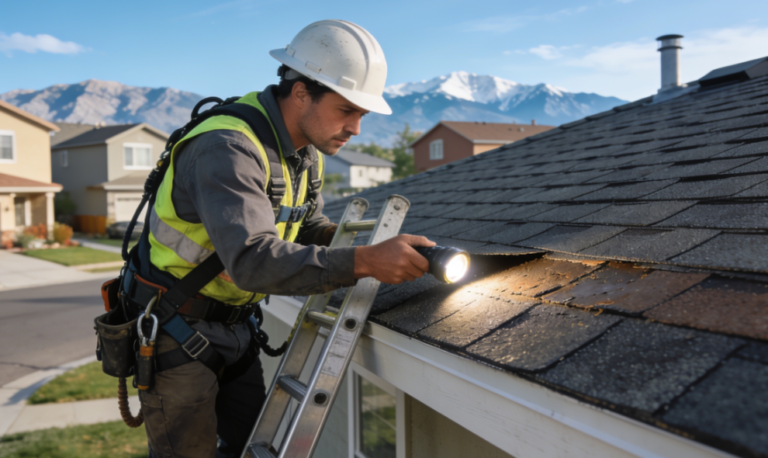
Anything over about 8/12 is a steep roof in an installer’s eyes. The crew needs more fall protection, the work goes slower, and some companies add a steep roof charge. It is not a reason to skip solar, but it is a reason to expect a slightly higher install line on the bid.
Low pitch roofs under 3/12 can go the other way. Panels on a nearly flat roof often need tilt racks to get them off the deck, which adds racking cost and changes how many fit.
There is a quiet offset on the low end, though. Roofs at 2:12 or shallower are exempt from the IRC’s rooftop solar access and pathway requirements, so a nearly flat roof can give back in usable area some of what it costs in racking. Confirm it with your own building department, since adopted code editions and local amendments vary.
Pitch and snow, pitch and dust
Two climate notes, because they pull in opposite directions. In snow country a steeper roof sheds snow off the panels faster, and a panel under six inches of snow makes nothing. Installers in Minnesota and Colorado like 6/12 and up for that reason alone. In the desert the problem is dust, and a shallow pitch lets it settle and bake on. Rain cleans a 6/12 roof on its own. A 2/12 roof in Phoenix may need a hose a couple of times a year to hold its numbers.
The soiling research lines up with that, and it is a bigger effect than I expected before I started looking at the data. Arid, low-rainfall regions lose roughly 3 to 7 percent of annual production to soiling alone, with Phoenix in the 4 to 7 percent band and Las Vegas at 5 to 8 percent. Humid and temperate regions generally stay under 1 to 2 percent. Seattle is 0.5 to 1.5 percent.
| Tilt | How soiling behaves |
|---|---|
| 0 to 15 degrees, roughly flat to 3/12 | Accumulates fastest, and pooled water can leave mineral deposits |
| 25 to 45 degrees, roughly 6/12 to 12/12 | Most soiling washes off with moderate rain |
| 45 to 60 degrees | Strong self-cleaning, minimal buildup |
About 20 mm, or 0.8 inches, of rain a month is enough to keep panels reasonably clean without help. In the desert Southwest, three to four cleanings a year is the common recommendation, which is a little more often than I used to tell people.
Reading your own roof
You do not need a ladder. Stand across the street and look at the gable end. A 4/12 roof looks gentle, the kind you could walk without thinking. A 6/12 looks like a normal house. An 8/12 looks steep and a 10/12 or 12/12 is the pointed roof you see on older colonials and chalets. If you have the original plans or a recent roofing bid, the pitch is written on it. If you have none of that, the tool below reads it from the imagery.
If you want to put a number on it yourself, our roof pitch calculator converts between rise over run, degrees and slope, and the roof square footage calculator turns a footprint and a pitch into actual roof area, which is the number that matters for panel count.
What the roof is made of matters too
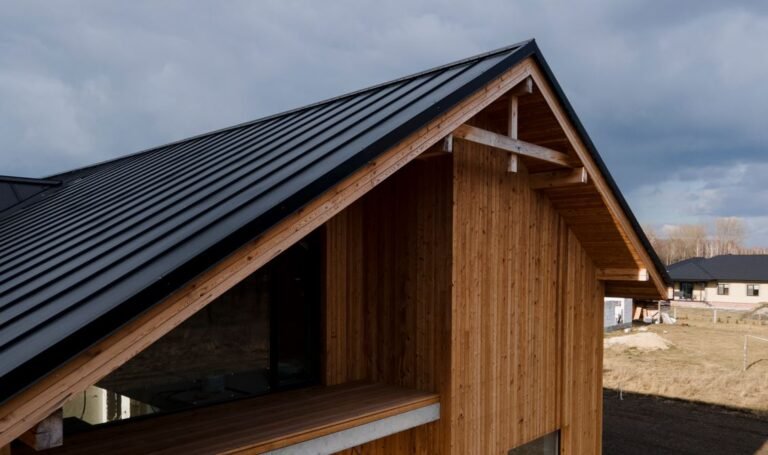
Composition shingle is the easiest and cheapest roof to put solar on. Tile is common in the Southwest and costs more, because the crew has to pull tiles, set the mounts to the deck, and reset or replace the tiles around them. Metal standing seam is the best of all, since the mounts clamp to the seams with no holes at all. Flat foam and TPO roofs use ballast or special mounts.
If your roof is within five years of needing replacement, replace it first. Pulling panels off to re-roof later costs real money.
| Roof material | How the mounts attach | Relative install cost |
|---|---|---|
| Composition shingle | Flashed penetrations into the rafters | Lowest, the baseline |
| Standing seam metal | Clamps to the seams, no holes | Often the easiest of all |
| Concrete or clay tile | Tiles pulled, mounts set to the deck, tiles reset or replaced | Higher, with breakage allowance |
| Flat foam or TPO | Ballast or specialty mounts, often on tilt racks | Varies, plus racking |
| Roof within 5 years of replacement | Any | Replace the roof first |
Hip roofs, gables and the fire setback
The shape of the roof decides more than the pitch does. A gable roof has two big faces, and if one points south you are in great shape. A hip roof has four faces that each slope to a point, so every face is a triangle and triangles waste panel space along the edges. Most building codes also require a clear path along the ridge and down at least one edge so a firefighter can get on the roof, usually 18 to 36 inches. On a small hip face that setback can take half the usable area.
What the setback rules actually say
This is the part that surprises people most, so it is worth spelling out. Under IRC R324.6, the rules work roughly like this:
| Requirement | What it means |
|---|---|
| Access pathways | Two pathways on separate roof planes, each at least 36 inches wide, running from the lowest roof edge up to the ridge. At least one must be on the street or driveway side. |
| Ridge setback, under 33% coverage | 18 inches on both sides of a horizontal ridge |
| Ridge setback, over 33% coverage | 36 inches on both sides |
| Sprinklered homes | The coverage threshold rises to 66% with an NFPA 13D or IRC P2904 system |
| Exemptions | Roofs at 2:12 or less, detached nonhabitable structures, and cases where the code official waives rooftop operations |
| How coverage is measured | Plan view area, the horizontal projection, not sloped panel area |
Two things fall out of that. The 18 versus 36 inch question is not arbitrary, it depends on whether your array covers more than a third of the roof in plan view, so a bigger system can trigger a bigger setback and partly eat its own gain. And because coverage is measured in plan view rather than sloped area, dividing sloped array area by plan roof area overstates your share and can scare you off a system that actually complies.
How many panels actually fit
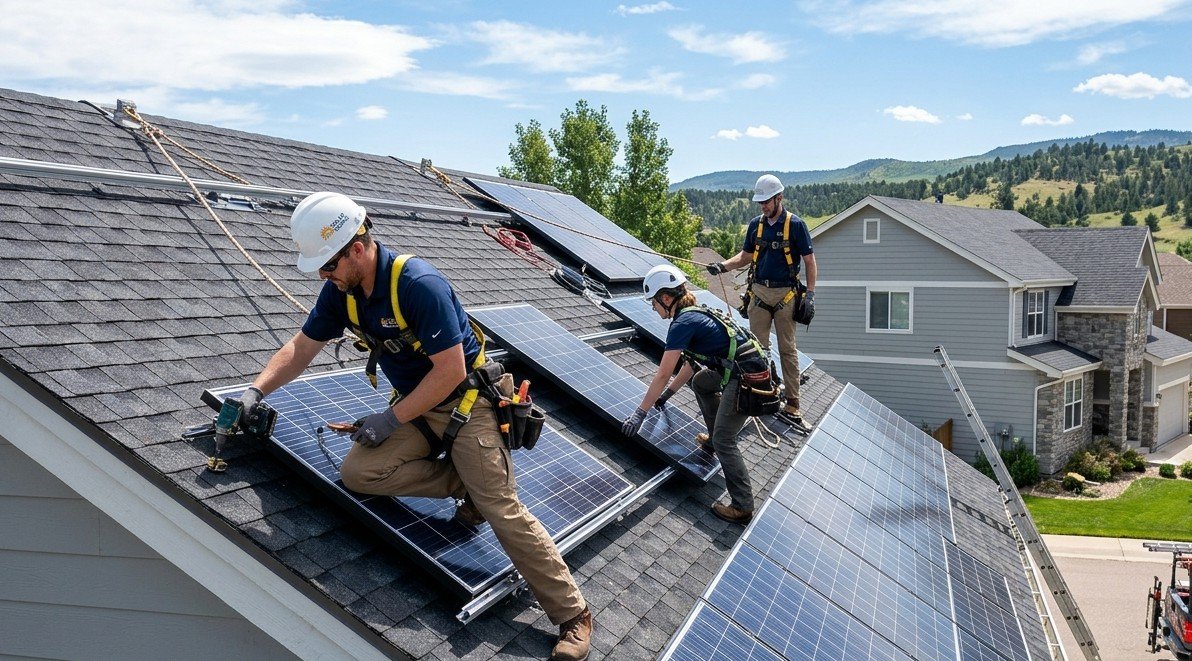
This is where pitch, direction and shape all come together, and it is the part nobody can eyeball. A hip roof with four small faces fits far fewer panels than a gable roof with one big south face of the same square footage. Vents, skylights and the fire setbacks along the ridge and edges all eat space.
A typical American home uses somewhere around 863 kWh a month, which is EIA’s 2024 figure, and covering that usually takes 15 to 25 modern panels. A hot climate home with two AC units can run 1,500 to 2,500 kWh in July and need more. Whether that many fit on the good faces of your roof is the real question.
| Monthly use | Rough system size | Modern panels, about |
|---|---|---|
| 600 kWh | 5 kW | 12 to 14 |
| 863 kWh, the US average | 7 to 8 kW | 17 to 20 |
| 1,100 kWh | 9 to 10 kW | 22 to 25 |
| 1,500 kWh | 12 to 13 kW | 30 to 33 |
| 2,000 kWh+ | 16 kW and up | 40 and up |
Those are approximations at around 400 watts a panel and average US sun. Your own numbers move with climate, shading and orientation, which is exactly why a layout beats a rule of thumb.
See it before anyone calls you
The tool I built does the measuring. You type an address, it reads the roof from satellite imagery, lays out the panels on the faces that make sense, and shows system size, estimated production, a cost breakdown and the payback. It is free, there is no phone number to enter, and nobody calls you. If you want bids after that, you can ask for them and no more than two licensed installers get the request.
If you are wondering what your own roof can do, run it through Solar Roofprint and look at the layout. Pitch is one input. The picture is the answer.
Frequently Asked Questions
What is the best roof pitch for solar panels?
Roughly your latitude, but somewhat flatter. Phoenix at 33 degrees suits a 7/12 or 8/12 roof; Minneapolis at 45 degrees does a little better steeper. The practical answer is that almost any pitch from 3/12 to 9/12 is fine. The Department of Energy puts the optimal south-facing tilt at 15 to 40 degrees, and typical roof pitches come in only a few percent below ideal.
Does roof pitch or roof direction matter more?
Direction, clearly. A shallow south slope beats a steep north one every time. North facing panels lose 20 to 30 percent, while the spread across every reasonable pitch is only a few percent. If you have to choose, pick the direction.
How much production do east and west facing panels lose?
Less than people expect. In EnergySage’s San Diego example, east facing loses about 15 percent and west facing about 10 percent against south at the same tilt. Panels only 10 degrees off ideal lose under 1 percent. West facing is sometimes worth more money than south, because the power arrives in the late afternoon when time-of-use rates peak.
Can you put solar panels on a flat roof?
Yes, but expect two trade-offs. Panels laid nearly flat give up roughly 10 to 15 percent against ideal, and they need tilt racks to get off the deck, which adds racking cost and changes how many fit. One offset: roofs at 2:12 or shallower are exempt from the IRC’s solar access and pathway requirements, so you may get usable area back.
Do steep roofs cost more for solar installation?
Usually a little. Anything over about 8/12 counts as steep, which means more fall protection and slower work, and some companies add a steep roof charge. It is not a reason to skip solar, just a reason to expect a higher install line on the bid.
What are the fire setback requirements for rooftop solar?
Under IRC R324.6, two access pathways at least 36 inches wide on separate roof planes, running from the lowest edge to the ridge, with at least one on the street or driveway side. The ridge setback is 18 inches on each side if the array covers no more than 33 percent of the roof in plan view, and 36 inches above that. Sprinklered homes get a 66 percent threshold. Confirm the adopted edition locally.
Why does a hip roof fit fewer panels than a gable roof?
Because every face is a triangle. Rectangular panels waste space along the sloping edges, and the required ridge setbacks and access pathways take the same width off a small face as a large one. On a narrow hip face those clear areas can consume half the usable area.
How many solar panels do I need?
For the US average of about 863 kWh a month, roughly 17 to 20 modern panels, or a 7 to 8 kW system. A 1,500 kWh month needs closer to 30 to 33 panels. Those assume around 400 watts per panel and average sun, so shading and orientation move the number.
Should I replace my roof before installing solar?
If the roof is within about five years of needing replacement, yes. Pulling panels off and reinstalling them to re-roof later costs real money, and it is money you spend for no additional production.
Which roof material is best for solar?
Standing seam metal is the easiest, because mounts clamp to the seams with no penetrations at all. Composition shingle is the cheapest baseline. Concrete and clay tile cost more, since the crew pulls tiles, sets mounts to the deck, and resets or replaces tiles around them. Flat foam and TPO use ballast or specialty mounts.
Do solar panels need cleaning?
It depends on climate and pitch. Arid regions lose roughly 3 to 7 percent of annual production to soiling, with Phoenix in the 4 to 7 percent band, and the desert Southwest commonly wants three to four cleanings a year. Humid and temperate regions generally stay under 1 to 2 percent and need little or nothing. About 0.8 inches of rain a month keeps panels reasonably clean on its own.
Does a steeper roof help with snow?
Yes, and it matters, because a panel under six inches of snow produces nothing. Steeper slopes shed snow off the panels faster, which is why installers in snowy states often prefer 6/12 and up. In the desert the logic reverses, since shallow pitches let dust settle and bake on.
Free Roofing Calculators
Sources
- EnergySage, solar panel performance by orientation and angle (DOE optimal tilt range of 15 to 40 degrees, San Diego tilt and azimuth loss examples, east and west loss figures, latitude-but-flatter rule)
- IRC R324.6 roof access and pathways, as summarized in published code guidance (two 36-inch pathways, 18 and 36 inch ridge setbacks at the 33 percent threshold, 66 percent threshold for sprinklered homes, 2:12 exemption, plan view measurement)
- Solar Price List, solar panel soiling and cleaning guide 2026 (annual soiling losses by climate, soiling behavior by tilt band, rainfall threshold, cleaning frequency by region)
- US Energy Information Administration residential electricity consumption data, as reported in 2026 industry summaries (about 863 kWh per month in 2024)
Disclaimer: Production percentages, soiling losses, and system sizes in this article are approximations for planning purposes, not engineering estimates. Fire access and setback requirements come from the adopted code edition in your jurisdiction and local amendments, so confirm them with your building department before sizing a system. Panel counts assume roughly 400 watt modules and average US sun, and your results will vary with shading, climate and orientation.